Nov 25, 2025
Top 10 Best Ways to Make Money Grow in 2025
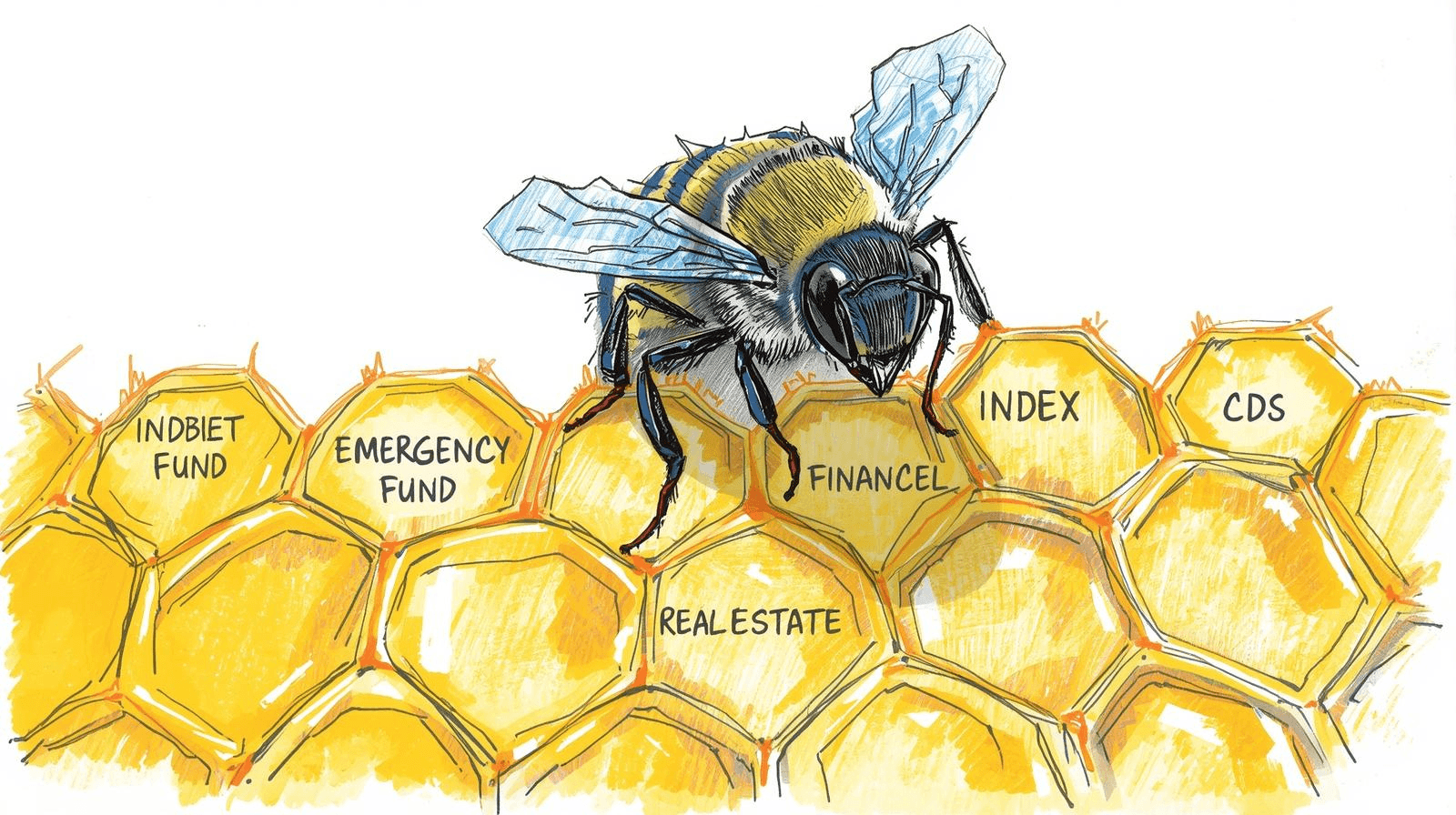
Want to learn the best ways to make money grow in 2025? This guide covers ten effective strategies, from solid financial foundations to smart investments. Read on to optimize your financial growth.
Key Takeaways
Establishing a solid financial foundation, including an emergency fund and debt management, is essential for growing wealth effectively.
High-yield savings accounts and investment options such as CDs and money market funds provide better returns while maintaining liquidity for short-term savings.
Diversifying investments through mutual funds, real estate, and stock index funds can reduce risk and enhance potential returns over the long term.
Build a Solid Financial Foundation

Establishing a solid financial foundation is the cornerstone of effective financial planning. Without a strong base, any attempts to grow your money can be undermined by unexpected expenses or poor financial decisions. The key components necessary for financial success include creating an emergency fund, managing high-interest debt, and implementing a robust budgeting strategy.
What you do with your money is critical for building wealth and achieving financial goals. Using money smartly to reach financial objectives is essential for accumulating assets. Savings vehicles, such as money market accounts and certificates of deposit, are important tools for accumulating assets and building a strong foundation. Protecting your existing money through a strong financial foundation enables the development of future growth strategies, making money work effectively.
Focusing on these fundamental aspects creates a financial safety net that supports long-term investment goals. Credit unions can be a good option for foundational accounts, as they often offer competitive rates and insured savings compared to traditional banks. Each component plays a crucial role in solidifying your financial situation and paving the way for future growth.
Create an Emergency Fund
An emergency fund is crucial for managing unexpected expenses without resorting to debt. Saving an amount equal to six months’ living expenses ensures you can cover unforeseen costs, such as medical emergencies or sudden job loss, without jeopardizing your financial stability.
A high-yield savings account is recommended for maintaining an emergency fund due to better interest rates compared to traditional savings accounts. These accounts help your money grow through compound interest, providing guaranteed returns over time. In addition to online banks, credit unions may also offer competitive high-yield savings accounts as an alternative, often with insured savings options and attractive rates. Online savings accounts often have no limit on withdrawals or transfers, offering flexibility in accessing funds when needed.
The combination of higher returns and liquidity makes high-yield savings accounts ideal for parking short-term savings while still allowing your money to grow.
Manage High-Interest Debt
Paying off high-interest debt should be a priority if you have it, as it frees up more money for investments. Credit card debt, in particular, can be a significant drain on your finances due to the high interest rates charged by credit card companies. Prioritizing the repayment of high-interest debts can significantly improve your overall financial health and capacity for further investments.
The debt avalanche method, which focuses payments on the highest interest rates first, is effective for quickly paying off high-interest debts. Also, consider a 0% introductory APR credit card or a debt consolidation loan to manage high credit card debt.
Reducing your debt burden frees up more resources for investment strategies, enabling more effective growth of your money.
Budget for Success
A robust budgeting strategy is vital for successful financial planning. The 50/30/20 budgeting rule is a popular method that helps ensure balanced allocation of your income across necessities, savings, and discretionary spending. This rule recommends allocating 50% of income to necessities, 30% to discretionary spending, and 20% to savings and investments.
Effectively implementing the 50/30/20 rule involves tracking your monthly income and expenses to ensure adherence to the specified allocations. This approach helps better manage living expenses, save for future goals, and invest consistently.
This disciplined budgeting approach helps meet financial goals and ensures a safety net for unexpected expenses.
Understanding Interest Rates
Interest rates represent a decisive force that demands strategic mastery in personal finance optimization—they directly impact your wealth accumulation through savings yields and borrowing costs with mathematical precision. Whether you're maximizing returns through high-yield savings accounts, executing money market fund strategies, or eliminating inefficient credit card debt, understanding interest rate mechanics is non-negotiable for superior financial outcomes. Interest rates shift based on economic conditions, central bank policy decisions, and market dynamics, making continuous rate monitoring essential for maintaining competitive advantage in your wealth-building strategy.
How Interest Rates Impact Your Money
Interest rates present decisive opportunities for wealth optimization—understanding their impact directly determines your financial trajectory. High-yield savings accounts systematically outperform standard accounts, delivering substantially higher returns that maximize your emergency fund growth over time. This strategic approach ensures your accessible funds work efficiently rather than stagnating in underperforming accounts—a fundamental principle I apply when optimizing short-term savings strategies.
Conversely, high interest debt represents a critical inefficiency that demands immediate elimination. Credit card debt compounds aggressively against your wealth-building objectives, creating systematic erosion of your financial foundation. Prioritizing the elimination of high interest obligations is non-negotiable—every month of delay costs you exponentially more in compounding interest charges that could otherwise fuel your investment growth.
Strategic investment positioning requires systematic adjustment to interest rate fluctuations for optimal portfolio performance. Money market funds, mutual funds, and index funds respond dynamically to rate changes—rising rates typically enhance money market yields while creating strategic repositioning opportunities across mutual and index fund categories. Effective investors implement structured approaches that capitalize on these shifts, ensuring their portfolios remain aligned with evolving market conditions and systematically advance their long-term wealth objectives through decisive strategy adjustments.
Tips for Navigating Rate Changes in 2025
With interest rates positioned for strategic fluctuation in 2025, decisive action and systematic adaptation of your financial framework is non-negotiable. For savers, ascending interest rates create immediate optimization opportunities—enhanced yields on high-performance savings accounts and premium savings vehicles. Execute regular rate analysis and strategically relocate capital to accounts delivering superior returns. Passive approaches are inefficient; proactive positioning maximizes wealth accumulation.
For investors, interest rate volatility introduces calculated market dynamics that demand structured responses. Implement dollar cost averaging systematically—because disciplined investment execution eliminates emotional decision-making inefficiencies. Diversify your portfolio architecture across multiple asset classes with strategic precision. This approach transforms rate uncertainty into manageable risk variables, ensuring your investment trajectory remains optimized regardless of market fluctuations.
When interest rate impacts on your specific financial architecture require clarity, engaging a professional financial strategist is essential. A qualified advisor will systematically recalibrate your investment strategy, execute portfolio rebalancing with surgical precision, and position your assets for maximum interest optimization while eliminating unnecessary risk exposure. Through strategic foresight and flexible execution, you'll transform changing interest rates from obstacles into wealth-building opportunities—ensuring your capital works with maximum efficiency rather than settling for mediocre performance.
Utilize High Yield Savings Accounts

Ideal for short-term savings goals, these accounts provide flexibility and liquidity for easy withdrawal, making them perfect for emergency funds.
Current high-yield savings accounts can offer interest rates up to 5.00%, significantly surpassing the national average. Typically, you can find higher rates for high-yield savings accounts offered by online banks.
High-yield savings accounts grow your savings effectively while maintaining easy access to funds.
Best High Yield Savings Accounts in 2025
Among the top high-yield savings accounts in 2025 are Varo Money at 5.00%, Axos Bank at 4.51%, and Newtek Bank at 4.35%. These accounts offer significantly higher interest rates compared to traditional savings accounts, making them an ideal choice for those looking to maximize their savings.
Additionally, high-yield savings accounts typically maintain high liquidity, enabling easy access to funds when needed.
How to Maximize Returns
To maximize returns from high-yield savings accounts, choose online banks for their higher interest rates due to lower operational costs. Look for options that offer better interest rates while keeping funds easily accessible.
This approach ensures that your savings grow effectively without sacrificing liquidity.
Invest in Certificates of Deposit (CDs)

Certificates of Deposit (CDs) are a type of savings vehicle issued by banks and credit unions that offers a fixed interest rate over a set term, providing a predictable return on your investment. CDs often have higher interest rates than regular savings accounts, so you can earn more interest over the term. Credit unions frequently offer competitive rates on CDs compared to traditional banks. At the end of a CD’s term, you receive your principal investment plus the accrued interest.
Withdrawing money from a traditional CD before the end of the term typically incurs an early withdrawal penalty. Therefore, having an emergency fund in a more accessible account allows you to lock in higher returns with CDs.
Top CD Options for 2025
Some leading CDs for 2025 are expected to offer rates above 4%. These CDs typically come with various term lengths, which can be selected based on individual financial goals.
Investing in high-rate CDs can be a secure way to grow your money over a predictable period, especially in a fluctuating market.
Choosing the Right CD Term
Selecting a term that aligns with your cash flow needs is crucial when choosing a CD. The typical term length range for CDs is from three months to five years. The CD interest rate will change after maturity to the offered rate in effect at that time.
Withdrawals from No Penalty CDs can be made any time after six days with interest earned. However, no withdrawals are allowed in the first six days after funding a No-Penalty CD. Understanding these terms helps you choose the right CD that fits your financial objectives.
Explore Money Market Funds

Money market funds invest primarily in low-risk, short-term debt instruments, making them a stable option for investors. As an investment product designed for short-term investing and liquidity, money market funds offer a way to hold liquid assets with minimal risk. It is important to distinguish money market funds from money market accounts, which are bank deposit products that often provide check-writing abilities and are insured by the FDIC. These funds provide slightly better returns than traditional bank accounts, appealing for short-term investments. A money market fund can be an attractive choice for those seeking stability within a financial institution.
Money market funds have several key characteristics:
They are easily accessible, allowing withdrawals without penalties.
Their returns generally surpass those of traditional savings accounts.
They typically invest in ultra-safe assets like Treasury bills and commercial paper, minimizing investment risk.
Benefits of Money Market Funds
Money market funds are easily accessible, allowing investors to withdraw funds without penalties. Their returns generally surpass those of traditional savings accounts.
These funds typically invest in ultra-safe assets like Treasury bills and commercial paper, which minimize investment risk and provide a risk free investment.
Best Money Market Funds to Consider
Investors should evaluate the yields and fees associated with different money market funds to find the best options. You can buy money market funds from banks or fund providers like Fidelity Investments or Vanguard. These funds offer slightly higher yields than traditional savings accounts while maintaining low-risk profiles.
Diversify with Mutual Funds and Index Funds

Diversifying investments is a key strategy to reduce risk and manage the impact of declining markets. Mutual funds and index funds are effective tools for diversification. Before making significant rebalancing decisions, consult a tax professional to understand any potential tax implications. A mutual fund pools money from investors to buy stocks, bonds, or other assets, providing an easy way to diversify portfolios across various asset classes. While mutual funds and index funds can be evaluated based on past performance, it is important to remember that past performance does not guarantee future results.
Investing $1,000 in stock index funds can provide significant diversification and reduce risk. Index funds mimic the performance of a specific market index, offering a passive investment option with lower expense ratios compared to actively managed funds.
Advantages of Mutual Funds
They provide an easy way for investors to diversify their portfolios across various securities.
Mutual funds provide access to professional management, allowing for informed decision-making.
Why Choose Index Funds?
Index funds are designed to mimic the performance of a specific market index, providing a passive investment option.
Index funds offer a simple strategy for young investors to accumulate wealth over time with minimal costs through an index fund.
Leverage Brokerage Accounts for Flexibility
Brokerage accounts offer flexibility and control for managing a wide range of investments, allowing access to stocks and mutual funds without early withdrawal penalties. A brokerage account is a type of investment account that offers flexibility for non-retirement investing. These investment accounts allow investment in index funds, which track benchmarks like the Nasdaq 100 or S&P 500 for diversified exposure.
Extensive tools and in-depth research from independent providers are available to help investors navigate the market effectively. No minimum deposit is required to open a brokerage account, enabling anyone to start investing regardless of their initial capital.
Setting Up a Brokerage Account
Many brokerage firms do not require a minimum balance investment amount to initiate an account. You can open a brokerage account without incurring fees, making it accessible for all investors.
A brokerage account is essential for investing in stocks, ETFs, and other securities, providing flexibility and control over your investments.
Investment Strategies for Brokerage Accounts
This strategy mitigates the effects of market fluctuations, offering a more stable approach to investing over time.
Investing in mutual funds, managed by skilled portfolio managers who handle security selection and performance monitoring, offers another effective strategy. These funds provide a balanced approach to asset allocation and building a diversified investment portfolio aligned with your financial goals.
Creating a Personalized Investment Plan
A personalized investment plan—this is your decisive weapon for conquering financial objectives with precision and purpose. It systematically evaluates your risk tolerance, time horizon, and specific targets, empowering you to strategically select the optimal combination of investment vehicles—brokerage accounts, mutual funds, and index funds—while allocating assets across diverse classes like stocks, bonds, and real estate with calculated intent. Crafting a plan that aligns perfectly with your needs is absolutely non-negotiable for building substantial wealth and maintaining unwavering trajectory control, regardless of market volatility—because financial mediocrity is simply unacceptable when strategic excellence is within reach.
Setting Your Financial Goals
Establishing a bulletproof investment strategy demands absolute clarity on your financial objectives—inefficiencies in goal-setting are simply unacceptable. Identify precisely what you're targeting: emergency fund accumulation, retirement wealth optimization, high-interest debt elimination, or major purchase capital formation. Each objective requires a distinct strategic approach, and prioritization with realistic timelines is non-negotiable for achieving maximum financial efficiency.
Assessment of risk tolerance comes next—and this analysis must be brutally honest. Conservative investors who gravitate toward money market funds and government bonds operate within one framework, while those comfortable with stocks and real estate pursue entirely different wealth-building trajectories for superior return potential. Your risk profile directly determines asset allocation strategies and investment account selection, from retirement vehicles to brokerage platforms—precision here eliminates future regrets.
Strategic diversification through multiple investment vehicles optimizes your wealth-building capacity significantly. Mutual funds and index funds deliver professional management and diversification benefits, while individual stocks and real estate provide accelerated growth potential for investors with extended time horizons and elevated risk tolerance. Tax-advantaged accounts—individual retirement accounts and employer-sponsored plans with company matching—represent powerful wealth acceleration tools that dramatically enhance retirement savings efficiency.
Systematic review and strategic adjustment of your investment plan ensures continued optimization. As financial circumstances, objectives, or risk parameters evolve, your investment approach must adapt decisively. Maintaining laser focus on your targets while making data-driven decisions positions you to maximize wealth growth and secure lasting financial dominance.
Invest in Real Estate for Long-Term Growth
Investing in real estate is a proven method for long-term wealth accumulation. Through strategic investments in rental properties and Real Estate Investment Trusts (REITs), individuals can expand their wealth over time. Real estate investments offer the potential for both income through rent and capital appreciation in property values. Certain savings options, such as life insurance policies and short-term savings accounts, can be utilized to accumulate funds specifically for a down payment on a home, which is a critical step in the home buying process.
Rising interest rates can lower the attractiveness of real estate investments, making fewer people consider it a viable option. Considering market conditions and financial planning is crucial when investing in real estate to maximize returns and manage market risk.
Benefits of Real Estate Investments
Equity in real estate increases significantly over time as property values appreciate. For instance, equity in a $500,000 property can grow from $100,000 to $200,000 after a 20% appreciation. Mortgage financing allows investors to use leverage, potentially enhancing their returns on investment.
While leverage can amplify potential gains, it also carries the risk of magnifying losses, which must be carefully managed. Real estate investments offer long-term benefits, including capital appreciation and tax benefits, making them an attractive option for growing your money.
Different Ways to Invest in Real Estate
Direct ownership of rental properties provides the potential for both income through rent and appreciation in property value. This method allows investors to have control over their properties and generate a steady income stream.
Investing in Real Estate Investment Trusts (REITs) is another way to gain exposure to the real estate market without owning physical properties. REITs offer dividend reinvestment and liquidity, making them a flexible investment option for various financial goals.
Plan for Retirement with Employer-Sponsored Plans
An employer sponsored retirement plan, such as a 401(k), allows employees to defer a portion of their salary into an individual retirement account, significantly enhancing retirement savings. This type of retirement plan offers tax advantages and faster growth potential. Participating in these plans is crucial for securing financial stability in retirement.
Employer matching contributions can significantly increase savings. A company match is a key benefit of many employer sponsored retirement plans, allowing employees to increase their retirement savings. Utilizing these contributions enhances retirement savings, maximizing the benefits of employer match-sponsored retirement plans.
Maximizing Your 401(k) Contributions
The annual contribution limit for a 401(k) plan in 2023 is $22,500. To maximize retirement savings, aim to save 15% of your annual income. Even an additional $1,000 contribution can significantly impact your retirement savings.
Each dollar invested in a 401(k) typically costs Americans between 65 to 75 cents due to tax advantages. Maximizing your 401(k) contributions allows you to fully benefit from these advantages, securing a more comfortable retirement.
Exploring Individual Retirement Accounts (IRAs)
Contributions to a traditional IRA provide immediate tax benefits by reducing taxable income. For 2023, the IRA contribution limit is $6,500, increasing to $7,500 for those 50 or older. Roth IRA contributions offer no immediate tax benefit, but qualified withdrawals are tax-free. Unlike 401(k) plans, IRAs do not provide a company match, so all contributions come solely from the individual.
A Roth IRA offers the advantage of zero taxes on capital gains, resulting in higher effective returns for young investors.
Recommended IRA accounts for beginners include Fidelity Investments IRA and Charles Schwab IRA. Exploring different IRA options can help you choose the best fit for your retirement goals.
Consider Low-Risk Government Bonds
Government bonds provide a safe investment that offers predictable income, making them suitable for conservative investors seeking lower risk investments. Key points about government bonds and treasury bills include:
Treasury bills are a type of government bond that guarantees returns backed by the government and can be purchased directly.
Investing in government bonds allows individuals to earn a fixed income with low risk.
Government bonds are a reliable choice for wealth preservation.
Investors can purchase Treasury bills from the TreasuryDirect website or through brokers like Charles Schwab or Fidelity. These bonds offer a stable, low-risk investment option for capital preservation. Additionally, interest from certain government bonds may be exempt from state and local taxes, but could still be subject to federal income tax.
Types of Government Bonds
In addition to Treasury bills, U.S. government bonds include Treasury notes, bonds, and TIPS (Treasury Inflation-Protected Securities). Understanding these bonds helps investors choose the right investments aligned with their risk tolerance and financial goals.
Benefits and Drawbacks of Government Bonds
Investing in government bonds like Series EE Savings Bonds can provide a fixed annual return of about 3.5% compounded annually. Series EE Savings Bonds guarantee a guaranteed return by doubling your initial investment if held for 20 years. While government bonds have lower risks, their potential returns are often less attractive compared to stocks.
A key drawback of investing in government bonds is their lower returns compared to other investments. Despite this, their stability and predictability make them a valuable component of a diversified portfolio.
Embrace Stock Market Opportunities
Stocks represent ownership in a company, providing a stake in its future profits and growth. The stock market has historically generated higher returns compared to other investment options, making it attractive for long-term growth. Maintaining investment goals, rather than attempting to time the market, is crucial for investors.
Speculative investments, like small-cap stocks or cryptocurrencies, may appeal to investors with a higher risk appetite. However, understanding volatility is essential; greater volatility indicates higher risk with the potential for significant returns.
Long-term investments typically yield better returns, with some investing strategies allowing investors to double their money invested through the best investment of well-managed portfolios to guarantee future results. Such investments can be particularly beneficial for those looking to maximize their financial growth.
Investing in Dividend Stocks
Dividend stocks provide a regular income stream, making them popular for investors seeking growth and income. These stocks offer both regular income and potential for price appreciation. Investors can easily buy stocks, including dividend stocks, through an online broker.
Dividends in taxable brokerage accounts are taxed in the year they occur. Despite this, dividend stocks remain a solid choice for building a diversified portfolio that generates steady income.
Utilizing Stock Index Funds
Stock index funds are favored for several reasons:
Diversification compared to actively managed funds
Lower fees
Allow investors to own a broad selection of stocks without picking individual companies
Typically have lower expense ratios, enhancing overall returns
Incorporating stock index funds into your investment strategy achieves broad market exposure and reduces investment risk. This approach ensures a balanced and diversified portfolio aligned with your long-term financial goals.
Staying Informed and Adapting to Change
In the dynamic landscape of personal finance, staying informed isn't just important—it's absolutely critical for optimizing your financial trajectory. Market volatility, interest rate fluctuations, and broader economic shifts demand decisive action and strategic awareness. Inefficiencies in financial knowledge bother me profoundly because uninformed decisions lead to suboptimal outcomes. By mastering the latest financial developments and market trends, you position yourself to execute smarter strategies, pivot decisively when conditions change, and ensure your capital works aggressively in your favor regardless of market conditions.
Being strategically proactive about continuous learning and swift adaptation—because reactive approaches are simply non-negotiable—empowers you to capitalize on emerging opportunities and navigate challenges with precision. Whether it's interest rate movements impacting your high-yield positioning or market corrections demanding immediate portfolio optimization, staying informed provides the clarity needed to refine your investment approach and maximize wealth accumulation. Strategic foresight combined with decisive action eliminates financial inefficiencies, ensuring you control your financial destiny rather than allowing market uncertainty to dictate your outcomes.
Keeping Up with Financial News
To make informed investment decisions, a systematic approach to financial intelligence is non-negotiable—inefficient information gathering profoundly undermines portfolio optimization. I advocate for a decisive information strategy: regularly consuming financial news through reputable websites, subscribing to high-value newsletters, and strategically following proven financial experts across social platforms. This systematic approach provides critical insights into market dynamics, interest rate movements, and emerging opportunities that drive superior returns. Financial news programs and specialized podcasts serve as additional intelligence sources—because comprehensive market awareness demands multiple information channels working in coordination.
Establishing targeted news alerts for specific financial sectors—interest rate shifts, high yield savings account developments, money market fund performance fluctuations—ensures zero tolerance for missed opportunities. This systematic monitoring enables rapid strategic pivots, whether reallocating funds between savings vehicles, exploring optimized money market options, or pursuing alternative investments aligned with your financial objectives. As someone who thrives on turning market complexity into actionable clarity, I've witnessed how this disciplined approach to financial intelligence dramatically enhances portfolio performance and secures long-term wealth optimization—because strategic foresight paired with decisive execution eliminates the inefficiencies that erode financial futures.
Adjusting Your Strategy Over Time
As market conditions shift—and they always do—I've learned that successful investors must decisively review and adjust their strategies to maintain alignment with their financial objectives. This requires purposeful action: rebalancing portfolios to preserve optimal asset allocation, updating investment objectives with precision, and adapting approaches when risk tolerance evolves. I consistently advise clients that reviewing brokerage accounts, retirement accounts, and other investment vehicles isn't optional—it's essential for ensuring investments remain strategically positioned for long-term success.
Implementing proven strategies like dollar cost averaging eliminates emotional decision-making while managing market volatility effectively—because disciplined execution trumps market timing every time. Maximizing tax benefits from individual retirement accounts isn't just smart; it's a decisive move that compounds returns significantly. I've found that strategic consultation provides the clarity needed to optimize investment approaches, whether through mutual funds, index funds, or other sophisticated investment products. By maintaining strategic flexibility and responding with conviction, you build an unshakeable financial foundation and accelerate wealth growth—regardless of market turbulence.
Summary
In summary, growing your money in 2025 involves a combination of building a solid financial foundation, utilizing high-yield savings accounts, exploring various investment options, and leveraging retirement plans. Each strategy plays a vital role in ensuring your financial stability and growth. By following these steps, you can create a diversified portfolio that meets your financial objectives and risk tolerance.
Remember, the key to successful investing is consistency and informed decision-making. Whether you are a conservative investor or willing to take on more risk, there are suitable options for everyone. Embrace these strategies, stay committed to your financial goals, and watch your money grow. Here’s to a prosperous financial future.
Frequently Asked Questions
What is the 7 3 2 rule?
The 7 3 2 rule suggests that 70% of your investment returns come from growth over time, while 30% is attributed to compounded returns. This emphasizes the importance of long-term investment strategies for maximizing returns.
How to turn $1000 into $10000 in a month?
To turn $1,000 into $10,000 in a month, consider flipping items you already own and transitioning to an Amazon reselling business. Additionally, invest in your education to enhance your earning potential while simultaneously engaging in long-term investing strategies.
How much should I save in an emergency fund?
You should aim to save an amount equal to six months' living expenses in your emergency fund. This provides a financial cushion in case of unexpected situations.
What is the debt avalanche method?
The debt avalanche method is an effective strategy for eliminating debt by prioritizing payments on the highest interest debts first, thereby minimizing overall interest costs and expediting the repayment process.
What are the benefits of high-yield savings accounts?
High-yield savings accounts provide significantly higher interest rates compared to traditional savings accounts, enabling you to maximize your earnings and grow your savings more effectively.