Mar 20, 2026
Qualified Charitable Distributions: Give Generously From Your IRA and Reduce Your Taxable Income
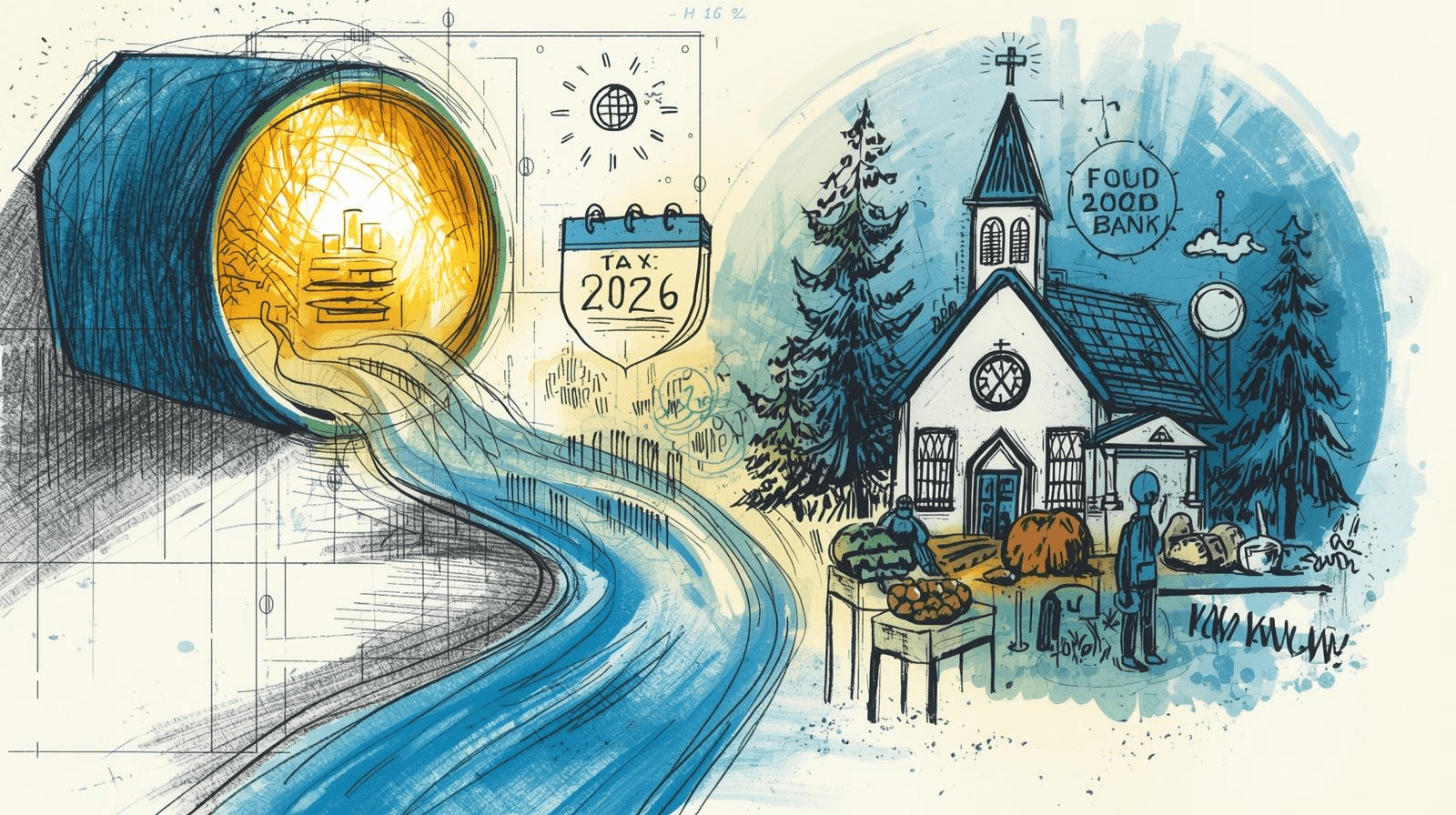
Margaret, a 73-year-old widow in Marietta, Georgia, wanted to continue her longtime tradition of giving $10,000 annually to her local church. Her financial advisor suggested something different for 2025: instead of writing a check from her bank account, she could use a qualified charitable distribution directly from her traditional ira. The result? Her generous contribution went to her church just the same, but she kept $10,000 out of her taxable income entirely. This QCD also counted as a charitable contribution, providing her with valuable tax benefits while supporting her church.
A qualified charitable distribution qcd is a direct transfer from an eligible ira to a qualified charity, allowing ira owners age 70½ and older to give up to $111,000 per year (for tax year 2026) while excluding that amount from adjusted gross income. This ira charitable rollover strategy can reduce federal taxes, lower medicare premiums through IRMAA avoidance, and decrease the taxable portion of social security benefits. Required minimum distributions rmd are minimum amounts that IRA and retirement plan account owners generally must withdraw annually.
At Third Act Retirement Planning, we help clients who’ve come into sudden wealth—through inheritance, business sale, or settlement—integrate charitable distributions into a purpose-driven financial plan rooted in biblical stewardship.
This article covers:
How QCDs work mechanically and legally
Who qualifies by age, account type, and charity
How QCDs interact with your required minimum distribution rmd
Tax savings strategies and real-world examples
What Is a Qualified Charitable Distribution (QCD)?
A qualified charitable distribution is a direct transfer from your ira account to a qualified charity—one that can receive tax deductible contributions as a 501(c)(3) public organization. The key distinction: the ira custodian sends the entire payment directly to the charitable organization, not to you.
QCDs originated in 2006 and became permanent under the PATH Act of 2015. They survived the SECURE Act and SECURE 2.0, with annual limit inflation adjustments starting in 2024.
Eligible charities include:
Churches and Christian ministries
Universities and hospitals
Food banks and relief organizations
What does NOT qualify:
Donor advised funds
Most private foundations
Supporting organizations
Any situation where you receive more than incidental benefits (event tickets, dinners)

Is a QCD Right for You? (And Why It Often Beats a Regular Charitable Deduction)
QCDs provide tax benefits that regular charitable donations cannot match for most retirees.
QCDs may be right for you if:
You’re age 70½ or older
You already give to charity annually
You take the standard deduction (most seniors do since 2018)
You want to reduce your annual income level for Medicare or social security purposes
Here’s why QCDs beat a traditional charitable deduction: a QCD excludes the amount from income entirely, reducing your adjusted gross income directly. By making a qualified charitable distribution directly from your IRA, you avoid having to pay income taxes on the distribution, unlike taking the distribution as income and then donating. A regular itemized deduction only helps if you exceed the standard deduction threshold ($17,700 for single filers 65+ in 2026).
Consider this scenario: A 73-year-old with a $20,000 required minimum distribution gives $10,000 to their church. Taking the money as income and deducting it (if itemizing) results in $20,000 of income. Using a QCD? Only $10,000 shows as taxable income—a direct reduction that lowers the tax bill and potentially keeps you below IRMAA thresholds.
How QCDs Work With Your Required Minimum Distributions (RMDs)
The starting age for RMDs is now 73 for most retirees (phasing to 75 for younger cohorts by 2033), but QCD eligibility remains fixed at age 70½. This creates a planning opportunity: you can use QCDs before RMDs even begin.
QCDs count toward satisfying your entire rmd for the calendar year. Here’s how the math works:
Example calculation:
Your 2026 RMD: $25,000
Your QCD to charity: $15,000
Remaining taxable amount you must withdraw: $10,000
The aggregate limit per person is $111,000 for 2026. Married couples filing jointly can each give up to this amount from their own separate ira accounts, potentially reaching $222,000 combined.
Key RMD + QCD rules:
Execute QCDs early in the calendar year (first-dollars-out rule)
Unused QCD capacity does NOT carry forward to the next tax year
A QCD from your personal IRA does not satisfy an inherited IRA’s RMD
QCD Eligibility: Age, Account Types, and Charity Rules
Age requirement:
You must be at least 70½ on the exact date the distribution leaves the ira directly
Being even one day short disqualifies the entire distribution
Eligible account types:
Traditional ira and rollover IRAs
Inherited IRAs (but these have separate RMD calculations)
Inactive SEP or simple ira (no current employer contributions)
Roth ira (technically eligible, but offers no additional benefit since withdrawals are already tax free)
Ineligible accounts:
401(k), 403(b), 457(b) plans (must roll to IRA first)
Active SEP/SIMPLE IRAs with ongoing contributions
Charity requirements:
Must be an IRS-qualified 501(c)(3) public charity
Churches, Christian colleges, hospitals, and relief organizations qualify
Donor advised funds and most private foundations do NOT qualify
At Third Act, we verify each client’s date of birth, account type, and charity status before recommending any QCD strategy.
How to Execute a QCD Correctly (Step-by-Step Process)
The transfer generates QCD treatment only when executed properly. Here’s your checklist:
Steps to complete a QCD:
Confirm you are at least 70½ before the distribution date
Verify the charity is a qualified 501(c)(3) using IRS Tax Exempt Organization Search
Contact your ira administrator (Schwab, Fidelity, Vanguard) and request a “Qualified Charitable Distribution”
Ensure the check is payable to the eligible charity, not to you
Obtain an acknowledgment letter from the charity confirming no goods or services were provided
Keep records for your tax professional—Form 1099-R won’t label it as a QCD
You can split your qcd amount among multiple charities within the annual limit.
What to avoid:
Never deposit the distribution in your own account first
Never reimburse yourself from QCD funds
Don’t wait until late December—custodians need 7-10 business days for processing
If you wish to designate a charity as the beneficiary of your IRA for legacy giving, contact your IRA administrator and request a change of beneficiary form.
Third Act coordinates with custodians and clients’ tax advisors to schedule QCDs early in the year, often as part of quarterly RMD planning.

The Role of Your IRA Administrator in Making Charitable Distributions
When you’re ready to make a qualified charitable distribution (QCD) from your individual retirement account, your IRA administrator becomes your key partner in the process. The administrator—whether it’s Schwab, Fidelity, Vanguard, or another provider—handles the mechanics of transferring funds directly from your retirement account to a qualified charity. This direct transfer is what allows your generous contribution to count as a QCD, reducing your taxable income and satisfying your required minimum distribution (RMD) for the year.
To start, you’ll need to reach out to your IRA administrator and provide specific details: the name and address of the qualified charity, the exact amount you wish to donate, and your account information. The administrator will then process the direct transfer, ensuring the funds never pass through your hands—an essential requirement for the distribution to qualify for the valuable tax benefits. This step is crucial: only distributions sent directly from your IRA to the charity are eligible to be excluded from your adjusted gross income, helping you lower your tax bill and potentially reduce Medicare premiums.
It’s important to know that not every IRA administrator offers QCD services, so check with your provider early in the year to confirm their process and any required forms. Some administrators may have specific paperwork or online requests for charitable distributions, and processing times can vary—especially near year-end. Proper documentation is also vital: after the transfer, you should receive an acknowledgment letter from the charity confirming your gift, which you’ll need for your tax records.
Working with your IRA administrator in tandem with a tax professional or financial advisor ensures your QCD is executed correctly and fits within your broader financial plan. This collaboration can help you maximize tax savings, avoid costly mistakes, and ensure your charitable giving aligns with your stewardship goals. For married couples filing jointly, coordinating QCDs from separate IRAs can further reduce your combined taxable income and federal taxes, while supporting the causes you care about.
In summary, your IRA administrator plays a pivotal role in making charitable distributions from your retirement account. By following the correct process and seeking guidance from a tax advisor, you can take full advantage of the tax benefits of QCDs—making a meaningful impact through charitable giving while minimizing your taxable amount and supporting your long-term financial well-being.
Tax Benefits and Planning Opportunities With QCDs
The primary benefit: the QCD amount is neither taxable income nor requires a charitable deduction on Schedule A. It’s excluded from income entirely.
Secondary benefits of lower AGI:
Reduced taxation on social security benefits (from up to 85% down to lower amounts)
Avoidance of Medicare IRMAA surcharges (2026 Part B premiums jump from $185 base to $296+ for AGI over $106,000 single)
Better eligibility for state tax credits
Example: A 72-year-old with a $15,000 RMD who gives that amount via QCD versus taking it as income and donating from their checking account saves approximately $3,300 at the 22% bracket—plus potential Medicare premium savings of $1,000+ annually.
Advanced strategies:
Pair QCDs with Roth conversions to fill lower tax brackets
Use QCDs during high-income years (business sale, capital gains events)
Deploy QCDs to reduce taxable IRA balances before passing to heirs
Real-World Examples of QCDs in Action
Example 1: The Widow Avoiding IRMAA A 71-year-old Georgia widow directs $8,000 via QCD split between her church and local food bank. This ira gift drops her AGI below the $106,000 IRMAA threshold, saving approximately $2,000 annually in medicare premiums.
Example 2: The Generous Couple A 75-year-old couple with a $40,000 RMD directs $20,000 via QCD to Christian missions and a children’s hospital. Result: their taxable income drops to $20,000, reducing their tax hit by $4,400 (22% bracket) while supporting ministries they care about.
Example 3: The Business Seller’s Legacy Plan A recent business seller rolled his 401(k) to an IRA. After turning 70½, he integrates annual QCDs into a broader legacy plan, systematically reducing his taxable IRA balance for heirs while supporting multiple ministries. This approach addresses the SECURE Act’s 10-year rule for non-spouse beneficiaries.
These examples are simplified illustrations. Actual outcomes depend on your tax bracket, state residence, and other income sources.
Coordination With Estate, Legacy, and Biblical Stewardship Goals
QCDs fit naturally into estate planning for those with substantial assets in pre-tax retirement accounts. Under the SECURE Act’s 10-year rule, most non-spouse beneficiaries must withdraw inherited IRA funds within a decade—creating potential income tax burdens for family members.
Strategies to consider:
Use QCDs during life to reduce the taxable balance heirs inherit
Name charities as IRA beneficiaries for remaining balances
Use after-tax accounts or life insurance for heirs while directing IRAs toward charitable giving
For clients at Third Act, we often structure automated annual QCDs that align with tithes and offerings—allowing retirement giving to reflect biblical stewardship principles and honor Christ through faithful generosity.
Special Situations: One-Time QCDs for Charitable Gift Annuities
SECURE 2.0 introduced a one time election (effective 2023) allowing a QCD up to approximately $55,000 (inflation-adjusted for 2026) to fund a charitable gift annuity or charitable remainder trust.
How it works:
The account owner directs the fixed amount as a QCD to an eligible split-interest arrangement
The QCD reduces taxable income
You receive an annuity payment (typically 5-9% rates) for life
No separate income tax deduction applies
A charitable gift annuity combines a charitable contribution with a lifetime payment plan, providing a stream of income while supporting a charitable cause
Who should consider this:
Retirees wanting both guaranteed income and a charitable legacy
Those seeking diversified income streams for living expenses
Watch out for:
Strict legal and tax advice requirements
Must coordinate with the charity and your tax advisor
Different rules than standard QCDs to operating charities
Third Act evaluates whether this special contribution fits each client’s income needs, risk tolerance, and generosity goals.
How Third Act Retirement Planning Can Help You Use QCDs Wisely
QCDs are powerful but must be coordinated with your complete financial plan to avoid errors and maximize tax savings.
Our process:
Discovery call to understand your income, assets, giving habits, and spiritual priorities
Detailed tax and cash-flow analysis comparing QCDs, bunching strategies, or donor advised funds (for those under 70½)
Implementation support with custodians and CPAs to process and report QCDs correctly
As a fee-only, fiduciary firm, we receive no commissions on investments or charitable products. Our legal or tax advice comes from qualified professionals, and our recommendations serve your interests alone.
If you’ve received sudden wealth from inheritance, business sale, settlement, or NIL income, schedule a discovery call to explore how QCDs can be part of a Christ-centered retirement and legacy plan.
Key Takeaways and Next Steps
Summary:
An ira qualified charitable distribution allows owners age 70½+ to give directly to charity while excluding those amounts from taxable income
QCDs can satisfy your entire rmd, lower AGI, and potentially reduce taxes on social security and medicare premiums
Only certain IRAs and charities qualify—the transfer must go directly from the ira custodian to the eligible charity
The 2026 per-person limit is $111,000
Your next steps:
Confirm your eligibility and identify target charities now rather than waiting until year-end
Gather your IRA statements and list of gift designations
Consult with a tax professional and fiduciary advisor before executing QCDs
Important: This article provides educational information, not legal or tax advice. Consult your own CPA, tax advisor, or attorney before implementing any strategy discussed here.