Feb 17, 2026
Purchasing Power of Gold Over Time

When people talk about the purchasing power of gold over time, they’re asking a fundamental question: how many real goods and services can one ounce of gold actually buy across different eras? From the Roman Empire to the early 1900s to today, gold has demonstrated a remarkable ability to maintain its value relative to everyday necessities. While fiat currencies like the U.S. dollar have steadily lost value to inflation, gold has broadly preserved its capacity to purchase comparable baskets of goods across centuries.
Consider this: an ounce of gold could buy a quality tailored suit in Shakespeare’s time, during Beethoven’s era, throughout the Great Depression, and still today. Meanwhile, a dollar from 1913 has lost over 90% of its ability to buy those same goods. This contrast forms the basis of gold’s reputation, as gold has long been considered a reliable store of value and a hedge against currency debasement and inflation.
Year | Gold Price (USD/oz) | Dollar Purchasing Power (1913 = 100) |
|---|---|---|
1913 | $20.67 | 100 |
1971 | $35.00 | 19 |
2000 | ~$280 | 6 |
2024 | ~$2,000+ | ~4 |
Gold prices are typically displayed in both tabular and chart formats for easier comparison across eras. Historical gold price data is often best understood when viewed in a chart, which visually displays trends in gold's purchasing power over time.
This article will explore historical gold prices, examine how inflation has eroded fiat money, discuss gold’s role under the classical gold standard, and consider modern investment implications for those seeking to protect their wealth.
What Is Purchasing Power? (And Why Gold Matters)
Purchasing power refers to what a unit of money or commodity can actually buy in the real economy. For example, what could 1 ounce of gold purchase in 1920 versus 2020? This distinction matters because nominal prices can be misleading without adjusting for the change in what money can actually acquire. Investors should also keep in mind that sentiment and perception play a significant role in influencing gold's value and demand, especially during times of market volatility.
Inflation erodes the purchasing power of fiat currencies over time. Since the Federal Reserve was established in 1913, the U.S. dollar has lost the vast majority of its value when measured against consumer goods. Data from long-run U.S. CPI indices confirms this steady erosion, which accelerates during periods of monetary expansion.
Gold serves as a natural reference point for purchasing power because its supply is naturally limited. Unlike paper currencies that central banks can print at will, gold must be mined from the earth at significant cost. Its durability, universal recognition, and use as money for thousands of years make it a reliable store of value across civilizations.
Key concepts to understand:
Nominal vs. real prices: The nominal price of gold in dollars tells you little without adjusting for inflation. Real prices account for changes in the general price level.
Fiat money vs. commodity money: Fiat currencies derive value from government decree, while commodity money like gold has inherent value based on scarcity and demand.
Store of value: An asset that maintains purchasing power over time rather than depreciating through inflation or other factors.
Inflation adjustment: Using indices like CPI to convert historical prices into comparable modern values.
The contrast is stark: while a 1913 U.S. dollar has lost over 90% of its purchasing power, an ounce of gold has tended to buy similar baskets of goods across long periods, making it a hedge against monetary debasement.
Historical Purchasing Power of Gold: Examples Across Eras
While gold prices are volatile year to year, the metal’s long-run purchasing power has been remarkably stable across centuries. Historical data suggests that gold has maintained its ability to purchase comparable quantities of goods and services even as nominal prices have fluctuated dramatically.
Approximately half of global gold demand is attributed to jewelry, underscoring its commercial significance and the enduring cultural and economic role of gold in societies worldwide.
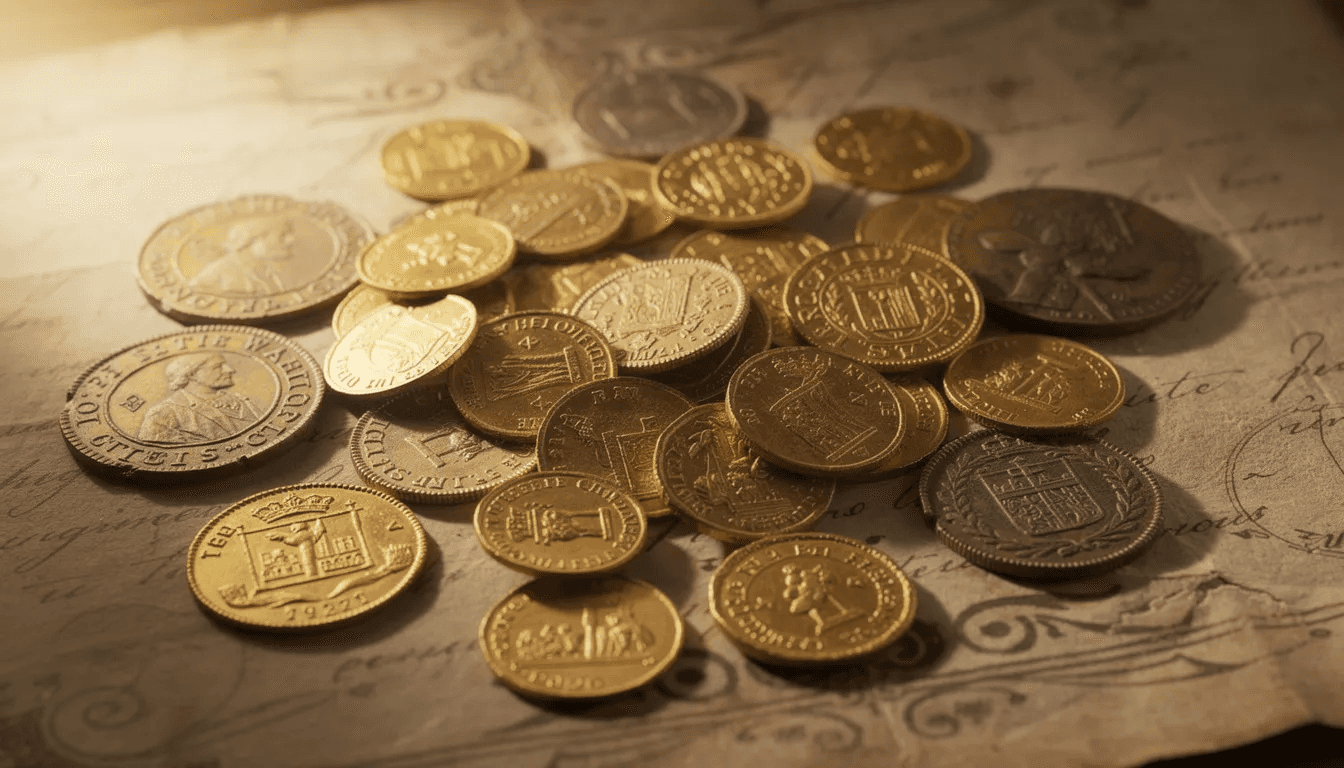
Ancient Rome: A Roman centurion’s annual pay was approximately 38.58 ounces of gold. Today, a U.S. Army captain earns roughly the equivalent of 33 ounces of gold annually. The purchasing power equivalence across two millennia is striking.
Classical gold standard era (1870-1914): Under the gold standard, one ounce of gold was fixed at $20.67 in the United States. This price remained stable for decades, and wholesale prices showed minimal long-term inflation.
Bretton Woods (1944-1971): Gold was fixed at $35 per ounce. While this represented a devaluation from the pre-1933 rate, the currency remained convertible into gold until 1971.
Early 2000s: Gold traded near $300 per ounce after two decades of weakness following the 1980 peak.
Mid-2020s: By 2025, gold prices surged 55% to over $4,000 per ounce, driven by trade concerns, a weaker dollar, and central bank buying exceeding 1,000 tonnes annually.
Year | Gold Price (USD/oz) | Example Good | Approximate Quantity per 1 oz Gold |
|---|---|---|---|
1900 | $20.67 | Quality men’s suit | 1 suit |
1950 | $35.00 | Quality men’s suit | 1 suit |
1980 | $800+ | Quality men’s suit | 2-3 suits |
2024 | $2,000+ | Quality men’s suit | 1-2 suits |
The table demonstrates that despite dramatic changes in the nominal dollar price of gold, one ounce has consistently purchased roughly the same level of quality goods over extended periods.
Gold vs. Inflation: Real Gold Prices Over Time
To understand gold’s purchasing power properly, you must examine its real (inflation-adjusted) price rather than just its nominal price in dollars. The nominal price can triple while real purchasing power remains flat if consumer prices rise proportionally.
1970s stagflation: This period offers the most dramatic example. Gold rose from $35 per ounce in 1971 to over $800 per ounce by January 1980. Consumer prices surged, but gold’s real purchasing power increased substantially as it outpaced inflation. Investors who held gold through this decade saw their wealth protected while those holding cash watched it erode.
1980s-1990s disinflation: After the 1980 peak, gold’s real price declined for nearly two decades. Inflation moderated, interest rates rose, and gold underperformed other assets. This period illustrates that gold’s effectiveness as an inflation hedge varies by time horizon.
Post-2000 era: The 2008 financial crisis and subsequent monetary expansion renewed interest in gold. By 2011, gold reached nearly $1,900 per ounce. The 2020-2022 inflation spike pushed gold to new highs, and by January 2026, gold hit an all-time high of $5,608.35 per ounce. According to market analysts, gold prices are expected to respond to ongoing inflation and changes in monetary policy, with future movements influenced by factors such as investor demand and central bank activity.
The main takeaway is that gold’s real price swings around a long-term average, with extended booms and busts. However, its purchasing power over multi-decade spans has been more stable than fiat currencies that experience compound inflation. Gold as an inflation hedge is most visible over long horizons of 10-20 years or more, and less reliable for short-term periods where volatility dominates.
Gold and the Gold Standard: Monetary Regimes and Purchasing Power
The historical gold standard directly connected the concept of stable purchasing power to how money itself functioned. When currencies were backed by gold, the money supply was constrained by gold reserves.
Classical gold standard (1870-1914): Major currencies were convertible into fixed amounts of gold. The U.S. dollar was pegged at $20.67 per ounce. This system promoted long-term price stability, with relatively low cumulative inflation over the entire period.
Interwar instability (1914-1939): World War I forced suspensions of convertibility. Countries attempted to return to gold after the war, but at unsustainable exchange rates. The Great Depression triggered widespread abandonment of the gold standard.
Bretton Woods (1944-1971): The post-war monetary system pegged the U.S. dollar to gold at $35 per ounce, with other currencies pegged to the dollar. This system required countries to maintain gold reserves to support their currencies.
The 1971 Nixon shock: President Nixon suspended dollar convertibility into gold in August 1971, ending the Bretton Woods system. By 1973, major currencies floated freely, and the modern fiat era began. In the post-1971 era, the Federal Reserve (Fed) has played a central role in influencing the purchasing power of gold over time. Decisions by the Fed, such as interest rate cuts, have historically impacted gold prices—rate cuts tend to make gold more attractive compared to yield-bearing assets, often leading to increases in gold's price and affecting its purchasing power.
Under gold standards, the money supply was constrained by gold reserves, which promoted long-term price stability but could cause short-term deflation or stress when gold flows shifted between countries. The debate continues among economists regarding the pros and cons of gold-backed money versus modern central bank management.
Drivers of Gold’s Purchasing Power: Supply, Demand, and Macro Forces
Gold’s purchasing power is ultimately determined by supply and demand for gold relative to goods, services, and fiat currencies. Understanding these drivers helps explain why gold performs well in some periods and poorly in others.
Long-term supply factors:
Gold supply grows slowly, typically 1-2% annually from new mining. Mining costs and technological changes influence how much new gold enters the market. Recycling from jewelry and industrial use provides additional supply, though volumes fluctuate with price levels.
Jewelry and cultural demand:
India and China represent massive markets for gold jewelry. Cultural traditions drive consistent demand that supports prices independent of investment flows. This base demand provides a floor under gold prices during periods of investment selling.
Investment demand:
Bars, coins, and ETFs have grown as investment vehicles. Gold ETF holdings expanded significantly in recent years, with gold’s share of total AUM rising toward potential 4-5%. Chinese insurers and crypto investors have broadened the buyer base.
Central bank demand:
Official sector purchases have exceeded 1,000 tonnes annually for three consecutive years, far above pre-2022 averages of 400-500 tonnes. J.P. Morgan forecasts 755 tonnes of central bank purchases in 2026, as institutions with under 10% gold reserves target that level. This could require $335 billion in notional shifts at $4,000 per ounce. Demand is set to increase as more institutions seek to diversify reserves.
Macro variables:
Real interest rates significantly influence gold prices. Low or negative real yields often support higher gold prices since the opportunity cost of holding non-yielding gold decreases. A weaker dollar tends to lift gold’s dollar price, as gold becomes cheaper for foreign buyers. Geopolitical uncertainty and financial crises typically spike safe-haven demand. Various issues such as geopolitical tensions, monetary policy shifts, and currency value fluctuations can drive volatility in gold prices.
Overall, gold is expected to remain a key safe-haven asset for investors worldwide.
Case Studies: Gold’s Purchasing Power in Key Modern Episodes
Examining specific episodes helps investors see how gold’s purchasing power behaves in real time, not just in long-term averages. The following case studies focus on key periods where gold's purchasing power shifted significantly.
1970-1980: The Great Inflation
The U.S. experienced severe stagflation driven by oil shocks and loose monetary policy. Gold rose from $35 to over $800 per ounce, dramatically outpacing inflation. One ounce of gold in 1970 could buy a modest used car; by 1980, the same ounce could purchase a new economy vehicle. During this volatile period, gold's value could fluctuate dramatically within a single day, underscoring both the risks and opportunities for investors.
Metric | Start (1970) | End (1980) |
|---|---|---|
Gold Price | $35/oz | $850/oz |
CPI Change | — | +105% |
Gold Change | — | +2,328% |
Real Purchasing Power | Baseline | Significantly higher |
2000-2011: Financial Crisis Recovery
Gold rose from approximately $280 per ounce to nearly $1,900 per ounce following the tech bust and 2008 global financial crisis. Central banks shifted from net sellers to net buyers. Gold outperformed the S&P 500 over this period while inflation remained moderate. You can find detailed gold price trends and comparisons for this era in historical data sources or charts.
Metric | Start (2000) | End (2011) |
|---|---|---|
Gold Price | ~$280/oz | ~$1,900/oz |
CPI Change | — | +31% |
Gold Change | — | +579% |
Real Purchasing Power | Baseline | Substantially higher |
2020-2024: Pandemic and Inflation Spike
COVID-19 triggered unprecedented monetary stimulus. Inflation surged in 2021-2022. Gold reached and revisited all-time highs in nominal terms, with prices exceeding $4,000 by late 2025. Analysts often examine gold demand and price forecasts on a quarter-by-quarter basis, noting significant changes in each quarter of 2021-2024 as the market responded to evolving economic conditions.
These case studies highlight both successes and limitations. Gold’s purchasing power rose sharply during inflationary crises but remained flat or declined during disinflationary periods when other assets outperformed.
Gold vs. Currencies: Long-Term Dollar Purchasing Power Comparison
While gold has no central issuer, major currencies like the U.S. dollar, euro, and pound sterling are managed by central banks and subject to inflation, policy changes, and expectations about future monetary conditions. Certain gold investment vehicles, such as futures contracts, involve an obligation to deliver or settle in gold at a specified price and date, highlighting the contractual nature of some gold trading instruments.
The decline in U.S. dollar purchasing power over 100+ years is dramatic. A dollar in 1913 could purchase goods that would cost approximately $30 today. That represents a loss of roughly 97% of purchasing power through cumulative inflation.
Gold’s purchasing power has followed a different path. Despite short-term volatility, one ounce of gold has maintained its ability to buy comparable quantities of real goods across this same period. The price of bread in gold grams has remained roughly constant from ancient times to today, according to purchasing power parity comparisons.
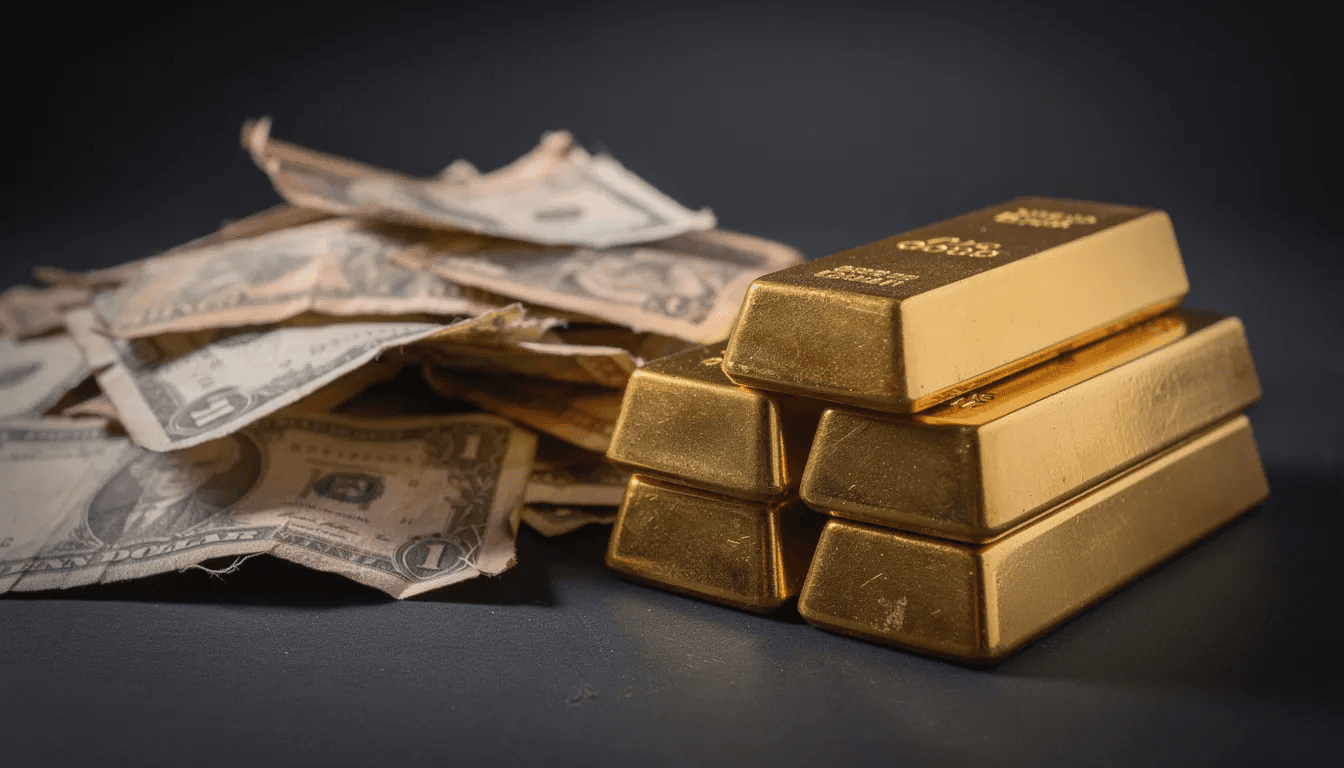
The contrast is instructive: cash holdings steadily erode unless invested at rates exceeding inflation. Gold generates no yield but also experiences no inherent depreciation from monetary policy. Over very long periods, this makes gold a potential hedge against currency debasement risk.
However, neutrality requires noting that gold can underperform interest-bearing assets in certain decades. The 1980s-1990s saw gold lose real value while bonds and stocks generated strong returns. Investors must weigh these tradeoffs based on their investment horizon and risk tolerance.
Gold in Modern Portfolios: Using Purchasing Power as a Guide
Understanding gold’s purchasing power helps shape modern investment decisions for long-term savers, retirees, and institutions seeking wealth preservation.
Gold can serve as a long-term inflation hedge and store of purchasing power. Historical data supports this role over multi-decade horizons, though shorter periods show mixed results.
As a diversification tool, gold often moves differently than stocks and bonds. During financial crises, gold may rise while equity markets fall, providing portfolio protection when most needed. This makes gold potentially valuable for risk management.
Investors can also gain exposure to gold through various contract-based instruments, such as futures contracts and ETFs, which offer different risk and liquidity profiles.
Gold also functions as a hedge against extreme monetary or geopolitical events. Currency crises, hyperinflation, or major geopolitical uncertainty tend to drive safe-haven demand. Germany’s experience during the 1922-23 hyperinflation illustrates this: gold reverted to pre-crisis purchasing power levels by 1924, while paper marks became worthless.
A simple illustrative allocation shows the tradeoffs. A portfolio with 0% gold fully relies on fiat-denominated assets for preservation. A 5-10% gold allocation provides meaningful protection against tail risks while maintaining exposure to yield-generating assets.
Gold’s effectiveness as a purchasing power hedge improves with time horizon length. Investors should consider their risk tolerance, liquidity needs, and regulatory constraints when determining appropriate allocations.
Limitations, Risks, and Misconceptions About Gold’s Purchasing Power
While gold has a strong long-run record, it is not a perfect or guaranteed protector of purchasing power in every period.
Long flat or declining periods:
The early 1980s through the 1990s saw gold’s real price decline significantly. An investor buying at the 1980 peak had to wait until approximately 2008 to fully restore their real purchasing power. That’s nearly three decades of waiting.
Costs reduce net returns:
Storage, insurance, and transaction costs reduce net returns, especially for physical gold. These expenses compound over time and represent a real drag on performance that paper calculations often ignore.
No yield or income:
Gold does not pay interest or dividends. In periods of high real interest rates, this opportunity cost becomes significant. Bond holders receive income while gold holders receive nothing until sale.
Common misconceptions:
Many believe gold always rises during any crisis. Historical evidence shows exceptions. Gold initially fell during the 2008 financial crisis before recovering. Not every page of crisis history shows gold performing immediately.
Confusing short-term speculative price spikes with stable long-term purchasing power is another error. Gold can experience dramatic booms and busts within decade-long periods while maintaining purchasing power only over much longer horizons.
Gold should be evaluated realistically within a broader financial plan, not treated as an infallible asset that performs performing security verification against all economic scenarios.
Conclusion: What History Tells Us About Gold’s Purchasing Power
Over centuries, one ounce of gold has often bought a similar level of real goods, such as quality clothes, a modest share of annual income, or comparable services across eras. This consistency stands in stark contrast to fiat currencies like the U.S. dollar, which have generally lost purchasing power through cumulative inflation.
Gold’s purchasing power is volatile in the short run but comparatively stable in the very long run. The metal functions as a reliable store of value over multi-decade and multi-century horizons, even though year-to-year price movements can be dramatic.
Understanding purchasing power rather than just nominal prices is crucial when evaluating gold versus cash and other assets. The information in this analysis shows that gold has preserved wealth across monetary regimes, currency crises, and periods of geopolitical uncertainty.
Time horizon, risk tolerance, and diversification should guide decisions about including gold in a financial strategy. For those with long investment horizons seeking protection against currency debasement and inflation, gold’s historical track record offers clues worth considering.