Jun 17, 2026
Investing in Farmland: A Guide for New Wealth Holders
When a sudden windfall lands in your lap - whether from an inheritance, the sale of a business, a legal settlement, or NIL income - the pressure to do something smart with that money can feel overwhelming. In 2026, a growing number of newly wealthy individuals are looking past Wall Street and toward something they can see, touch, and pass down: agricultural land. Farmland investing has quietly moved from the margins of institutional portfolios into mainstream conversations about durable, inflation-resistant wealth.
There is a reason Bill Gates became the largest private farmland owner in the United States by 2022, accumulating roughly 270,000 acres across multiple states. Institutional investors, pension funds, and family offices have steadily increased their allocations to this asset class over the past two decades. Farmland is a tangible asset that cannot be produced in unlimited quantities, and that fundamental scarcity gives it staying power that few other investments can match.
At Third Act Retirement Planning, we speak to Christians who want to steward new wealth wisely, integrate biblical wisdom into their financial decisions, and build a lasting legacy. Farmland can be part of that story - but only if you understand what you are buying, what to expect, and how it fits into a larger plan. This guide walks you through the case for farmland, the practical options available, and the steps to take before committing capital.
The Case for Farmland as an Asset Class
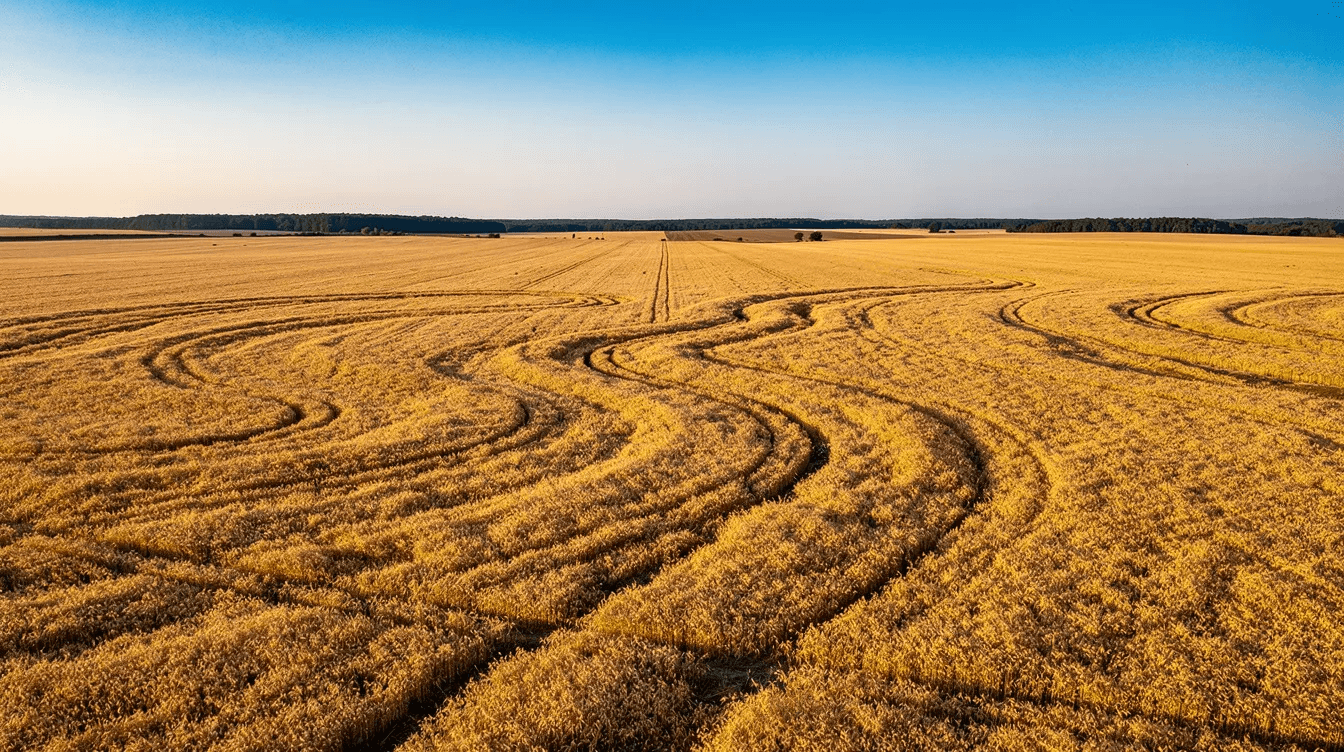
The numbers behind farmland are striking. According to the NCREIF Farmland Index, U.S. farmland has returned approximately 10.7% annualized since 1991, combining steady farm income with long-term capital appreciation. Over that same period, farmland values have grown at an average rate of 6.7% since 1970, while income from rents and crop profits has contributed roughly 4–5% annually.
What makes these farmland returns especially compelling is the relatively low volatility. Farmland's standard deviation has hovered around 6.5% over multi-decade spans, compared with roughly 15.5% for the S&P 500. Farmland value does not fluctuate daily, providing stability that public equities simply cannot offer. This combination of solid returns and muted swings has meant farmland investments have outperformed stocks and bonds over 48 years on a risk adjusted returns basis.
Returns from farmland investments come from two sources: land appreciation and crop income. That dual engine - part growth, part yield - is what gives farmland its resilience. During the dot-com bust, the 2008–09 financial crisis, and the COVID-19 shock, farmland held its value far better than public markets. In 2022, farmland values increased by 10.2% amid rising inflation, underscoring the asset's role as a hedge. Farmland has outpaced inflation since 1991, and the NCREIF Farmland Index returned over double the inflation rate during that stretch. Farmland has provided returns more than double the inflation rate since 1991, making it a natural fit for investors worried about purchasing power erosion.
From a diversification standpoint, farmland is uncorrelated with traditional assets like stocks and bonds. Adding farmland to a conventional 60/40 investment portfolio has historically smoothed overall volatility without sacrificing returns. Farmland investments provide a hedge against inflation during economic downturns - precisely when traditional investments tend to struggle most.
Structural Tailwinds: Demographics, Scarcity, and Global Food Demand
Beyond historical performance, several long-term forces are working in farmland's favor.
Aging ownership. Roughly 40% of U.S. farmland is owned by people over 65, according to USDA data. Meanwhile, 80% of rented farmland is owned by non operator landlords - many of whom are approaching or past retirement age. An estimated 370 million acres of farmland will change ownership in 20 years, creating both opportunity and disruption as heirs decide whether to keep, lease, or sell.
Shrinking supply. The U.S. lost 31 million acres of farmland to development from 1992 to 2012. Urban sprawl, industrial expansion, and infrastructure projects continue to chip away at high quality farmland, making productive agricultural land an increasingly scarce resource. The average price of U.S. cropland reached $5,055 per acre in 2022, reflecting that tightening supply.
Rising global demand. The United Nations projects global population reaching approximately 9.7 to 10 billion by 2050, with expanding middle classes in Asia, Africa, and Latin America driving demand for grains, protein, and higher-calorie diets. More people eating more food on less land is the basic form of the farmland investment thesis.
Climate realities. Climate variability and water stress are making some regions less productive while elevating the value of land with secure water rights and stable growing conditions. These other factors - soil health, average rainfall patterns, and proximity to infrastructure - increasingly separate premium agricultural property from marginal acreage.
Where Water and Location Drive Long-Term Value
Access to reliable water rights is essential for long-term farmland value. In the Western U.S., lands with senior water rights or banked groundwater are commanding premiums, while parcels dependent on over-allocated aquifers face mounting uncertainty. Droughts and floods can affect crop yields and land value, and those risks are not distributed evenly.
Consider the contrast: Midwest Corn Belt states like Iowa and Illinois benefit from dependable rainfall, deep topsoil, and dense transportation networks. These regions offer lower climate risk and steady, if moderate, appreciation. Parts of the Pacific Northwest also enjoy reliable water and strong infrastructure. Meanwhile, California's Central Valley - home to some of the highest per-acre revenues in the country - faces acute water policy risk, regulatory constraints, and prolonged drought cycles.
For new wealth holders evaluating direct farmland investments, the lesson is straightforward: prioritize water security, soil quality, and proximity to processing and transportation over cheap acreage in remote or water-stressed regions. Soil quality impacts crop yield and should be tested before purchasing farmland. A parcel with secure water and good soil in a well-connected market is almost always a better long game than more land at a lower price in a marginal location.
How Farmland Investments Generate Returns
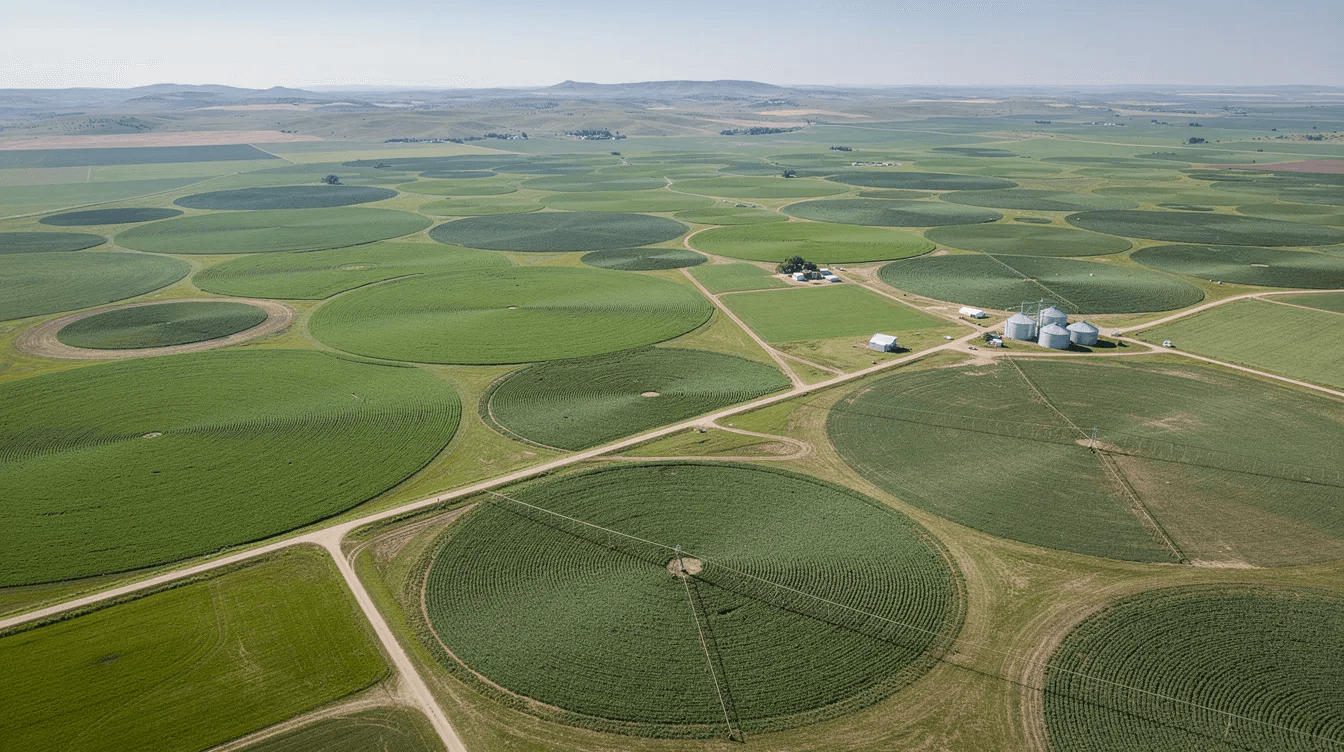
Farmland generates returns through two primary channels: ongoing farm income (rent or profit share from the farmer working the land) and capital appreciation (the rising value of the land itself). Think of it like owning a rental property, except your tenant grows corn instead of living in an apartment.
Unlike commercial real estate, farmland carries unique risks from weather, commodity prices, and crop production cycles. But it also benefits from persistent demand - people need to eat regardless of the stock market's mood.
Long-term farmland investments should consider a holding period of at least 5 to 10 years for appreciation. Most institutional farmland investors target 5–15 year holds, and flipping farmland is rare due to high transaction costs and generational farmland ownership patterns. For most investors receiving sudden wealth, farmland should be approached as a patient agricultural investment, not a speculative trade.
A simplified example: if you purchase high quality farmland yielding 5% net farm income annually, and the land appreciates at 4% per year, your total return runs around 9% before taxes. Over a decade, that compounds meaningfully - especially when the income stream adjusts upward with inflation and agricultural commodities pricing.
Farm Income: Lease Structures and Passive Cash Flow
Most farmland investor income comes through leasing arrangements. The main models include:
Fixed cash rent: The landlord receives a set dollar amount per acre annually. The farmer bears all the risk of crop production and market prices. This is the most common structure.
Flexible or variable rent: Rent adjusts based on commodity prices or yields, aligning landlord income with market conditions but introducing more volatility.
Crop-share agreements: Owner and operator split the harvest revenue, typically 25–35% to the owner. Both sides share risk and reward.
Investors can earn from farmland through crop shares or cash rents, and leasing farmland can provide steady rental income with less risk than operating a farm yourself. Non operator landlords typically receive annual or semiannual payments, making farm income relatively predictable compared with corporate dividends. Many farmland investment platforms and institutional vehicles rely on net leases where the farmer covers operating expenses, leaving the investor with a cleaner income stream.
A word of caution: cash returns vary depending on region, crop type, and leverage. Weather unpredictability can significantly impact farm income in any given year, and interest rates influence farmers' incomes and production costs, which can ripple through to what they are willing to pay in rent. Do not extrapolate unusually high teaser yields without understanding the underlying farm economics.
Capital Appreciation: Where Long-Term Growth Comes From
Land values increase over time through several mechanisms: rising commodity prices, improving yields per acre driven by technological advances, nearby development pressure, and infrastructure investments such as roads, storage facilities, and irrigation systems.
The appreciation potential varies by farmland type. Core row crop investments in the Midwest tend to deliver steady but moderate growth. High-value permanent crop regions - almonds in California, wine grapes in Oregon - can deliver higher upside, but they carry substantially more risk. The 2024 NCREIF data illustrated this starkly: cropland posted a positive return of roughly +5.66%, while permanent cropland fell approximately –10.18%, driven by water stress and falling valuations.
Market fluctuations can affect the value of farmland investments, and saturated production areas can limit profitability for farmers, which in turn suppresses land values. The key to capital appreciation is disciplined, data-driven selection - buying at reasonable valuations based on local comparable sales and realistic cash flow projections, not chasing headline stories about celebrity investors.
Understanding Farmland Types: Row Crops vs. Permanent Crops
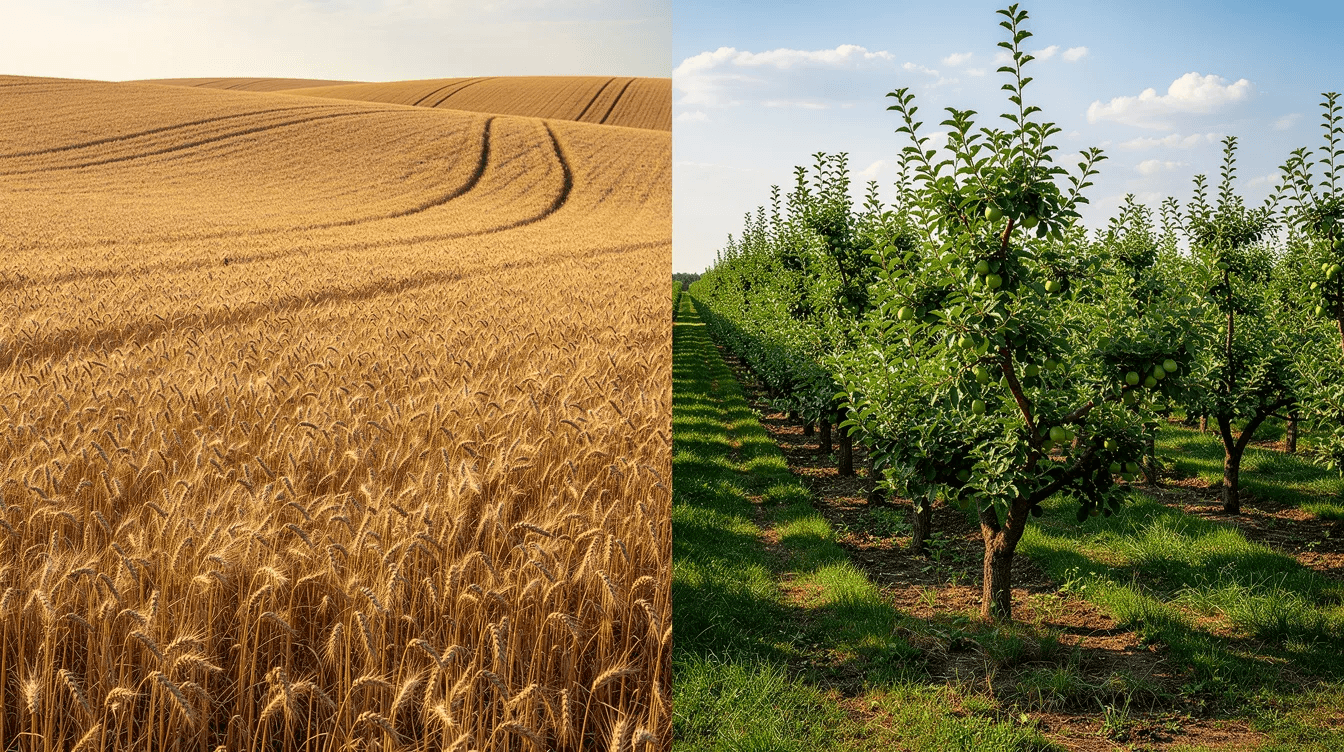
Not all farmland is created equal. The three broad categories - annual crops, permanent crops, and pasture or rangeland - carry distinct risk, return, and liquidity profiles. For most investors, the row crop versus permanent crop distinction matters most. Blending types within a farmland portfolio can provide diversification benefits, but you need to understand what you are mixing.
Annual "Row" Crops: Stability and Flexibility
Row crops are annual crops like corn, soybeans, wheat, and cotton, planted and harvested each year. They dominate the Midwest, Great Plains, and parts of the South. Their defining advantage is flexibility: if soybean prices drop, a farmer can rotate into corn or wheat the following season.
From an investor's perspective, row crop investments tend to deliver steadier farm income yields, lower operational complexity, and moderate capital appreciation tied to long-term productivity gains and land scarcity. Leases are straightforward, typically fixed cash rent, and custom farming arrangements are well-established in these regions.
Row crops have different income stability and capital requirements compared to permanent crops. Conservative or first-time farmland investors often start here because the underwriting is simpler and the risks are more predictable. Picture a 160-acre Iowa corn and soybean field on a 5–10 year hold: reliable rent income, gradual land value growth, and a liquid resale market among neighboring operators who want to buy farmland to expand.
Permanent Crops: Higher Risk, Higher Potential Reward
Permanent crops - orchards and vineyards producing almonds, pistachios, apples, citrus, and wine grapes - stay in the ground for decades. They require years of establishment before reaching full production, during which income is minimal and capital is tied up in trees, trellising, and irrigation.
Once mature, these assets can generate higher per-acre income and stronger capital appreciation, especially when aligned with export markets or strong consumer brands. Permanent crops have generally outperformed annual crops with returns over 9% in favorable periods. But the risks are equally outsized: sensitivity to drought and water restrictions (particularly in California), long lag to profitability, and almost no flexibility to switch crops if market conditions shift.
The 2024 previous year data drove this point home: while row cropland posted positive returns, permanent crop regions suffered double-digit valuation declines. Permanent crops may farmland fit investors with higher risk tolerance, longer time horizons, and room in their plan to absorb volatility. They are not a starting point for someone still figuring out how to manage a large sum wisely.
How Farmland Fits into Your Overall Portfolio and Life Plan
Many sophisticated investors allocate 5–15% of their investable portfolio to farmland as an alternative asset. For a new wealth holder, a smaller starting point - perhaps 2–5% - allows you to build knowledge and comfort before scaling up.
The diversification benefits are well documented. Farmland's low correlation to equities and bonds can smooth overall portfolio volatility, and its track record of strong risk adjusted returns makes it a compelling complement to other assets in a diversified strategy. Because farmland has outpaced inflation consistently, it serves as a partial hedge for investors concerned about long-term erosion of purchasing power in retirement.
But farmland should not be evaluated in isolation. Its true value emerges when it connects to your broader goals: retirement income needs, estate and legacy planning, charitable giving strategies, and the desire for tangible property that can be passed to children or donated. Adding farmland to your investment strategy works best when it is embedded in a comprehensive financial plan, not treated as a stand-alone bet.
Risk, Liquidity, and Time Horizon Considerations
Farmland is not risk-free. Here are the trade-offs you must weigh:
Liquidity: Direct land ownership is highly illiquid and can take months or years to sell. Some farmland investments can take up to three years to sell. Even farmland investing platforms often impose multi-year lockups.
Weather and climate: Droughts, floods, and extreme heat can damage yields and reduce land value in specific regions.
Commodity prices and interest rates: Falling crop prices squeeze farm income; rising rates increase capitalization rates and can depress farmland values.
Regulatory risk: Changes in water policy, environmental regulations, or zoning can impose unexpected costs.
Operator risk: The quality of the tenant farming your land directly affects income and land care.
Evaluate local land markets to ensure future resale capabilities. Stress-test your financial plan to confirm that capital earmarked for farmland is truly long-term and not needed for near-term obligations like taxes, healthcare, or major purchases. To mitigate risk effectively, match your farmland investment horizon to your planned cash needs.
Biblical Wisdom and Farmland Stewardship
Scripture has much to say about land, sowing, and stewardship. Genesis 2:15 speaks of tending and keeping the earth. Galatians 6:7 reminds us that we reap what we sow - a principle that applies as much to financial decisions as to crop production. Wise land management reflects the heart of a faithful steward.
Farmland investing offers a chance to view an investment not merely as a financial instrument but as a means to support families, workers, communities, and creation over generations. That means considering the ethical dimensions: Is the land farmed sustainably? Are workers treated fairly? Is the soil being depleted or built up?
At Third Act Retirement Planning, our Qualified Kingdom Advisor perspective helps believers evaluate whether and how farmland investing aligns with their convictions and calling. Not every good investment is the right investment for every person. Discernment matters.
Farmland Investment Options for New Wealth Holders
You do not need to become a farmer to invest in farmland. The main options range from hands on ownership to fully passive financial exposure, each with different minimums, liquidity, and oversight demands. The right structure depends on your time, expertise, risk tolerance, and how actively involved you want to be.
Direct Farmland Investments: Owning the Dirt
Purchasing farmland directly - buying a 100- to 200-acre parcel in Iowa or Kansas, for example, either individually or through a closely held LLC - gives you maximum control. Direct ownership of farmland allows for full control and profits, and you can tailor lease structures, integrate the property into estate planning, and build a long-term family legacy.
The downsides are real: high capital requirements, concentration risk, and the need for local market knowledge. If you live in Atlanta and buy farmland in Nebraska, you need a managing partner on the ground - a professional farm management company - to handle tenant selection, lease negotiation, soil testing, and ongoing oversight. Active management from a distance is difficult.
For out-of-state buyers, assembling the right team (appraiser, attorney, farm manager) is not optional - it is essential. Direct farmland investments are best suited for investors with significant capital, patience, and a willingness to learn the local market before committing.
Farmland REITs and Agriculture Stocks: Public Market Exposure
For investors who want exposure without owning dirt, farmland reits offer a publicly traded alternative. Farmland REITs offer shares in managed farmland investments, and two pure-play options dominate:
Farmland Partners (NYSE: FPI): Approximately 71,000 acres across 11 states, roughly 90% row crops by acreage, with a dividend yield around 2.6%.
Gladstone Land (NASDAQ: LAND): Roughly 99,000 acres in 14 states, focused on fresh produce and some permanent crops, with a dividend yield near 6.1%.
Agriculture-related stocks and exchange traded funds - covering equipment manufacturers, seed companies, and broad ag indices - provide indirect exposure to the agricultural economy but are not the same as owning land. These other investment vehicles trade with equity market volatility and may not deliver the same diversification benefits as direct farmland ownership. Do not confuse buying an ag stock with owning agricultural land itself.
Farmland Investment Platforms and Private Funds
Farmland investment platforms allow fractional ownership of agricultural land, typically with minimums in the $10,000–$50,000 range. Accreditation requirements are common. These farmland investing platforms handle sourcing, due diligence, and land management, allowing the investor to earn passive farm income without being hands on.
Benefits include professional underwriting, diversification by crop type and region, and less administrative burden. But platform risk is real: fee structures can eat into returns, liquidity is limited (often multi-year lockups), and you are relying on the platform's portfolio manager and operator selection.
Before committing capital through any platform or private equity fund, ask pointed questions:
What are the all-in fees, including acquisition, management, and disposition?
What is the exit strategy and expected holding period?
How were water rights, lease quality, and operator track record evaluated?
What happens if the platform itself faces financial difficulty?
The investment process should be transparent. If it is not, walk away.

Practical Steps Before You Invest in Farmland
Enthusiasm is not a substitute for preparation. If you have recently come into significant wealth and are drawn to farmland, resist the urge to act before you plan. The difference between a good investment and a costly mistake often comes down to informed decisions made with trusted counsel - not speed. If you are navigating a windfall, the principles in our guide on avoiding the 12 deadly mistakes of sudden wealth apply here just as much as anywhere.
Clarify Your Goals and Farmland Fit
Before exploring market data or touring farms, define why you want farmland exposure. Common motivations include:
Income and diversification: You want steady cash returns and reduced correlation to your stock and bond holdings.
Legacy building: You want to pass tangible property to children or grandchildren, perhaps funding education or endowing a donor-advised fund.
Mission alignment: You want to support regenerative agriculture or sustainable crop production as an expression of your values.
Assess your risk tolerance, your liquidity needs over the next 10–15 years, and your comfort with opaque local markets and slower exits. Ask yourself: "What if I needed this capital in five years?" If the answer makes you uncomfortable, farmland may not be the right fit - or the allocation needs to be smaller.
Do Your Homework: Markets, Valuation, and Leases
Due diligence on farmland is not glamorous, but it is non-negotiable. Key areas to investigate:
Soil quality and historical yields: Request soil maps and multi-year yield records.
Water rights and availability: Verify legal water entitlements and physical supply reliability.
Local rental rates and comparable sales: The average price of U.S. cropland reached $5,055 per acre in 2022. Know your local market, which can vary depending on region and crop type, and may be well above or below that figure.
Existing lease agreements: Review tenant quality, lease terms, and remaining duration. A good deal on paper can unravel if the tenant is struggling or the lease is poorly structured.
Valuing farmland typically combines a cap rate approach (net farm income divided by purchase price) with local comparable sales analysis. Be wary of deals marketed solely on headline yields or picturesque photos. Demand transparent financials and agronomic data from any seller, platform, or fund.
Build the Right Professional Team
For new wealth holders, assembling the right advisory team is not optional. Consider:
A fee-only fiduciary financial advisor who understands both traditional investments and alternatives like agricultural land
A farm management company with local expertise
A real estate attorney experienced in farmland transactions
A tax professional familiar with agricultural property depreciation, 1031 exchanges, passive versus active income treatment, and charitable strategies
A local farm appraiser or broker with career paths rooted in the region you are targeting
A fiduciary advisor like Third Act Retirement Planning can help integrate farmland into your retirement, tax, and estate planning rather than treating it as an isolated bet. Wise counsel is especially vital for those managing sudden wealth for the first time.
How Third Act Retirement Planning Can Help You Discern If Farmland Belongs in Your Plan
Farmland investing is not for everyone, and it is certainly not something to rush into. At Third Act Retirement Planning, we help new wealth holders evaluate farmland alongside other investments within a coherent retirement and legacy investment strategy. Our process starts with a discovery call to understand your goals, values, and current holdings. From there, we analyze whether adding farmland supports your desired lifestyle, giving plan, and multi-generational vision - or whether your capital is better deployed elsewhere.
Consider a scenario: you sold a business in 2026 and are sitting on significant liquid wealth. After addressing the immediate priorities - taxes, emergency reserves, debt - a partial farmland allocation might provide inflation protection, steady income, and a tangible asset to anchor your investment portfolio. Perhaps that farmland becomes part of a charitable remainder trust, generating income during your lifetime and supporting ministry upon your passing.
Our fee-only, fiduciary structure means we have no financial incentive to push farmland - or any product - unless it genuinely fits. As a Qualified Kingdom Advisor, Thomas Cloud, Jr. brings biblical wisdom to every recommendation, ensuring your plan reflects both sound economics and faithful stewardship.
Ready to explore whether farmland belongs in your plan? Schedule a discovery call to discuss your situation, goals, and whether farmland - in any form and at any scale - makes sense for your third act.
Final Thoughts for New Wealth Holders Considering Farmland
Farmland is a compelling, long-term, income-producing asset class with genuine diversification benefits. It has a remarkable track record through crises, it has outpaced inflation for decades, and it offers something few investments can: the satisfaction of owning productive land that feeds people.
But it is not a one-size-fits-all solution. It is illiquid. It carries real risks - from weather to water to commodity prices. And it demands patience, education, and alignment with your personal convictions and calling. Do not chase farmland because a billionaire owns it or because a platform promises record high returns. Approach it slowly and prayerfully, testing your assumptions with trusted advisors before committing large amounts of capital.
Stewarding sudden wealth well means playing the long game - investing not just for returns, but for purpose, legacy, and impact. Farmland can be part of that story. The question is whether it is part of yours.