Mar 3, 2026
How to Spend Lottery Winnings Without Wasting Your Once-in-a-Lifetime Shot
You just watched the Powerball numbers flash across your screen. One by one, they matched. All of them. Your hands are shaking. Your heart is pounding. That $500 million jackpot is yours.
Now what?
Here’s the uncomfortable truth: nearly 70% of lottery winners exhaust their entire winnings within a few years. About one-third file for bankruptcy. Winning the lottery without a plan is like being handed a live grenade wrapped in hundred-dollar bills.
This guide walks you through exactly how to handle your newfound wealth—from the first 24 hours to building a legacy that lasts generations. Whether you’ve already won or you’re preparing for good fortune, these steps can mean the difference between financial freedom and becoming another cautionary statistic.
First 24–72 Hours: What To Do Immediately After You Win
The moment feels surreal. You’ve just seen your numbers match on a life changing amount of money. Your mind races through mansions, sports cars, and never working again.
Stop. Breathe. The next 72 hours will determine whether this windfall becomes your greatest blessing or your biggest curse.
Verify and secure your ticket immediately:
Sign the back of the ticket in permanent ink—an unsigned ticket is a bearer instrument that anyone can claim
Photograph both the front and back with your phone
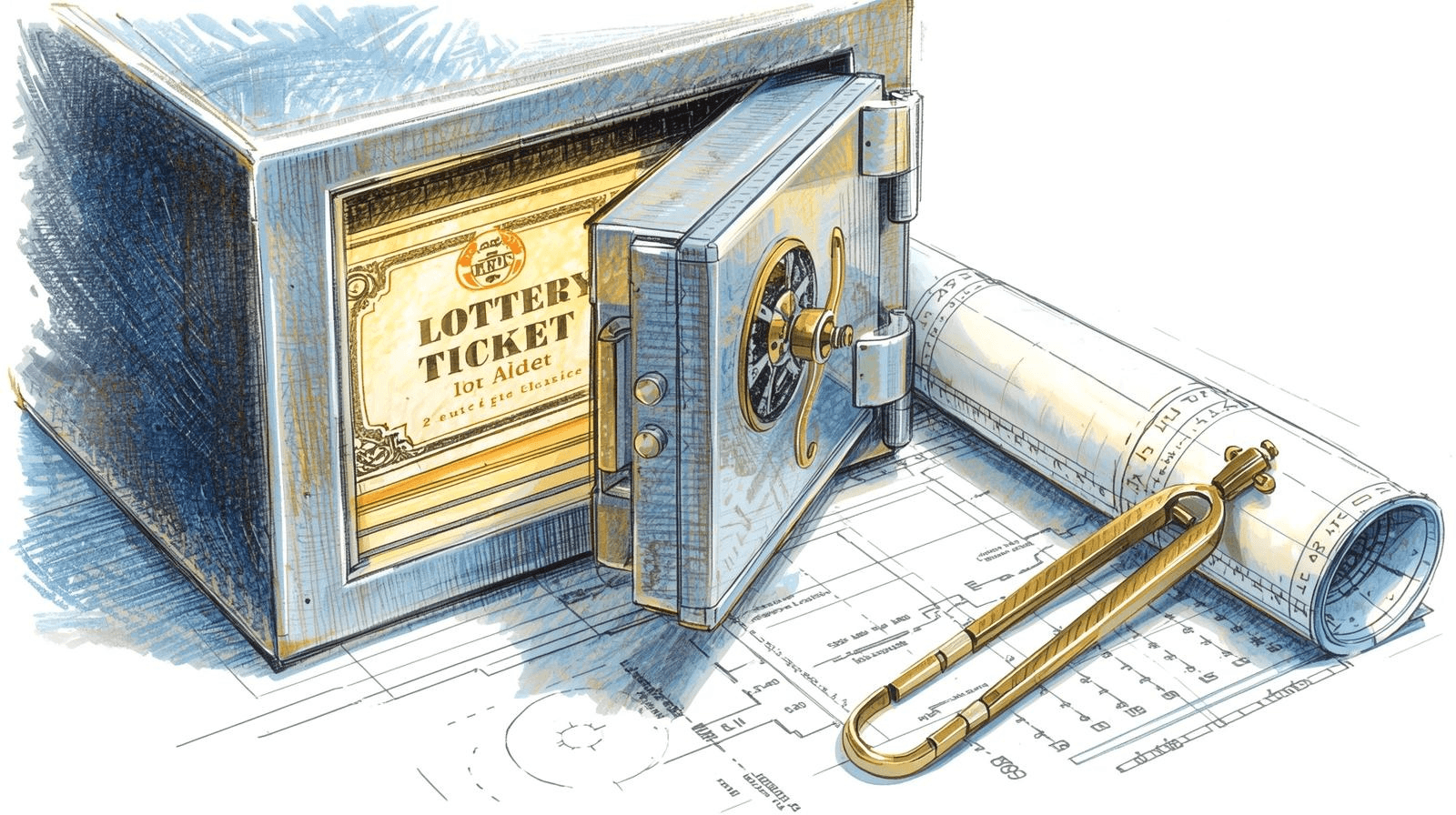
Store the original in a fireproof safe or a bank safe deposit box (not your nightstand drawer)
Understand your claim window:
Depending on your state, you typically have 180 to 365 days to claim your prize. California gives winners 180 days, while New York allows a full year. Don’t rush to the lottery office tomorrow morning—you have time to plan.
Keep your mouth shut:
No social media posts. No calls to your extended family. No celebratory drinks with coworkers where you might let something slip. Even your closest family members should wait until you have a plan in place.
The temptation to share news of your windfall is powerful, but every person you tell increases your exposure to requests, scams, and pressure.
Buy yourself time without raising suspicion:
Take a sick day or personal day from work. You need mental space to process what just happened and begin thinking clearly. Do not—under any circumstances—resign from your job, buy a car, put a deposit on a house, or make any financial commitments during this window.
The pause matters more than anything else right now. Those long-suppressed material urges? They’re about to scream at you. Resist.

Staying Anonymous and Protecting Yourself
Before you spend a single dollar, you need to understand whether you can claim your prize without becoming a household name. This is the number one safety and sanity step that protects both your wealth and your peace of mind.
State anonymity rules vary dramatically:
As of 2025-2026, some states allow anonymous claims for large prizes:
State | Anonymity Rules |
|---|---|
Delaware | Winners can remain anonymous |
Maryland | Anonymous claims allowed |
New Jersey | Anonymous for wins over certain thresholds |
California | Winner names are public record |
Texas | Names public, but trusts may claim |
Verify the rules before doing anything else:
Contact your state lottery commission anonymously—use a blocked caller ID or a prepaid phone—to confirm current rules on anonymity. Rules change, and you want accurate information before making decisions.
Use legal structures where allowed:
Many states permit trusts or LLCs to claim lottery prizes on behalf of winners. An estate planning attorney can establish a blind trust that:
Shields your name from public records
Protects your home address from press and predators
Provides a legal layer between you and the inevitable requests
Implement immediate practical protections:
Change your phone number before the announcement
Scrub oversharing social media posts (vacation photos, home images, family details)
Consider a basic home security upgrade
Set up a separate email for all lottery-related communications
Prepare for the requests that will come:
Practice this script: “I’ll think about it once my plan is set.” Memorize it. Use it with everyone—friends, family, acquaintances, and strangers alike. You don’t owe anyone an immediate answer about your money.
Assembling Your Professional Team
For prizes exceeding $100 million, your professional team should be in place before you claim the prize, ideally within the first one to three weeks after winning. This team makes the difference between long-term stability and losing everything.
CPA/Tax Specialist
Advises on tax implications of lump sum vs. annuity
Helps with tax planning and compliance
Guides you through reporting requirements
A CPA can also help you identify and leverage tax benefits, such as those related to charitable giving and investment strategies, to maximize your savings and financial growth.
The Three Core Roles
1. Fiduciary Financial Advisor
Not all financial professionals are created equal. You need a fee-only fiduciary financial advisor—someone legally obligated to act in your best interest, not someone earning commissions by selling you products.
Questions to ask:
“Are you a fiduciary, and will you put that in writing?”
“How many clients with $10 million or more do you currently work with?”
“How are you compensated—fees, commissions, or both?”
A certified financial planner with experience managing eight- or nine-figure portfolios is worth finding, even if it takes weeks of interviews.
2. CPA/Tax Specialist
Your tax implications are about to become extremely complex. You need a CPA experienced with:
Multi-state taxation (especially if you plan to buy homes in multiple states)
High-net-worth tax planning
Estimated payments and withholding strategies
3. Estate Planning Attorney
Find one who specializes in sudden wealth and complex estate structures.
Critical Rules for Working with Advisors
All contracts with advisors should be reviewed by your attorney
No one gets power of attorney or joint signing rights to your main accounts without strict, documented limits
Pay fair fees, but never let anyone control your money without oversight
Get second opinions on major decisions

Claiming the Prize: Lump Sum vs. Annuity
A $700 million Powerball jackpot sounds incredible—until you understand what you’ll actually receive. The advertised amount differs dramatically from the cash value you’ll walk away with.
Understanding the numbers:
A $700M advertised jackpot typically equals roughly $350–400M as a cash lump sum before taxes
After federal and state taxes, you might net $180–220M depending on your state
The annuity option pays the full $700M, but spread over 29–30 payments spanning three decades
Annuity structure explained:
If you take the lump sum option, you get one large payment immediately. If you choose annuity payments, you’ll receive:
29–30 payments over 30 years
Usually escalating annually (about 5% increases)
The full advertised jackpot amount before tax
There is no universal “right” choice:
The best option depends on:
Factor | Favors Lump Sum | Favors Annuity |
|---|---|---|
Age | Younger winners | Older winners |
Self-discipline | Strong financial habits | History of overspending |
Advisory team | Experienced team in place | Limited financial literacy |
Investment confidence | Comfortable with markets | Prefers guaranteed annual income |
Health | Long life expectancy | Uncertain health |
Over 90% of Powerball winners historically take the lump sum. But annuities can be safer for people worried about overspending or family pressure. The structured smaller payments create built-in spending constraints.
Tax Implications of Your Choice
As of 2024–2026, the top federal bracket sits at 37%. Any massive lottery win will push you into this bracket immediately.
Lump sum tax reality:
When you take the lump sum, most tax is front-loaded:
24% federal withholding at payout
Additional federal tax owed at filing (up to 37% total)
State tax on top: 10.9% in New York, 13.3% in California, 0% in Florida or Texas
Annuity tax advantages:
Spreading income across 29 years potentially keeps portions of your winnings in lower brackets. For prizes exceeding $36 million, winners choosing installments can save approximately $53,990 annually due to the graduated federal tax structure—roughly $1.6 million over the full distribution period.
Side-by-side example ($300M cash lump sum):
Scenario | Lump Sum | Annuity (30-year total) |
|---|---|---|
Gross payout | $300M | $700M |
Estimated federal tax | ~$100M | ~$175M (spread out) |
Estimated state tax (NY) | ~$33M | ~$77M (spread out) |
Net after taxes | ~$167M | ~$448M over 30 years |
The annuity approach also allows winners to relocate to low-tax states and reduce future payments’ state tax burden.
If you’re not a U.S. citizen or resident, or you won while visiting from another country, you need specialized tax counsel immediately. Cross-border issues add layers of complexity.
Building Your Financial Foundation Before Big Spending
This is the boring but essential phase. Before any mansion shopping or luxury vacation planning, you need to build the foundation that will keep you wealthy for life.
Priority order for your first moves:
Pay off high interest debt first: Credit cards at 18–25% APR, personal loans, car notes—eliminate them immediately
Clear lower-rate debts if they affect peace of mind: Mortgage payoff is optional but can provide psychological freedom
Fund your emergency fund: 12–24 months of living expenses in an FDIC-insured high yield savings account or short-term treasury bills
Set your annual “fun money” budget in writing: Even billionaires need spending limits
Create a simple account structure:
Account | Purpose | Access |
|---|---|---|
Daily checking | Monthly expenses, bills | Easy access |
Tax reserve | Quarterly estimated payments | Limited access |
Long-term investment | Wealth building | Restricted |
“Fun money” | Discretionary spending | Monthly limit |
Establish a written budget with your financial advisor that separates funds for immediate enjoyment from long-term investment capital. Having a large bank account with easy access to your winnings can make it tempting to overspend and quickly fall into lifestyle inflation, so it's crucial to separate your funds and set strict spending limits. A fixed annual spending allocation—say $1M per year—prevents the lifestyle inflation that destroys lottery winners.
Do not buy the mansion or the supercar until this foundation is clearly documented and sanity-checked by your entire advisory team.
Short-Term Parking for Large Cash Balances
You’ve got tens of millions sitting in limbo while your long-term investment strategy takes shape. Where does it go safely for 6–18 months?
Spread funds across multiple banks:
FDIC insurance covers $250,000 per depositor, per bank, per ownership category. A $50M cash balance needs to be distributed across many institutions—or use sweep services that automatically spread deposits across partner banks.
Treasury bills for large sums:
U.S. treasury bills (3–12 months) offer:
Full backing by the U.S. government
Modest interest while staying liquid
No credit risk
Easy purchase through Treasury Direct or your brokerage
What to avoid at this stage:
“Guaranteed” high-yield schemes from strangers or new acquaintances
Exotic investments you don’t understand
Locking up large sums in illiquid vehicles
Any investment that requires a quick decision
The interest rate on conservative options won’t make you rich, but it will keep your money safe while you build your plan.
Achieving Financial Literacy: Mastering the Basics Before You Invest or Spend
Winning the lottery is a life-changing event, but without a solid foundation in financial literacy, even the largest jackpot can slip through your fingers. Many lottery winners discover too late that managing newfound wealth is far more complex than it seems. That’s why mastering the basics of financial management is the first—and most important—step before you start spending or investing your lottery winnings.
A certified financial planner or fiduciary financial advisor can be your guide through this unfamiliar territory. These financial professionals help you understand the essentials: how to pay taxes on your winnings, create a realistic budget, and make smart choices about investing. Whether you’re considering the lump sum or annuity payments, a financial advisor will help you weigh the tax implications and long-term benefits of each option, ensuring your decisions support your financial freedom and personal goals.
Paying taxes is non-negotiable, and the tax implications of winning the lottery can be significant. A financial planner will help you set aside the right amount, avoid costly mistakes, and even identify strategies to minimize your tax liability. Consulting an estate planning attorney is also crucial—this expert can help you protect your wealth, create a plan for your family members, and ensure your wishes are honored for generations to come.
When it comes to investing lottery winnings, financial education is your best defense against risky schemes and poor decisions. Safe options like high-yield savings accounts, mutual funds, and treasury bills can provide security and steady growth while you develop a long-term investment strategy. Your advisor will help you assess your risk tolerance, manage cash flow, and align your investments with your financial goals.
Before making any major moves, visit the lottery office and seek expert advice. Take the time to learn, ask questions, and build a team of financial experts who will act in your best interest. Managing new wealth isn’t just about spending—it’s about planning for your future, supporting your family, and creating a legacy that lasts.
By prioritizing financial literacy and working with trusted professionals, you can turn your good fortune into lasting financial security. Whether your dreams include a luxury vacation, robust retirement savings, or supporting causes you care about, the right knowledge and guidance will help you make the most of your once-in-a-lifetime win.
Investing Your Lottery Winnings for the Long Term
The goal now shifts: turn a one-time windfall into multi-generational wealth that can sustain your family for 30, 50, or 100+ years. When you invest lottery winnings, it's crucial to choose secure and diversified investment pathways to maximize returns and preserve wealth for the long term.
The foundation of any investment strategy is diversification:
Instead of betting everything on one company, one sector, or one asset class, you spread risk across:
Stocks (domestic and international)
Bonds (government and corporate)
Real estate (direct ownership or funds)
Cash and cash equivalents
Alternative investments (limited allocation)
Example allocation for $100M+ net worth:
Asset Class | Allocation | Purpose |
|---|---|---|
Global equity index funds | 40–50% | Long-term growth |
Bonds/fixed income | 15–25% | Stability and income |
Real estate | 10–20% | Diversification and income |
Cash reserves | 5–10% | Liquidity |
Alternative investments | 5–10% | Opportunistic growth |
Emphasize low-cost investments:
Index funds and ETFs often charge less than 0.10% annually. High-fee, opaque products that get sold to lottery winners (often by commission-hungry salespeople) can eat millions in unnecessary costs over decades.
Create a written investment policy statement:
This document should specify:
Target annual returns (realistic: 5–7% after inflation)
Your risk tolerance
Annual withdrawal rules (e.g., 3–4% of portfolio)
Rebalancing schedule (quarterly or annually)
With a 5–7% average annual return, a $100M portfolio can sustainably support $3–5M in annual withdrawals indefinitely while continuing to grow.

Core Investment Options to Consider
Index Funds
Broad market exposure through funds tracking the S&P 500 or global equity indices. Fees often below 0.10%. These should form the core of most portfolios. Mutual funds and ETFs both offer index options.
Government Bonds and Treasury Bills
Stabilizers that provide predictable cash flow and buffer stock market volatility. Lower returns, but essential for balance.
Real Estate
Options include:
Primary residence (buy something you’ll love for decades)
1–2 rental properties (if you want direct involvement)
Real estate investment trusts or syndications (professional management)
Avoid buying dozens of properties unless you’re ready to run a property management business.
Private Annuities
These can complement or replace lottery annuity payments to guarantee income into old age. They transfer longevity risk to insurance companies.
What to limit or avoid:
Keep speculative investments—cryptocurrency, penny stocks, friends’ startup ideas—to 5% or less of your total net worth. This becomes your “play money” bucket where losses won’t matter.
Spending Smart: Enjoying Your Win Without Going Broke
Here’s the truth many lottery winners miss: it’s okay to enjoy your money. In fact, it’s expected. The key is enjoying it within a structured plan rather than an emotional whirlwind.
Set a clear celebration budget:
Allocate 1–2% of your after-tax lump sum for immediate fun. On a $200M win netting $120M after taxes, that’s $1.2–2.4M for:
Paying off your parents’ mortgage
A reasonable home upgrade (not a $25M estate—think $1–3M)
A quality vehicle ($100K, not five supercars)
One memorable luxury vacation
Scale annual spending to what’s sustainable:
After-Tax Net Worth | Sustainable Annual Spending (3-4% rule) |
|---|---|
$20M | $600K–$800K |
$50M | $1.5M–$2M |
$100M | $3M–$4M |
$200M | $6M–$8M |
These numbers assume your investments earn average returns and you want the money to last indefinitely.
The lifestyle creep trap:
Many lottery winners go bankrupt within 5–10 years not because they made one catastrophic decision, but because they constantly upgraded everything. A bigger house means bigger property taxes, more maintenance, more staff. More cars mean more insurance, more storage, more problems.
Establish “no” rules before you need them:
No co-signing loans for anyone
No open-ended promises to cover relatives’ bills indefinitely
No investments without written proposals reviewed by your advisor
No decisions made under pressure or in the same conversation
Your new wealth is capital that generates income for decades—not spending money to be consumed as fast as possible.
Helping Family, Friends, and Causes You Care About
Generosity feels natural after a massive win. Your family members have supported you, friends have been there through hard times, and causes you care about could use funding. But unstructured giving destroys both wealth and relationships.
Create a fixed annual giving budget:
Set aside a specific amount—perhaps $500K–$1M per year—for family and friends. This is a gift, not a loan.
Understand gift tax rules:
The U.S. annual gift tax exclusion (2024–2025) allows roughly $18,000 per recipient without reporting requirements. Larger gifts count against your lifetime exemption but may still avoid immediate taxation. Discuss strategy with your CPA.
Use trusts for structured support:
Instead of handing family members lump sums that can be spent quickly, consider trusts that provide:
Education funding
Home down payment assistance
Monthly income supplements
A trust with terms prevents the money from being blown on poor decisions while still providing meaningful support for family.
Intentional philanthropy:
For truly enormous wins (hundreds of millions), consider:
Donor-advised funds (simple, flexible charitable giving)
Private foundations (more control, more administrative burden)
Structured giving and philanthropy can provide not only support for others but also significant own benefits, such as personal fulfillment and a sense of purpose.
Guidelines that protect relationships:
Give gifts, not loans—loans between family create resentment
Don’t mix business ventures with close family unless vetted by your attorney and financial advisor
Be clear about boundaries: support has limits, and that’s okay
Retirement, Estate Planning, and Long-Term Security
Even with $20 million or more, structured retirement planning remains essential. Your estate plan transforms lottery winnings into a true legacy spanning your lifetime and beyond.
Retirement planning still matters:
Estimate your needs carefully:
Annual spending requirements
Healthcare costs (potentially $500K+ over retirement)
Long-term care possibilities
Inflation adjustments over 30–40 years
Other factors, such as unexpected medical bills, family responsibilities, and inflation, can also significantly impact how much you need to save and where to invest.
Core estate documents to create or update:
Document | Purpose |
|---|---|
Will | Directs asset distribution at death |
Revocable living trust | Avoids probate, provides privacy |
Healthcare proxy | Names someone to make medical decisions |
Durable power of attorney | Authorizes financial decisions if incapacitated |
Advanced tools for large estates:
Generation-skipping trusts: Transfer wealth to grandchildren while minimizing estate taxes
Irrevocable life insurance trusts: Keep life insurance proceeds outside your taxable estate
Charitable remainder trusts: Provide income during your lifetime with remainder going to charity
What happens to annuity payments if you die?
If you chose the annuity and pass away before all payments are made, remaining payments typically pass to your estate or named beneficiaries—but terms vary by state and contract. Confirm details with your estate planning attorney.
Review your estate plan regularly:
Update every 2–3 years, or immediately after:
Marriage or divorce
Birth of children or grandchildren
Relocation to a new state
Starting a new business
Major changes in net worth
Planning for a Life You Actually Want
The financial logistics matter, but they’re ultimately in service of something bigger: designing a life worth living.
Think beyond the money:
Ask yourself honestly:
Do I want to keep working, or does financial freedom mean something else?
Would I switch careers, go part-time, or start something new?
Where do I actually want to live?
What would I do with unlimited time?
Plan concretely: “I’ll go part-time by 2027” or “I’ll start a nonprofit focused on financial education by 2030.”
Build a life plan alongside your financial plan:
Travel goals and experiences you’ve always wanted
Education plans for yourself or your children
Creative projects you’ve put off
Businesses or ventures to explore slowly
Prepare for emotional challenges:
Common struggles for lottery winners include:
Isolation (old friends feel distant, new “friends” want something)
Mistrust (everyone’s motives become suspect)
Loss of motivation (what do you work toward now?)
Consider working with a therapist or coach familiar with sudden wealth. Financial experts can manage your money; emotional experts can help you manage your life.

The bottom line:
The smartest way to spend lottery winnings is to buy time, freedom, and security first—and luxuries second.
Before you cash that ticket, before you tell anyone, before you imagine how your financial future will unfold: write down your personal goals, contact a professional team of financial professionals who will act in your best interest, and commit to a written plan.
Winning the lottery is a matter of luck. Keeping the money is a matter of discipline, expert advice, and a clear vision for the life you want to build.
Your future self will thank you for the pause you take today.