Dec 1, 2025
High Net Worth Investment Opportunities: Exclusive Strategies for Wealthy Investors

When your investable assets exceed $1 million, an entirely different universe of investment opportunities becomes available. High net worth investors operate in a fundamentally different financial ecosystem than the average investor, with access to sophisticated strategies, exclusive funds, and complex financial planning structures that simply aren’t available to retail participants.
The distinction extends far beyond simple asset quantity. High net worth investment opportunities encompass specialized financial instruments, personalized advisory services, and investment structures designed to address complex financial needs spanning growth, capital preservation, and tax optimization. These opportunities exist partly due to regulatory frameworks that restrict certain investment vehicles to accredited investors, creating an exclusive tier of sophisticated strategies.
This comprehensive guide explores the exclusive world of high net worth investing, covering everything from private equity and alternative real estate to international opportunities and family office structures. Whether you’re newly wealthy or looking to optimize an existing portfolio, understanding these opportunities is crucial for maximizing your investment potential.

What Qualifies as High Net Worth Investment Opportunities
The world of high net worth investment opportunities begins with specific thresholds that separate sophisticated investors from retail participants. High net worth individuals (HNWIs) typically possess liquid assets exceeding $1 million, while qualified purchasers—who gain access to even more exclusive investments—maintain $5 million or more in investable assets.
Accredited investor status represents the gateway to private investments unavailable to traditional investors. To qualify as an accredited investor, individuals must meet specific income requirements ($200,000 annually for individuals or $300,000 for couples) or maintain net worth exceeding $1 million excluding primary residence. This regulatory classification opens doors to private equity, hedge funds, and other alternative investments that constitute the core of high net worth portfolios. Private markets, which include private equity, venture capital, and private credit, are a key area of opportunity for high net worth investors seeking access to alternative investments not available through public markets.
The exclusivity of these opportunities stems from both regulatory restrictions and practical considerations. Private placements often require minimum investment amounts starting at $250,000 and frequently exceeding $1 million. These substantial entry points ensure that only investors with sufficient capital and risk tolerance can participate, while also maintaining the intimate investor base that many alternative investment managers prefer.
Key characteristics that distinguish high net worth investment opportunities include:
Regulatory exclusivity: Many investments restrict participation to accredited investors or qualified purchasers
Substantial minimums: Entry points typically range from $250,000 to $5 million or more
Extended time horizons: Many opportunities require capital commitments spanning 5-10 years
Limited liquidity: Unlike traditional stocks and bonds, these investments often cannot be easily sold
Sophisticated strategies: Complex approaches unavailable through traditional brokerage accounts
Understanding these qualifications helps high net worth individuals recognize which opportunities align with their financial capacity and investment objectives. The substantial minimums and regulatory requirements serve as natural filters, ensuring that participants possess both the financial resources and sophistication necessary for these complex investment strategies.
Private Equity and Venture Capital Investments
Private equity and venture capital represent transformative opportunities for high net worth investors, enabling direct participation in companies operating outside public markets. These alternative investments offer access to pre-IPO companies and growth-stage businesses with target returns of 15-25% annually over typical holding periods of 5-10 years.
Notable private equity firms like Blackstone, KKR, and Apollo maintain minimum investment requirements often exceeding $100 million for their flagship funds, though smaller fund vehicles may accept investments starting at $1-5 million. Sequoia Capital and other top-tier venture capital firms similarly maintain high barriers to entry, reflecting the exclusive nature of these opportunities.
The investment process typically follows several distinct pathways:
Traditional Fund Participation: High net worth investors contribute capital to dedicated private equity or venture capital funds managed by institutional firms. These funds pool investor capital to acquire stakes in multiple companies, spreading risk across a diversified portfolio of private investments. Selecting an experienced investment manager is crucial, as they oversee fund selection and portfolio construction to align with the investor’s objectives and risk profile.
Co-investment Opportunities: Many fund managers offer co-investment opportunities alongside their primary funds, enabling high net worth clients to participate directly in specific deals. These arrangements often feature reduced fees and enhanced terms compared to fund-only participation.
Secondary Market Transactions: The secondary market allows investors to purchase existing fund interests from other limited partners seeking liquidity. These transactions can provide earlier cash flows and reduced J-curve effects compared to primary fund commitments.
Direct Investments: Sophisticated high net worth investors may pursue direct investments in private companies, bypassing fund structures entirely. This approach requires substantial due diligence capabilities and sector expertise but offers maximum control and potentially enhanced returns.
The appeal of private equity and venture capital for high net worth investors extends beyond return potential. These investments fundamentally align with the longer investment horizons wealthy individuals can maintain. Unlike retail investors requiring near-term liquidity, high net worth families can genuinely commit capital for extended periods, positioning themselves to benefit from the illiquidity premium—the additional return investors demand in exchange for accepting reduced liquidity.
Investment performance in private equity has historically exceeded public market returns, though with substantially higher volatility and risk. The National Association of Investment Companies reports that top-quartile private equity funds have generated net returns exceeding 20% annually over the past decade, though performance varies dramatically between managers and vintage years.
Alternative Real Estate Investment Strategies
Real estate investments represent a cornerstone of high net worth portfolios, offering income generation, inflation protection, and portfolio diversification beyond traditional stocks and bonds. Private real estate investments, distinct from public REITs, offer high net worth investors access to exclusive properties and income streams. High net worth investors access sophisticated real estate strategies unavailable to typical investors, including commercial syndications, opportunity zone investments, and international property acquisitions.

Commercial Real Estate Syndications enable high net worth investors to participate in large-scale commercial properties including office buildings, shopping centers, and industrial facilities. These syndications typically target yields of 8-12% annually through a combination of rental income and property appreciation. Minimum investments generally range from $50,000 to $500,000, making them accessible to most high net worth individuals.
Opportunity Zone Investments provide compelling tax advantages for high net worth investors seeking to defer capital gains through 2026. These designated economically distressed areas offer the potential for significant tax savings: investors can defer capital gains taxes until 2026, reduce them by up to 15% if held for seven years, and eliminate taxes entirely on opportunity zone gains if held for ten years.
International Property Investments allow portfolio diversification across global markets including Dubai, London, Singapore, and other stable jurisdictions. These investments provide currency diversification, exposure to different economic cycles, and potential for enhanced returns in rapidly developing markets. Many international properties also offer residency or citizenship programs for substantial investors.
Real Estate Debt Funds represent a lower-risk alternative to direct property ownership, offering 10-15% returns with reduced volatility. These funds provide loans to real estate developers and investors, generating income through interest payments while maintaining senior positions in the capital structure.
Sale-Leaseback Transactions with corporate tenants on triple-net leases offer stable, long-term income streams. These arrangements involve purchasing properties from established companies that lease them back under long-term agreements, providing predictable cash flows with minimal management requirements.
The tax advantages of real estate investments enhance their appeal for high net worth investors facing substantial tax burdens. Depreciation deductions enable annual tax benefits despite potential property appreciation, while 1031 exchanges permit tax-deferred property swaps, creating opportunities for portfolio optimization without immediate tax consequences.
Modern real estate investing platforms have democratized access to institutional-quality properties, enabling high net worth individuals to participate in previously exclusive deals. These platforms typically offer detailed property analysis, professional management, and streamlined investment processes that reduce the complexity traditionally associated with real estate investing.
Hedge Fund and Private Credit Opportunities
Hedge funds and private credit investments represent sophisticated strategies designed specifically for high net worth investors seeking returns uncorrelated with traditional markets. These alternative investments employ complex approaches fundamentally distinct from buy-and-hold strategies, including long-short equity positioning, global macro strategies, and event-driven tactics.
Multi-Strategy Hedge Funds target absolute returns in all market conditions through diversified approaches spanning multiple investment strategies. These funds may simultaneously employ long-short equity strategies, fixed income arbitrage, and global macro positioning to generate positive returns regardless of market direction. Top-tier multi-strategy funds typically require minimum investments of $1-5 million and charge management fees of 2% plus 20% performance fees.
Private Credit Funds provide lending to middle-market companies at yields typically ranging from 12-18%. These funds fill the financing gap left by traditional banks’ reduced commercial lending, particularly for companies with revenues between $10-500 million. Private credit offers attractive risk-adjusted returns with lower volatility than equity investments, making it particularly appealing during periods of market uncertainty. Direct lending is a private credit strategy that provides loans directly to companies, offering higher yields and portfolio diversification for high net worth investors.
Distressed Debt Investments capitalize on market dislocations by acquiring debt securities of companies experiencing financial difficulties. During market downturns, these opportunities can generate enhanced returns as distressed situations resolve and companies recover. Specialized distressed debt funds target returns of 15-25% annually, though timing and selection expertise prove critical for success.
Currency and Commodity Trading Strategies provide portfolio diversification through exposure to global foreign exchange markets and commodity futures. These strategies can hedge against dollar weakness, inflation, and geopolitical risks while potentially generating positive returns through active trading approaches.
The fundamental value proposition of hedge funds centers on their capacity to generate returns operating independently of traditional market conditions. While long-only equity portfolios suffer during market downturns, hedge funds employing short strategies can potentially profit from declining asset values, providing valuable downside protection during volatile periods.
Private credit investments offer several advantages for high net worth portfolios beyond attractive yields. These investments typically feature quarterly distributions, providing regular income streams, while maintaining priority over equity holders in bankruptcy situations. Many private credit funds also include inflation protection features, adjusting interest rates based on prevailing market conditions.
However, hedge fund and private credit participation requires careful consideration of complex fee structures and limited transparency. The traditional “two and twenty” fee model—2% annual management fees plus 20% performance fees—substantially exceeds costs of traditional investments and can significantly impact long-term returns. Additionally, many hedge funds provide limited visibility into holdings and strategies, requiring investors to rely heavily on manager reputation and track record.
Tax-Advantaged Investment Structures
Tax efficiency fundamentally reshapes investment decision-making for high net worth individuals, creating substantial differences between pre-tax and after-tax returns. Sophisticated tax-advantaged structures enable wealthy investors to optimize their tax situations while pursuing growth and income objectives.
Effective tax management strategies are essential for optimizing after-tax returns for high net worth individuals, ensuring that investment and distribution planning are aligned with overall wealth management goals.
Municipal Bond Portfolios provide tax-exempt income particularly valuable for high-income earners in states like California and New York with elevated tax rates. For high net worth investors in maximum federal tax brackets (37% for 2025), a municipal bond yielding 4% provides equivalent after-tax return to a taxable bond yielding approximately 6.3%. State-specific municipal bonds offer additional tax savings for residents, potentially eliminating both federal and state taxation on interest income.
Separately Managed Accounts (SMAs) enable customized portfolio management with enhanced tax efficiency compared to mutual funds. SMAs provide direct ownership of underlying securities, facilitating tax loss harvesting throughout the year. This systematic approach to realizing losses while maintaining market exposure can enhance after-tax returns by 0.5-1% annually through careful implementation.
Donor-Advised Funds combine charitable giving objectives with immediate tax deductions while maintaining investment growth potential. High net worth donors receive immediate tax deductions at current market value while retaining advisory privileges over future charitable distributions. The funds can grow tax-free while donors decide on ultimate charitable recipients, creating flexible philanthropic vehicles with substantial tax benefits.
Conservation Easements offer potentially dramatic tax deductions of 3-4 times the cash investment for qualified land conservation projects. These arrangements involve donating development rights to conservation organizations while retaining ownership of underlying land, generating substantial charitable deductions. However, increased IRS scrutiny requires careful structuring and legitimate conservation purposes.
Delaware Statutory Trusts (DSTs) facilitate 1031 exchange transactions for real estate investors seeking to defer capital gains taxes. These structures enable investors to exchange appreciated real estate for fractional interests in institutional-quality properties without active management responsibilities. DSTs typically target returns of 5-7% annually while providing access to properties requiring multi-million dollar investments.
The optimization potential of tax-advantaged structures compounds significantly over extended periods. A high net worth investor saving 2% annually in taxes through strategic structure selection accumulates substantially more wealth over decades compared to traditional investment approaches. This makes sophisticated tax strategy a crucial component of long-term wealth building for affluent families.
Modern tax planning for high net worth individuals requires coordination across multiple investment vehicles and strategies. The most effective approaches integrate charitable giving objectives, estate planning goals, and investment performance targets within comprehensive tax-efficient structures that address both current income and long-term wealth transfer objectives.
While this article provides general information on tax-advantaged strategies, readers should consult a qualified professional for personalized tax advice tailored to their individual circumstances.
International and Offshore Investment Opportunities
Global diversification represents a critical component of sophisticated high net worth investment strategies, providing exposure to different economic cycles, currencies, and regulatory environments. International and offshore opportunities enable wealthy investors to reduce concentration risk while accessing growth markets unavailable through domestic investments.
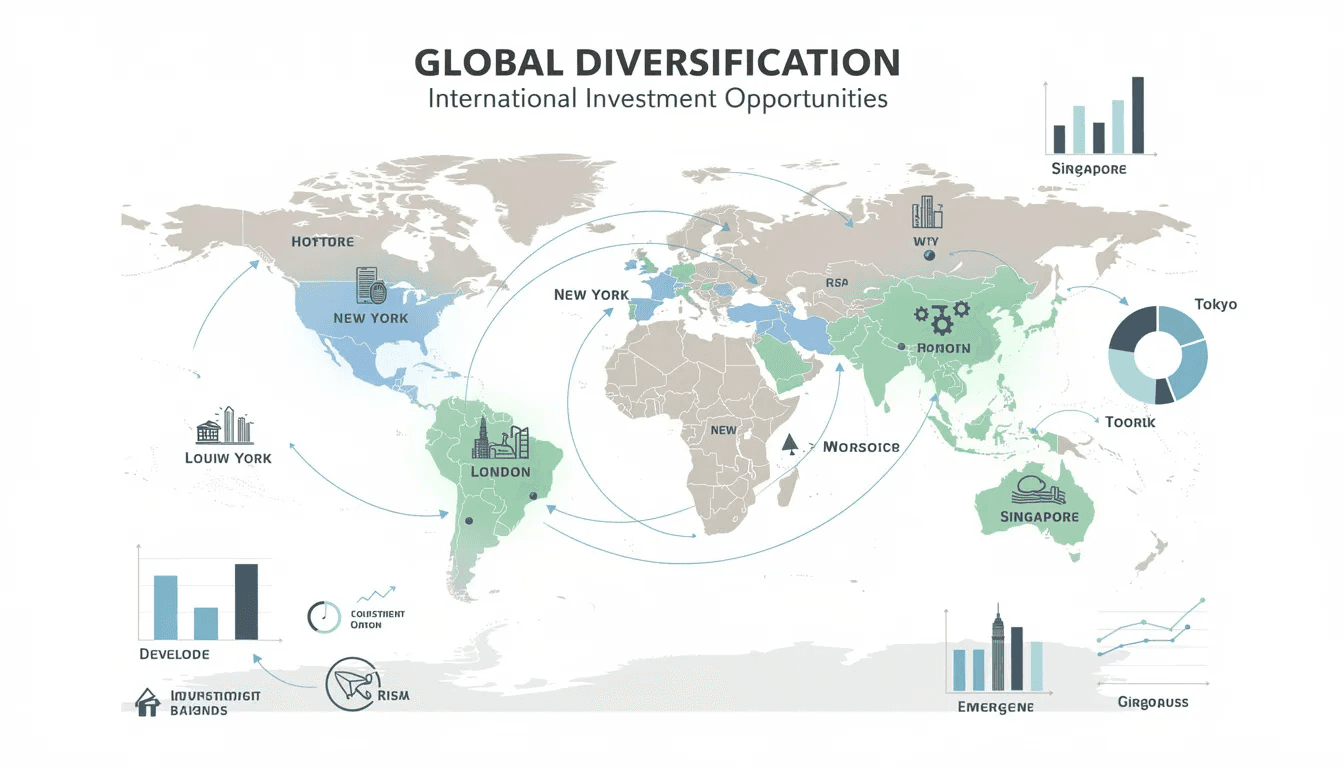
Swiss and Luxembourg Private Banking Services offer global diversification through stable jurisdictions with sophisticated financial infrastructure. These banking centers provide access to international markets, currency hedging capabilities, and specialized investment products unavailable through domestic institutions. Private banks in these jurisdictions typically require minimum relationships of $1-5 million while offering comprehensive wealth management services including tax planning and estate structuring.
Emerging Market Exposure through dedicated country funds and ETFs provides access to rapidly growing economies with higher return potential. Countries like India, Vietnam, and selected African markets offer compelling demographic trends and economic growth prospects that can enhance portfolio returns over extended periods. However, emerging market investments carry elevated political and currency risks requiring careful allocation and risk management. Emerging markets can also experience significant market volatility, making risk management and diversification especially important for high net worth investors.
Foreign Real Estate Investments in stable jurisdictions like Canada and Germany provide international diversification with relatively low political risk. Canadian real estate markets offer proximity to the United States with distinct economic drivers, while German property markets provide European exposure with strong tenant protections and stable rental yields. Many international real estate investments also offer residency benefits for investors meeting minimum investment thresholds.
Offshore Insurance Products enable tax-efficient wealth transfer strategies while providing international diversification. Variable universal life insurance policies issued in favorable jurisdictions can accumulate investment gains tax-deferred while facilitating wealth transfer to future generations. These structures prove particularly valuable for high net worth families with complex international tax situations.
Currency Hedging Strategies protect against dollar weakness while potentially generating returns through active currency management. High net worth investors can implement currency hedging through various mechanisms including foreign exchange forwards, currency ETFs, and direct foreign currency deposits. These strategies prove particularly valuable during periods of dollar weakness or elevated U.S. inflation.
International investing requires careful consideration of tax implications, regulatory requirements, and political risks. The Foreign Account Tax Compliance Act (FATCA) and similar regulations impose substantial reporting requirements on U.S. citizens with foreign financial accounts, creating compliance complexity that must be managed through qualified tax professionals.
Successful international investing typically involves partnerships with local expertise in target markets. This might include local real estate professionals for international property investments, country-specific investment managers for emerging market exposure, or international tax advisors for cross-border planning strategies.
Structured Products and Alternative Assets
Structured products and alternative assets provide high net worth investors with sophisticated investment vehicles designed to address specific risk-return objectives while offering exposure to non-traditional asset classes. These investments range from principal-protected instruments to collectibles with unique risk-return characteristics.
Market-Linked Certificates of Deposit provide principal protection while offering upside participation in equity market performance. These FDIC-insured instruments guarantee return of principal at maturity while providing returns linked to stock index performance, currency movements, or commodity prices. Typical structures offer 70-100% participation in positive market performance while protecting against downside risk. When considering structured notes, it is important to carefully evaluate credit risk, as the issuer's financial strength directly impacts the safety of your principal.
Fine Art Investments through platforms like Masterworks and partnerships with Art Basel provide exposure to alternative assets with low correlation to traditional markets. Historical art returns have averaged 7-8% annually with low correlation to stock and bond markets, making art valuable for portfolio diversification. Minimum investments typically range from $15,000-50,000 through fractional ownership platforms, though direct art acquisition requires substantially higher capital commitments.
Collectibles Investing encompasses vintage wines, classic cars, and rare watches as alternative store of value with potential appreciation. Wine investments through specialized funds target returns of 8-12% annually while providing tangible assets with intrinsic value. Classic car investing has generated average returns exceeding 10% annually over the past decade, though selection expertise and storage requirements create operational complexity.
Precious Metals Storage in secure facilities like Brink’s and Delaware Depository provides inflation protection and portfolio diversification. Physical gold and silver ownership offers protection against currency debasement and economic uncertainty while providing tangible asset exposure. Allocated storage in certified facilities ensures security while maintaining liquidity through established dealer networks.
Commodity Investments through direct ownership and managed futures provide exposure to agricultural products, energy, and industrial metals. Commodity investments can provide inflation protection and portfolio diversification while generating returns uncorrelated with traditional financial assets. Managed futures funds target returns of 8-15% annually through systematic commodity trading strategies.
The appeal of structured products and alternative assets for high net worth investors extends beyond diversification benefits. Many of these investments provide inflation protection, currency hedging, and downside protection features unavailable through traditional stocks and bonds. However, these benefits often come with increased complexity, reduced liquidity, and unique risks requiring specialized expertise. For fixed income or principal-protected products, managing interest rate sensitivity is also crucial; strategies such as bond laddering can help reduce exposure to interest rate changes and maintain steady cash flows.
Alternative asset investing requires careful due diligence regarding storage, insurance, and authentication requirements. Physical assets like art, wine, and precious metals require specialized storage facilities and insurance coverage, adding ongoing costs that must be factored into return calculations. Additionally, many alternative assets lack active secondary markets, creating potential liquidity constraints during market stress periods.
Family Office and Wealth Management Services
Family office structures represent the pinnacle of personalized wealth management, providing comprehensive financial services tailored specifically for ultra-high net worth families. These sophisticated organizations coordinate investment management, tax strategy, estate planning, and family governance within integrated service models designed for complex financial needs. Many families partner with a registered investment adviser to ensure fiduciary oversight and regulatory compliance in managing their wealth.
Single Family Office Establishment
Single family offices serve individual families with assets typically exceeding $100 million, providing complete control over investment decisions and family financial affairs. These organizations employ dedicated investment professionals, tax specialists, and estate planners working exclusively for one family’s interests.
The criteria for establishing single family offices include sufficient asset scale to justify dedicated staffing costs, complex financial situations requiring specialized expertise, and family preference for maximum privacy and control. Annual operating costs for single family offices typically range from $1-3 million, requiring substantial assets to achieve cost efficiency compared to external wealth management alternatives.
Single family offices enable in-house investment management and direct deal sourcing, providing access to exclusive opportunities unavailable through traditional wealth management relationships. Family office principals can participate directly in private equity deals, real estate syndications, and hedge fund launches, often securing enhanced terms through direct relationships with fund managers.
Comprehensive financial planning within single family offices integrates investment strategy with tax optimization, estate planning, and succession planning for family businesses. This holistic approach ensures coordination across all aspects of family wealth management while maintaining privacy and family values alignment across generations.
Next-generation education and governance structures represent critical components of successful single family offices. Many families establish formal education programs for younger family members, teaching financial literacy, investment principles, and family values. Governance structures including family councils and investment committees ensure decision-making processes scale effectively as families grow and wealth transfers across generations.
Multi-Family Office Partnerships
Multi-family offices provide shared services models for families with $25-100 million in assets, offering access to institutional investment opportunities and co-investments while sharing costs among multiple client families. These structures provide economies of scale unavailable to smaller single family offices while maintaining personalized service levels.
The shared services model enables access to investment opportunities typically reserved for much larger investors. Multi-family offices can aggregate client capital for private equity commitments, real estate investments, and hedge fund allocations, achieving minimums that individual families cannot meet independently.
Reduced costs compared to single family office structures make multi-family offices attractive for families lacking sufficient scale for dedicated organizations. Annual fees typically range from 0.75-1.5% of assets under management, substantially below the fixed costs of single family office operations while providing comparable investment access and planning services.
Peer networking and deal sharing among ultra-wealthy families represent valuable additional benefits of multi-family office participation. Families can share investment opportunities, best practices, and lessons learned while maintaining privacy regarding specific financial details. This collaborative approach often leads to enhanced investment opportunities and improved risk management.
Family office selection requires careful evaluation of investment philosophy, service capabilities, and cultural fit. The most successful relationships develop between families and offices sharing similar investment approaches, risk tolerance, and values regarding wealth stewardship and intergenerational wealth transfer.
Portfolio Construction for High Net Worth Investors
Portfolio construction for high net worth individuals requires sophisticated asset allocation strategies that extend far beyond traditional stock-bond models. Wealthy investors can access illiquid investments, alternative strategies, and complex structures unavailable to average investors, enabling portfolio optimization across multiple dimensions of risk and return.
A representative allocation model for high net worth portfolios demonstrates this complexity: 40% public equities provide global growth exposure across developed and emerging markets, 25% alternatives including private equity and hedge funds target enhanced returns with reduced market correlation, 20% fixed income encompasses both traditional bonds and private credit strategies, and 15% real assets including real estate and commodities provide inflation protection and portfolio diversification.
Geographic Diversification across US, Europe, and Asia-Pacific markets reduces concentration risk while providing exposure to different economic cycles and growth drivers. High net worth investors typically allocate 50-60% to U.S. investments, 20-30% to international developed markets, and 10-20% to emerging markets depending on risk tolerance and return objectives.
Risk Budgeting and Correlation Analysis for alternative investments ensures that portfolio risk remains manageable despite increased complexity. Professional portfolio managers employ sophisticated risk measurement tools to evaluate correlation patterns between different investment strategies, ensuring that alternatives provide genuine diversification benefits rather than simply adding complexity.
Liquidity Management represents a critical consideration for high net worth portfolios containing substantial illiquid investments. Most financial advisors recommend maintaining 2-3 years of expenses in cash and short-term bonds while ensuring that illiquid commitments don’t exceed 40-50% of total portfolio value. This liquidity buffer enables families to maintain lifestyle spending without forced asset sales during market stress periods.
Regular Rebalancing and Tax Loss Harvesting throughout the year optimizes portfolio performance while managing tax consequences. High net worth investors typically rebalance quarterly or semi-annually, though tax considerations may delay rebalancing activities to optimize tax efficiency. Systematic tax loss harvesting can enhance after-tax returns by 0.5-1% annually through careful implementation.
The portfolio management process for high net worth investors requires coordination across multiple investment managers, tax advisors, and estate planning professionals. Most successful approaches establish clear investment policy statements defining risk tolerance, return objectives, liquidity requirements, and tax constraints while delegating implementation details to qualified investment professionals.
Asset allocation optimization for high net worth investors must also consider unique constraints including concentrated stock positions, family business interests, and complex tax situations. Managing concentrated equity positions, such as large single-stock holdings, may require specialized strategies—like options collars—to mitigate risk while maintaining investment exposure. These factors may require customized allocation approaches that deviate from standard models while still achieving appropriate diversification and risk management objectives.
Modern portfolio theory applications for high net worth investors incorporate alternative assets, tax considerations, and liquidity constraints within optimization frameworks designed specifically for sophisticated investors. These approaches typically target risk-adjusted returns exceeding traditional 60/40 portfolios while managing the complexity inherent in alternative investment strategies. All investments involve risk, and disciplined risk management and diversification are essential for achieving long-term financial goals.
Due Diligence and Risk Management
Institutional-level due diligence processes represent essential protection for high net worth investors accessing exclusive investment opportunities. The sophistication and complexity of alternative investments require comprehensive evaluation procedures that extend far beyond traditional investment analysis.
Background Checks on Fund Managers and Key Personnel form the foundation of effective due diligence, requiring investigation of professional experience, regulatory history, and personal integrity. High net worth investors should verify educational credentials, professional certifications, and prior investment performance while investigating any regulatory violations or legal disputes. This process typically involves third-party background investigation firms specializing in financial services professionals.
Legal Structure Analysis and Regulatory Compliance Verification ensures that investment vehicles comply with applicable securities laws and provide appropriate investor protections. Due diligence should examine fund documents including private placement memoranda, limited partnership agreements, and subscription documents to understand fee structures, investment restrictions, and redemption provisions.
Performance Attribution and Benchmark Comparison Methodologies enable objective evaluation of manager skill versus market performance. High net worth investors should request detailed performance data including gross and net returns, volatility measures, and drawdown statistics compared to relevant benchmarks. This analysis should cover multiple market cycles to evaluate consistency and risk management capabilities.
Regular Portfolio Stress Testing and Scenario Analysis helps high net worth investors understand potential portfolio behavior during adverse market conditions. Professional wealth managers employ sophisticated modeling tools to simulate portfolio performance during various stress scenarios including market crashes, interest rate shocks, and currency devaluations.
Risk management for high net worth portfolios requires continuous monitoring of concentration risk, liquidity risk, and counterparty risk across all investment holdings. Many families establish formal risk management policies defining maximum allocations to individual managers, strategies, and asset classes while requiring regular reporting on portfolio risk characteristics.
The due diligence process should also evaluate operational infrastructure including custody arrangements, auditing procedures, and compliance programs. High net worth investors require confidence that investment managers maintain institutional-quality operations capable of safeguarding substantial asset amounts while providing transparent reporting and communication.
Professional due diligence support through qualified investment advisors, attorneys, and accountants provides essential expertise for evaluating complex investment opportunities. The most effective approaches combine internal family office capabilities with external specialist expertise to ensure comprehensive evaluation of potential investments.
Ongoing monitoring represents a critical component of effective risk management, requiring regular review of investment performance, manager changes, and market developments affecting portfolio holdings. High net worth families typically establish formal investment committees responsible for ongoing oversight and decision-making regarding investment strategy modifications.

The information provided in this section is for educational purposes only and does not constitute personalized investment advice. Readers should consult a qualified professional for tailored guidance based on their individual circumstances.
Conclusion
High net worth investment opportunities represent a sophisticated ecosystem of strategies, structures, and vehicles designed specifically for wealthy investors seeking to optimize their financial outcomes. From private equity and hedge funds to international diversification and family office services, these exclusive opportunities provide access to enhanced returns, tax efficiency, and risk management capabilities unavailable through traditional investment approaches.
The key to successful high net worth investing lies in understanding the unique advantages and complexities of these sophisticated strategies. While minimum investment amounts, extended time horizons, and complex structures create barriers to entry, they also provide opportunities for enhanced returns and portfolio optimization that justify their complexity for qualified investors.
However, the sophistication of high net worth investment opportunities requires professional guidance from qualified advisors specializing in complex financial planning. The integration of investment strategy, tax optimization, estate planning, and family governance demands expertise across multiple disciplines that few individual investors can master independently.
For high net worth individuals seeking to optimize their investment outcomes, the path forward involves careful evaluation of available opportunities, comprehensive due diligence on potential investments, and integration of investment decisions within broader wealth management objectives. The exclusive nature of these opportunities creates significant potential for enhanced returns and tax efficiency, but only when implemented with appropriate professional guidance and risk management.
The financial world continues evolving with new opportunities, regulatory changes, and market dynamics affecting high net worth investment strategies. Staying informed about emerging trends, maintaining relationships with qualified investment managers, and regularly reviewing portfolio allocation ensures that wealthy investors can capitalize on the full range of opportunities available to them while managing the risks inherent in sophisticated investment strategies.
Whether through family office establishment, alternative asset allocation, or international diversification, high net worth investors possess unique advantages that, when properly leveraged, can create substantial wealth preservation and growth opportunities for current and future generations.
Introduction to Investment Strategies for High Net Worth Investors
High net worth investors require a financial approach that transcends conventional methods—and frankly, generic strategies frustrate me. When working with clients possessing investable assets exceeding $1 million, I encounter unique challenges and opportunities that demand sophisticated solutions. My objective is crystal clear: balance aggressive growth with wealth preservation and tax efficiency, while masterfully navigating complex financial instruments and market dynamics.
Unlike typical investors, my high net worth clients blend traditional investments—stocks and bonds—with diverse alternative investments including private equity, hedge funds, and real estate. These alternatives deliver enhanced portfolio diversification and superior return potential, but they introduce complexity that demands expertise. Ineffective planning bothers me profoundly. The investment process I design is highly personalized, meticulously accounting for individual risk tolerance, liquidity requirements, and long-term financial objectives—because cookie-cutter approaches are non-negotiable failures.
My role as a skilled financial advisor is decisive in this environment. I design and implement tailored investment strategies that optimize asset allocation, identify suitable alternative investments, and ensure every decision aligns with the investor's risk profile and goals. Tax efficiency represents another critical battleground—high net worth investors face significant tax liabilities that will erode returns if not managed proactively. I thrive on eliminating these inefficiencies.
Ultimately, the most effective investment strategies I develop integrate traditional and alternative assets, balance growth with preservation, and leverage professional expertise to navigate financial complexity. By adopting this holistic approach, I empower high net worth individuals to achieve their financial goals while managing risk and maximizing after-tax returns. Strategic foresight and decisive action eliminate wealth-eroding inefficiencies—turning complexity into clarity for optimized financial outcomes.
Legacy Planning and Charitable Giving
For my high net worth clients, legacy planning and charitable giving represent fundamental pillars of intelligent financial strategy. As an advisor who thrives on maximizing outcomes, I've witnessed too many wealthy families accumulate substantial assets without decisive planning for meaningful impact—both for future generations and broader community benefit. Achieving these objectives demands strategic thinking that addresses succession planning, wealth transfer, and philanthropy with ruthless tax efficiency.
Legacy planning encompasses a comprehensive range of activities—and frankly, half-measures irritate me profoundly. I focus on establishing robust trusts and succession frameworks that ensure seamless asset transfers, while creating governance structures that preserve family values across multiple generations. My high net worth clients consistently benefit from sophisticated vehicles like private foundations and donor advised funds that I strategically deploy for charitable giving. These structures deliver significant tax advantages—because unnecessary tax burdens are simply unacceptable—while providing flexibility for supporting philanthropic causes over extended timeframes.
Donor advised funds represent one of my preferred strategies, allowing clients to make charitable contributions, secure immediate tax deductions, and recommend grants to preferred charities at their optimal timing. Private foundations offer even greater control and enable family member involvement in ongoing philanthropic efforts, fostering a giving culture that endures for generations. As someone who values long-term strategic thinking, I find these structures particularly effective.
Effective legacy planning requires systematic coordination with estate planning and tax advisors—because fragmented approaches drive me crazy and waste opportunities. I ensure wealth transfers to heirs occur with maximum tax efficiency through carefully orchestrated strategies including gifting, trusts, and charitable bequests, all designed to minimize estate taxes and amplify charitable impact. My clients appreciate this decisive, coordinated approach.
By integrating legacy planning and charitable giving into comprehensive financial strategies, I empower my high net worth clients to achieve personal and financial objectives while creating lasting impact for future generations and causes they value most. Strategic foresight and decisive execution transform complex legacy challenges into optimized outcomes—precisely what drives my passion for this work.
Key Considerations for High Net Worth Investors
High net worth investors face a distinct set of challenges that demand decisive action—and frankly, inefficient wealth management bothers me profoundly. Risk management stands as the foremost priority because preserving substantial wealth trumps aggressive growth every single time. As someone who thrives on systematic approaches, I recognize that high net worth individuals typically maintain lower risk tolerance and require robust capital preservation strategies. The solution is clear: implement comprehensive risk management frameworks across their entire portfolio—because mediocre protection simply won't suffice.
Tax efficiency represents another critical battleground where I've seen too many wealthy investors hemorrhage money unnecessarily. The complex tax situations accompanying significant wealth demand strategic foresight and decisive execution. I systematically deploy tax loss harvesting, coordinate charitable giving strategies, and leverage tax-advantaged investment vehicles to eliminate tax inefficiencies. Working with knowledgeable financial advisors isn't optional—it's non-negotiable for navigating these complexities and ensuring investment decisions align perfectly with each investor's unique tax landscape.
When I evaluate investment strategies and asset allocations, three factors drive my decision-making process: investment time horizon, liquidity requirements, and long-term financial objectives. Alternative investments—private equity, hedge funds—provide valuable diversification and superior return potential, but they come with complex fee structures and limited liquidity that demand thorough due diligence. Understanding these trade-offs is absolutely crucial for making informed decisions that actually move the needle on wealth accumulation.
Additionally, I've learned that high net worth investors require personalized investment management that accounts for their specific objectives, risk tolerance, and family circumstances—because cookie-cutter approaches simply don't work at this wealth level. Through systematic research, leveraging professional expertise, and conducting regular strategy reviews, I ensure these individuals effectively balance risk and reward. My goal remains crystal clear: help them achieve their financial objectives while preserving wealth for future generations through decisive, efficient wealth management strategies.