Dec 29, 2025
Financial Vehicles: A Practical Guide to Types, Uses, and Trade-Offs
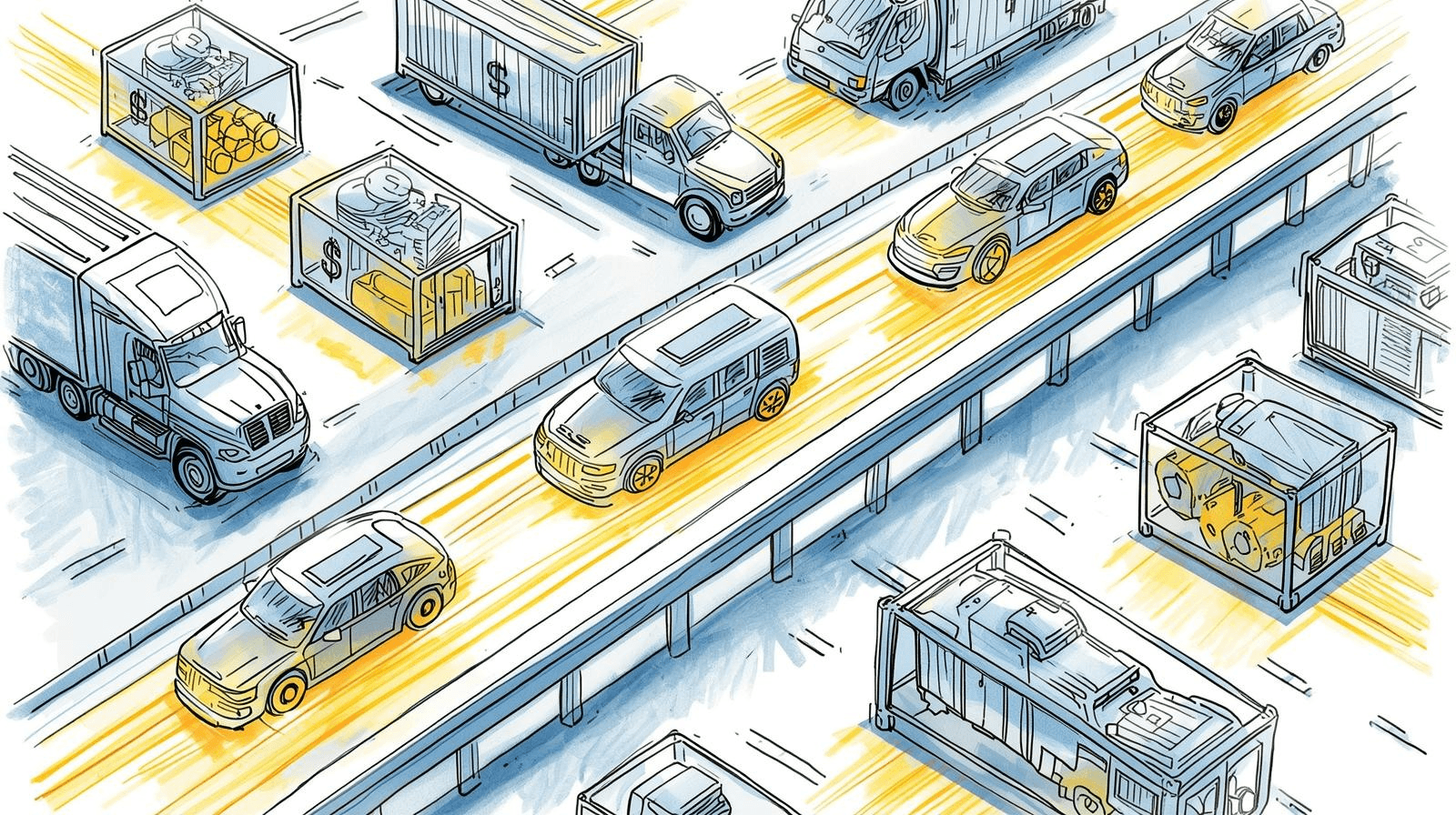
If you’ve ever wondered where to put your money—and how to make it work harder—you’re really asking about financial vehicles. Financial vehicles are a core concept in the finance industry, and understanding them is essential for navigating the broader finance and insurance sector. Yet most guides on this topic dive straight into stock picking or fund comparisons without explaining the bigger picture.
Here’s the thing: understanding the wrapper matters just as much as understanding what goes inside it. A Roth IRA and a taxable brokerage account can both hold the same S&P 500 index fund, but they’ll produce wildly different outcomes over 30 years because of how taxes work.
This guide breaks down the major categories of financial vehicles available to U.S. individuals and families, with current figures as of 2025. We’ll cover the various types of financial vehicles, how each type works, what trade-offs to expect, and how to pick the right mix for your situation within the finance industry.

Quick Answer: What Are Financial Vehicles?
Financial vehicles are the specific accounts, products, and legal structures you use to hold, grow, or transfer money. Think of them as containers—each with its own rules about taxes, access, and protection. Different financial vehicles are also subject to varying regulations depending on their type and jurisdiction, which can impact their risks, rewards, and suitability for investors.
The vehicle itself (like a 401(k), trust, or brokerage account) is distinct from the underlying investments inside it (stocks, bonds, ETFs, or cash equivalents). This distinction trips up many investors. A 401(k) isn’t an investment—it’s a tax-advantaged wrapper that can hold mutual funds, target-date funds, or company stock. The vehicle determines the tax treatment and withdrawal rules; the investments determine the risk and return profile.
Here’s a concrete example of how this works in practice: Your paycheck gets deposited into a checking account → you transfer $500 monthly to a Roth IRA at Fidelity (the vehicle) → inside that Roth IRA, you buy shares of an S&P 500 index fund (the underlying asset). Another example: You inherit money → it goes into a revocable living trust (the vehicle) → the trustee invests it in municipal bonds and dividend-paying stocks (the assets).
This article focuses on vehicles available to individuals and families in the U.S. context. Laws, contribution limits, and tax treatment can change—and have changed significantly between 2017 and 2025—so verify current rules before making major decisions.
Major categories covered in this guide:
Investment accounts (taxable and tax-advantaged)
Pooled investment vehicles like mutual funds and ETFs
Retirement plans (employer-sponsored and individual)
Real estate and business-oriented vehicles
Insurance-based vehicles and trusts
Decision frameworks for choosing among them
Core Investment Vehicles: Accounts and Wrappers
Most people encounter account-type vehicles before they think about specific securities. You open a 401(k) at work or a brokerage account online, and only then do you start choosing what to buy inside it. Monitoring cash flow in and out of these accounts is essential for managing personal finances and achieving short-term goals.
Taxable brokerage accounts are the most flexible option. These are accounts at firms like Fidelity, Vanguard, Charles Schwab, or Robinhood where you can buy and sell stocks, bonds, ETFs, and mutual funds without contribution limits or early withdrawal penalties. The trade-off? No tax advantages. Capital gains and dividends are taxable each year under current IRS rules, which means your investment returns get chipped away annually. Still, the easy access makes these accounts essential for goals that fall outside retirement or education.
Tax-advantaged retirement accounts flip that equation. With a 401(k), 403(b), or governmental 457(b) plan sponsored by your employer, you contribute pre-tax dollars (or after-tax with Roth versions) up to annual limits—around $23,000 in 2025, with additional catch-up contributions for those 50 and older. Your money grows without annual taxation, though you’ll pay taxes upon withdrawal in traditional accounts. Traditional and Roth IRAs offer similar benefits for individuals, with 2025 contribution caps around $7,000 (plus catch-ups). The key difference: traditional accounts offer tax deferral now but taxation later, while Roth accounts flip that—you pay taxes upfront but enjoy tax-free withdrawals if rules are met.
Education-focused vehicles serve families saving for college or private school. 529 college savings plans, sponsored by individual states, offer tax-advantaged growth when funds are used for qualified education expenses. Coverdell ESAs provide similar benefits but with lower contribution limits (around $2,000 annually) and more flexibility for K-12 expenses.
Health Savings Accounts (HSAs) deserve special attention as perhaps the most tax-efficient vehicle available. Linked to high-deductible health plans, HSAs offer triple tax advantages: contributions reduce taxable income, growth is tax-free, and withdrawals for eligible medical expenses escape taxation entirely. Current annual contribution ranges hover around $4,150 for individuals and $8,300 for families in 2025. Many investors use HSAs as stealth retirement accounts, paying medical expenses out-of-pocket now and letting the HSA balance compound for decades.
Types of Investment Vehicles by Asset Class
Many investors and financial advisors use “investment vehicle” to mean the asset itself—stocks, bonds, real estate—rather than the account holding it. This section follows that convention for clarity.
Ownership investments give you a stake in something that can grow in value:
Individual stocks represent equity ownership in companies. The S&P 500 has delivered roughly 10% nominal annualized returns over the past century, but that average masks brutal drawdowns—the index dropped over 50% from peak to trough during 2008-2009.
Real estate through direct ownership (single-family rentals, small multifamily buildings) offers income through rent payments and appreciation potential. Returns vary dramatically by market, with some U.S. cities seeing 7-10% annual appreciation while others remain flat for years.
Lending investments position you as the creditor rather than owner:
U.S. Treasury bonds and bills have offered yields in the 4-5% range during 2024-2025, backed by the full faith and credit of the federal government. Many bonds and certificates of deposit offer a fixed interest rate, providing predictable returns and protection from interest rate fluctuations.
Investment-grade corporate bonds from issuers like Apple or Microsoft typically yield 1-2% more than comparable Treasuries in exchange for slightly higher credit risk.
Municipal bonds issued by state and local governments fund infrastructure projects while offering tax advantages—interest is often exempt from federal taxes and sometimes state taxes for residents of the issuing state.
Cash and cash equivalents prioritize safety over growth:
High-yield savings accounts, money market funds, and short-term Treasury bills currently yield 4-5% in the current interest rate environment. These vehicles are considered low risk, making them attractive for conservative investors seeking capital preservation.
These vehicles typically lag inflation over long periods, making them poor choices for wealth building but essential for emergency funds and short-term goals where you can’t afford to lose principal.
Alternative investment vehicles fall outside traditional stocks and bonds:
Commodities like gold, oil, and agricultural futures offer diversification benefits but can be volatile and produce no income.
Cryptocurrencies such as Bitcoin and Ethereum have generated spectacular returns for some investors and devastating losses for others, with regulatory uncertainty persisting into 2025. The price of digital assets is determined by transactions recorded on the blockchain, and transaction volume can impact liquidity and trading activity.
Collectibles (fine art, vintage wine, sports cards) can appreciate significantly but suffer from illiquidity, high transaction costs, and the need for specialized expertise.
The key insight: different asset types behave differently over 5-10+ year horizons. Stocks have historically delivered superior long-term returns but with gut-wrenching volatility. Bonds provide more stability but limited growth. Cash preserves capital but gets eroded by inflation. Building wealth typically requires exposure to ownership investments, while maintaining financial stability requires some allocation to lending investments and cash.
Pooled Financial Vehicles: Funds and Trust Structures
Pooled investment vehicles combine money from multiple investors to buy a diversified portfolio of assets. Instead of purchasing 500 individual stocks yourself, you buy shares in a fund that owns all of them. Professional managers or rules-based strategies handle the selection and rebalancing.
Mutual funds are the original pooled vehicle for retail investors. These open-end funds are priced at net asset value (NAV) once per trading day, calculated by dividing total fund assets by shares outstanding. Actively managed funds employ a portfolio manager who is responsible for overseeing and adjusting the fund's asset allocation to optimize performance, charging expense ratios typically ranging from 0.50% to 1.50% annually. Index funds simply track a benchmark (like the S&P 500) and charge far less—often 0.03% to 0.20%. Most mutual funds have minimum investment amounts between $1,000 and $3,000 at major fund companies, though some have eliminated minimums entirely.
Exchange traded funds (ETFs) share the pooled structure of mutual funds but trade intraday on stock exchanges like individual stocks. This means you can buy or sell at any point during market hours rather than waiting for end-of-day NAV calculation. ETFs have captured massive market share partly due to lower fees—many broad U.S. stock ETFs from sponsors like Vanguard, iShares (BlackRock), and State Street charge expense ratios under 0.10%. They also tend to be more tax-efficient than mutual funds because of how they handle redemptions.
Closed-end funds issue a fixed number of shares that then trade on exchanges at prices determined by supply and demand. This means shares can trade at discounts or premiums to the underlying NAV—sometimes substantial ones. Closed-end funds are often used for specialized sectors or income strategies and frequently employ leverage to boost yields.
Other pooled vehicles worth understanding:
Unit investment trusts (UITs) hold fixed portfolios that don’t change until the trust terminates on a predetermined date, offering transparency but no active management.
Money market funds function as pooled cash-equivalent vehicles, with institutional and retail categories offering different minimum investments and yield profiles.
Hedge funds and private equity funds represent pooled vehicles available only to accredited investors (generally those with net worth exceeding $1 million or income above $200,000). These structures often feature lock-up periods preventing withdrawals for years and charge performance fees of 20% on profits plus 2% annual management fees. Managing these vehicles requires active oversight and decision-making by experienced investment teams to maintain or improve performance.

Retirement and Long-Term Savings Vehicles
Retirement vehicles matter more than ever given demographic realities. Baby Boomers are aging into their late 70s and 80s, life expectancy continues climbing, and Social Security faces projected shortfalls by the mid-2030s that could reduce benefits without congressional action. Building independent retirement resources through tax-advantaged vehicles has become essential rather than optional.
Employer-sponsored plans like 401(k)s and 403(b)s remain the primary retirement vehicle for most workers. The most valuable feature is often the employer match—a common structure is 50% of the first 6% of salary you contribute, essentially a 3% raise for participating. Automatic enrollment has become widespread, with many plans defaulting new employees into target-date funds as their investment strategy. These funds automatically adjust their asset allocation from stock-heavy to bond-heavy as the target retirement date approaches.
Individual retirement accounts (IRAs) complement employer plans or serve as the primary vehicle for self-employed individuals. Traditional IRAs offer tax-deductible contributions if your income falls below certain thresholds (or if you’re not covered by a workplace plan), with taxes due upon withdrawal. Roth IRAs flip the equation—no upfront deduction, but qualified withdrawals are completely tax-free. Income limits restrict direct Roth contributions; in 2025, phase-outs begin around $150,000 for single filers and $236,000 for married couples filing jointly. Required minimum distributions (RMDs) force traditional IRA owners to begin withdrawals in their early 70s, while Roth IRAs have no RMDs during the original owner’s lifetime.
Annuity-based retirement vehicles work differently from market accounts. These are contracts with insurance companies that guarantee income payments, either immediately or starting at a future date. Fixed annuities pay predetermined amounts regardless of market performance. Variable annuities tie payments to underlying investment portfolios you select. Indexed annuities split the difference, offering returns linked to market indices with downside protection. The pros include guaranteed income streams and longevity protection—you can’t outlive an annuity. The cons: fees typically run higher than comparable investments, surrender periods can lock up your money for years, and the contracts are notoriously complex.
Government and military plans serve federal employees and service members. The Thrift Savings Plan (TSP) mirrors a 401(k) structure but with extremely low costs and limited investment options: the C Fund (large U.S. stocks), S Fund (small and mid-cap stocks), I Fund (international stocks), F Fund (bonds), and G Fund (government securities). Lifecycle L Funds provide all-in-one allocations similar to target-date funds.
Real Estate and Business-Oriented Financial Vehicles
Certain legal entities function specifically as vehicles to hold real estate or operating businesses, with significant implications for taxes, liability, and management control.
Direct real estate vehicles range from personal ownership to more sophisticated structures. Holding a rental property in your own name is simple but exposes your personal assets to potential lawsuits from tenants or visitors. Many investors instead use limited liability companies (LLCs) to hold real estate investment properties. A single-member LLC owning a duplex in Denver, for example, can shield the owner’s other assets from lawsuits related to that property while maintaining passthrough taxation—profits flow to your personal return without corporate-level taxes.
Real estate investment trusts (REITs) offer exposure to real estate without the headaches of direct ownership. These entities own income-producing properties and must distribute at least 90% of taxable income as dividends to shareholders under U.S. tax law. Equity REITs own physical properties (office buildings, apartments, warehouses, data centers), while mortgage REITs hold real estate debt rather than property. Public REITs trade on the NYSE and Nasdaq like regular stocks, offering liquidity and transparency. Non-traded and private REITs restrict liquidity but may offer higher yields or access to specialized properties.
Business ownership vehicles structure how companies operate and get taxed:
C-corporations are distinct legal entities that pay corporate income tax, with shareholders paying again on dividends—the famous “double taxation” structure. However, C-corps offer the most flexibility for raising capital and can have unlimited shareholders.
S-corporations avoid double taxation through passthrough treatment but face restrictions: no more than 100 shareholders, all shareholders must be U.S. citizens or residents, and only one class of stock is allowed.
LLCs offer passthrough taxation with fewer restrictions than S-corps and provide liability protection. Most small businesses and real estate holdings use LLC structures.
Private equity and venture capital funds pool capital from institutional investors and accredited individuals to take ownership stakes in private companies. These funds invest in businesses before they go public (venture capital) or buy and restructure existing companies (private equity). Lock-up periods typically run 7-10 years, and minimum investments often start at $250,000 to $1 million. Individual investors can access similar exposure through publicly traded business development companies (BDCs) or private equity ETFs, though these vehicles capture only a portion of the private market’s characteristics.

Insurance, Trusts, and Other Specialized Financial Vehicles
Advanced financial vehicles typically serve estate planning, risk management, or tax optimization purposes. These structures make the most sense for higher-net-worth households, but understanding them helps everyone evaluate whether specialized planning might benefit their situation.
Cash-value life insurance combines death benefit protection with investment-like savings components. Whole life policies guarantee fixed premiums and a minimum cash value growth rate, typically around 3-4%. Universal life offers more flexibility in premium payments and death benefits. Both allow tax-deferred growth of the cash value and potential borrowing against it without triggering taxable events. The trade-offs: fees and commissions run significantly higher than comparable investments, surrender charges can trap your money for a decade or more, and the complexity makes comparison shopping difficult. These vehicles make the most sense when you’ve maxed out other tax-advantaged options and have permanent insurance needs.
Trusts are legal entities that hold assets for beneficiaries according to terms you specify. Revocable living trusts remain under your control during your lifetime—you can change beneficiaries, move assets in and out, and dissolve the trust entirely. Their primary benefits: avoiding probate (the public court process for distributing assets after death) and maintaining privacy about your estate. Irrevocable trusts surrender control in exchange for potential estate tax benefits and asset protection. Once assets enter an irrevocable trust, they’re generally outside your taxable estate, which matters for those above federal estate tax thresholds (around $13 million per person in 2025, though this could revert to roughly half that amount after 2025 under current law).
Charitable vehicles help donors optimize tax benefits while supporting causes they care about:
Donor-advised funds (DAFs) allow you to bunch charitable deductions into a single tax year while granting to charities over many years. You get an immediate tax deduction when you contribute to the DAF, then recommend grants to qualified charities whenever you choose.
Charitable remainder trusts (CRTs) provide income to you or other beneficiaries for a specified period, with the remainder going to charity. This can defer capital gains on appreciated assets while generating an income stream.
Charitable lead trusts (CLTs) flip this structure—charities receive income for a period, then remainder beneficiaries (often family members) receive what’s left.
Business and asset protection structures serve families with substantial wealth or complex holdings. Family limited partnerships (FLPs) can consolidate family assets, facilitate gifting strategies, and provide some asset protection. Series LLCs (available in some states) allow a single entity to hold multiple properties or businesses in separate “series” with liability segregated between them.
A note of caution: Laws and tax treatment for these specialized vehicles change regularly. The Tax Cuts and Jobs Act of 2017 dramatically altered estate tax thresholds, and provisions are scheduled to sunset after 2025. State laws vary significantly for trusts and LLCs. Always verify current rules with qualified legal and tax professionals before implementing these strategies.
Investment Platforms: Where and How to Access Financial Vehicles
Investment platforms serve as the decisive gateways—the essential bridges that connect serious investors to the expansive world of financial vehicles. I've witnessed firsthand how the right platform transforms portfolio management from overwhelming complexity into systematic wealth-building efficiency. Whether you're targeting mutual funds, exchange traded funds (ETFs), hedge funds, or sophisticated investment vehicles, a strategically chosen platform delivers immediate access to comprehensive assets and services—precisely calibrated to your financial objectives and risk parameters.
Types of Investment Platforms
How to Choose the Right Financial Vehicles for Your Situation
Selecting among different investment vehicles doesn’t require an advanced degree—it requires clarity about your circumstances and goals. Here’s a practical decision framework:
Step 1: Clarify your time horizon. Money you’ll need within 0-2 years cannot afford to lose significant value, which rules out most stock market exposure. Money for 3-10 year goals can tolerate modest volatility. Money for 10+ year goals can ride out major market cycles, as even the 2008 crash fully recovered within about five years.
Step 2: Identify your primary goal. Different goals call for different financial instruments:
Emergency fund (3-6 months expenses): liquidity and safety matter most
Retirement (20+ years away): growth and tax efficiency matter most
College for children: tax advantages and timeline alignment matter most
Wealth transfer to heirs: estate planning and legal structures matter most
Step 3: Assess your risk tolerance and capacity. Risk tolerance is psychological—how would you actually react to seeing your portfolio drop 40%? Risk capacity is financial—can you afford to wait for recovery, or would a major loss derail essential goals? The 2008-2009 crisis saw many investors panic-sell at the bottom because they overestimated their tolerance. March 2020’s 30% crash tested investors again—those who stayed invested recovered within months.
Match goals to vehicles:
Time Horizon | Appropriate Vehicles |
|---|---|
0-2 years | High-yield savings accounts, money market funds, short-term Treasuries |
3-10 years | Balanced mutual funds or ETF portfolios, short/intermediate bond funds, CDs |
10+ years | Stock-heavy index funds in 401(k)/IRA/529 vehicles, real estate investment trusts, small alternative allocations |
Tax considerations should guide sequencing. Generally, fill tax-advantaged accounts before investing heavily in taxable accounts:
Capture any employer 401(k) match (that’s free money)
Max out HSA if eligible (triple tax advantage)
Max out IRA contributions
Return to 401(k) to reach annual limit
Fund 529 if saving for education
Use taxable brokerage for remaining savings
Work with a financial advisor (preferably a fiduciary who must act in your interest) for complex situations involving business ownership, significant assets, or unusual income patterns.
Diversification across different vehicles and asset types manages risk more effectively than concentrating in any single investment. A simple three-fund portfolio—using a total U.S. stock market index fund, a total international stock index fund, and a total bond market index fund—provides broad exposure at minimal cost. Many investors split this across multiple investing vehicles: bonds in tax-advantaged accounts (where their tax-inefficient interest income is sheltered), stocks in Roth accounts (where their higher growth potential compounds tax-free), and tax-efficient index funds in taxable accounts.
Make reviewing your financial vehicles an annual habit. Each January, assess whether your allocation still matches your goals, whether you’re taking full advantage of available tax benefits, and whether any major life changes warrant adjustments. Rebalance if your targets have drifted significantly. Document your reasoning so future-you understands past decisions.
The world of other financial vehicles and specialized structures will always offer complexity. But for most households, the fundamentals remain straightforward: spend less than you earn, shelter investments from unnecessary taxes using appropriate vehicles, maintain a diversified portfolio matched to your timeline, and revisit the plan regularly. The specific funds and accounts matter far less than consistently executing this basic framework over decades.