Mar 2, 2026
Difference Between Gold and Silver: Key Facts for Investors

Gold and silver have captivated investors for centuries, but understanding the difference between gold and silver is essential before adding either to your portfolio. Gold has recently hit record highs, highlighting its strong performance and making silver appear more accessible and potentially undervalued by comparison. While both precious metals serve as hedges against economic uncertainty, they behave quite differently in practice—and choosing the right one depends on your goals, budget, and risk tolerance.
Introduction to Precious Metals
Precious metals have long held a special place in human history, prized for their rarity, beauty, and enduring value. Gold and silver, in particular, have served as the backbone of monetary systems, adorned countless pieces of jewelry, and provided a reliable store of wealth across generations. Today, these metals remain at the heart of many investment strategies, offering a tangible way to diversify portfolios and hedge against economic uncertainty.
The value of gold and silver is shaped by a complex web of supply and demand relationships. Factors such as mining output, industrial usage, and investor appetite all play a role in determining prices. Additionally, broader economic forces—like interest and exchange rates—can drive significant price movements in the precious metals markets. For example, when interest rates are low or currencies weaken, investors often turn to gold and silver as safe-haven assets.
There are several ways to gain exposure to these metals. Many investors choose to purchase physical precious metals, such as gold and silver coins or bars, appreciating the security and tangibility they provide. Silver coins, in particular, offer an accessible entry point for those looking to start small. Alternatively, precious metal ETFs allow investors to track the price of gold and silver without the need to store or insure physical assets, making it easier to respond to market changes.
Whether you’re drawn to the historical allure of gold, the industrial versatility of silver, or the dynamic price movements of both, understanding the fundamentals of precious metals is the first step toward making informed investment decisions.
Quick Summary: Main Differences Between Gold and Silver
From an investor’s perspective, gold and silver differ significantly in price, volatility, primary uses, and portfolio role. Gold functions primarily as a store of value and safe-haven asset, while silver straddles the line between investment metal and industrial commodity.
Here’s a quick comparison of the two metals:
Price per ounce: Gold trades around $1,900–$2,100 per troy ounce, while silver prices typically range from $22–$26 per ounce in early 2024. Silver value stands out for its relative affordability, making it an appealing entry point for investors seeking exposure to precious metals at a lower cost than gold.
Volatility: Silver’s daily price movements are often 2–3 times greater than gold volatility, making it more speculative
Main uses: About 50% of gold demand comes from jewelry and investment; more than half of silver’s demand stems from industrial applications
Portfolio role: Gold serves as a defensive, stability-focused holding; silver offers more speculative growth potential with higher risk
Both gold and silver act as hedges against rising inflation and fiat currency devaluation. However, they respond differently to economic events. Gold tends to shine during economic declines and market downturns, while silver can outperform during periods of strong economic growth when industrial demand surges. Historically, silver may follow gold's rise, often increasing in value after gold has moved upward, which can present additional investment opportunities.
The sections below explore each difference in depth, helping you determine which metal—or combination of both—fits your investment objectives.
Physical and Chemical Differences of Precious Metals
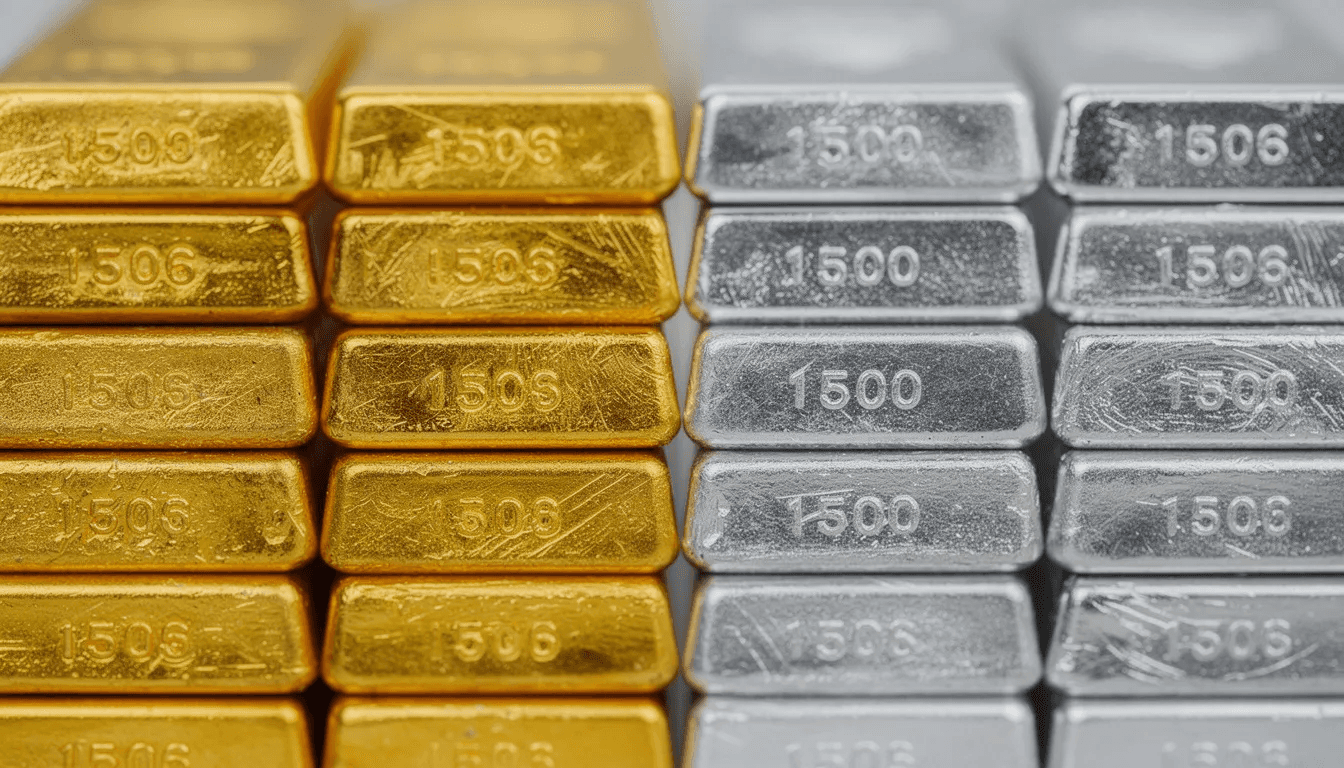
The visible and physical characteristics of gold and silver explain much about their different uses and values. These properties have shaped how civilizations have employed each metal for thousands of years.
Gold is the iconic yellow metal, bearing the chemical symbol Au (from the Latin aurum) and atomic number 79. It’s remarkably dense at 19.32 grams per cubic centimeter—nearly double that of silver. Gold melts at approximately 1,064°C and boasts exceptional resistance to corrosion and tarnish. Unlike silver, gold maintains its luster indefinitely without special care, which is why engagement rings and wedding bands are traditionally crafted from gold or white gold alloys.
Silver presents a brilliant white metallic sheen, with chemical symbol Ag (from argentum) and atomic number 47. It melts at a lower temperature of about 961°C. What sets silver apart is its conductivity: silver is the best electrical and thermal conductor among all elements, scoring 100 on a 0–100 conductivity scale where copper trails at 97 and gold at 76. However, unlike gold, silver tarnishes when exposed to sulfur compounds in the air, developing a patina over time that requires periodic cleaning.
Gold’s resistance to corrosion and its scarcity made it the natural choice for currency and jewelry throughout history. Silver’s superior conductivity, meanwhile, drove its adoption in automobile electrical systems, solar panels, and countless electronic devices. This fundamental divergence—gold as the enduring symbol of wealth, silver as the workhorse of modern industry—continues to shape how investors approach these two metals today.
Price Level, Supply and Demand Relationships, and Gold–Silver Ratio
Gold has consistently commanded a far higher price per ounce than silver, and investors track this relationship through the gold–silver ratio. Understanding this ratio helps you evaluate whether one metal may be relatively cheap or expensive compared to the other.
In early 2024, gold often traded near $1,900–$2,100 per troy ounce, while silver hovered around $22–$26 per ounce. These price levels mean gold costs roughly 75–85 times more than silver on a per-ounce basis.
The silver ratio calculation is straightforward: divide the gold price by the silver price. For example, if gold trades at $2,000 and silver at $25, the ratio equals 80. This means one ounce of gold could theoretically purchase 80 ounces of silver at current market conditions.
Historical context reveals how dramatically this ratio can shift. In some pre-20th century monetary systems, the ratio sat near 15:1 to 16:1 when both metals backed official currencies. The late 20th and early 21st centuries have seen ratios more commonly between 40:1 and 80:1. During the COVID-19 panic in March 2020, the ratio spiked above 120:1 as investors fled to gold while industrial demand for silver collapsed.
Many investors use the ratio as a relative value indicator rather than a precise trading signal. A historically high ratio can suggest silver is cheap relative to gold and may follow gold’s rise with amplified returns. A low ratio might indicate silver has outperformed and could be due for consolidation. History suggests silver tends to outperform gold during strong commodity bull markets, but the relationship is far from guaranteed.
Industrial Uses vs. Monetary and Investment Role
Gold and silver occupy distinctly different positions in the global economy. Gold remains primarily an investment and jewelry metal, while silver serves a dual role as both a precious metal and an essential industrial commodity.
The numbers tell the story clearly. Roughly 50–60% of annual silver’s demand comes from industrial applications, compared with under 15% for gold. Silver's demand is heavily influenced by its significant industrial and technological uses, especially in sectors like electronics, solar energy, and manufacturing, making it highly responsive to economic growth and cycles. The remainder of gold demand splits mainly between jewelry (about 50%) and investment products like bars and coins, plus central bank reserves. This supply and demand relationship fundamentally shapes how each metal behaves during different economic cycles.
Silver’s industrial applications span an impressive range:
Solar panels: Photovoltaic cells consume over 200 million ounces of silver annually, and this figure continues growing with the renewable energy transition
Electronics: Smartphones, tablets, and computers rely on silver’s unmatched conductivity for circuits and connections
Automotive: Electric vehicles and hybrids use silver extensively in automobile electrical systems and battery components
Medical equipment: Silver’s antimicrobial properties make it valuable in wound dressings, water purification, and medical devices
Specialized batteries: Certain high-performance batteries depend on silver for optimal conductivity
Gold’s industrial uses exist but remain modest by comparison. High-reliability electronics, aerospace connectors, and some dental applications consume gold, but these represent a small fraction of total demand. Gold’s primary value proposition remains its monetary and wealth-preservation role.
One crucial distinction: silver consumed in many industrial processes is often not economically recoverable. When silver goes into a solar panel or smartphone, much of it becomes effectively lost to future supply. This consumption dynamic can influence long-term price movements in ways that don’t apply to gold, which is almost entirely recovered and recycled.

Volatility and Sensitivity to the Economy
Silver generally experiences larger price swings than gold, which directly affects portfolio risk for investors holding either metal. Understanding such volatility helps you choose the right exposure for your risk tolerance.
On many trading days, silver’s percentage move is often 2–3 times that of gold. This means when gold rises 1%, silver might climb 2–3%. Conversely, when gold falls 1%, silver could drop 2–3% or more. This amplified volatility cuts both ways, offering greater upside potential alongside greater downside risk.
The reason traces back to silver’s industrial dependency. Because industrial demand accounts for more than half of silver consumption, silver prices are tightly linked to global economic growth, manufacturing activity, and technology adoption cycles. When the global economy expands and factories hum, silver benefits from both investment and industrial buying. When economic growth stalls, silver faces pressure from declining industrial demand even as some investors seek it as a haven.
Gold tends to perform relatively better during crises and recessions. Its role as a safe-haven asset—independent of industrial cycles—means investors often pile into gold precisely when economic conditions deteriorate. During the 2008–2009 financial crisis, silver dropped more sharply than gold as industrial demand collapsed alongside the broader economy. Similarly, during the early 2020 COVID shock, silver initially fell harder than gold before staging a powerful recovery when stimulus measures and recovery expectations took hold.
The practical implication for managing portfolio risk is clear: gold suits conservative, defensive allocations designed to weather a market downturn or a declining market. Silver suits investors comfortable with sharper price movements who seek amplified returns during commodity upcycles. Long term price volatility in silver significantly exceeds that of gold, making it more appropriate for those with longer time horizons and stronger stomachs.
Portfolio Diversification and Risk Management
Gold and silver behave differently relative to other major asset classes like stocks, bonds, and real estate. Their diversification benefits, while related, are not identical.
Gold has historically shown a low or even moderately weak positive correlation with major equity indices, particularly during severe market stress. When stocks plunge during financial difficulties or international political crises, gold often holds steady or rises, providing genuine diversification when investors need it most. Unlike stocks and unlike bonds, gold generates no dividend payments or interest—its value derives purely from supply, demand, and its role as a physical asset outside the financial system.
Silver presents a more complex picture. Its substantial industrial demand creates a stronger connection to economic activity, resulting in a moderately positive correlation with risk assets like equities. During growth scares or recessions, silver may decline alongside stocks as industrial demand weakens. However, during powerful commodity bull markets driven by economic expansion, silver can significantly outperform gold and other financial assets.
Many investors hold both metals to capture their complementary characteristics:
Gold as the core holding: Provides stability, crisis protection, and reliable wealth preservation
Silver as a satellite position: Offers higher-beta exposure with more upside potential during commodity rallies and economic expansions
For positioning, a long-term conservative investor focused on wealth preservation might favor a higher weight in gold, accepting lower volatility and potentially lower returns. A more aggressive investor comfortable with significant risks and seeking growth might allocate a larger share of their precious metals investments to silver.
Neither approach is inherently superior—the right choice depends entirely on each investor’s individual circumstances, time horizon, and tolerance for price volatility.
Practical Considerations: Price, Storage, Tax, and Liquidity
Beyond market behavior, everyday practicalities like minimum purchase size, storage volume, tax treatment, and liquidity differ markedly between gold and silver. These factors can significantly impact your total returns.
Affordability and Entry Point
Silver’s lower per-ounce price makes it accessible for small retail investors looking to build positions gradually. You can purchase gold and silver coins starting with a single ounce—but a 1-oz gold coin might cost $2,000+ while a 1-oz silver coin runs around $30. For those asking how many ounces they can afford with a given budget, silver offers more flexibility for regular, incremental buying.
Storage and Transport
For the same dollar value, silver requires far more space and weight than gold. Gold’s density (19.32 g/cm³) means a one-troy-ounce gold coin occupies just 1.61 cubic centimeters. Silver’s lower density (10.49 g/cm³) means a similar value in silver could weigh dozens of kilograms and require substantial storage space.
This creates practical challenges:
Home safes fill up quickly with silver
Insurance costs rise with the physical volume and weight stored
Shipping costs for silver significantly exceed those for equivalent-value gold purchases
Even insurance costs for silver holdings can add up over time
Tax Treatment
In many jurisdictions, tax rules differ between the two metals. In the EU and UK, standard investment-grade gold bullion is typically exempt from value-added tax (VAT), while silver bullion faces VAT charges. This means silver must appreciate further before an investor breaks even after purchase. The US treats both metals as collectibles for capital gains purposes, though specific rules vary. Always verify current tax rules in your jurisdiction before making substantial purchases.
Liquidity
Both metals are widely traded through coins, bars, online dealers, and financial products. Gold is generally more liquid at high values—you can sell gold quickly through numerous channels worldwide. Silver offers flexibility for raising modest amounts of cash by selling one or two silver coins rather than liquidating a larger gold position.
Additional costs to consider include manufacturing and distribution markups (dealer premiums), which can impose additional costs above the metal spot price, especially for smaller coins and bars.

Selling Gold and Silver: What Investors Need to Know
When the time comes to sell gold or silver, understanding the process and the factors that influence resale value is crucial for maximizing your returns. Unlike some other major asset classes, precious metals offer a high degree of liquidity, but the details of selling can vary depending on the form of your holdings and current market conditions.
The most common avenues for selling gold and silver include reputable bullion dealers, online marketplaces, auction houses, and, for certain products, even banks. If you hold physical precious metals—such as gold and silver coins or bars—it’s important to ensure they are in good condition and, ideally, accompanied by certificates of authenticity. The resale value of your metals will be closely tied to the current metal spot price, but keep in mind that manufacturing and distribution markups (dealer premiums) paid at purchase may not be fully recouped when you sell.
Timing can also impact your proceeds. Price volatility in the commodities markets means that gold and silver values can fluctuate significantly in response to economic events, changes in supply and demand, or shifts in interest and exchange rates. Monitoring these trends can help you choose an opportune moment to sell, especially if your investment objectives include capitalizing on price movements.
For those holding precious metals through a traditional brokerage account or precious metal ETFs, selling is typically as simple as placing a trade. However, it’s important to understand that while the Securities Investor Protection Corporation (SIPC) protects against the loss of cash and securities in the event of a brokerage firm’s bankruptcy or other financial difficulties, it does not guarantee the value of your investments or shield you from market losses.
Additional costs—such as shipping, insurance, and potential taxes—should also be factored into your decision. Some jurisdictions may impose capital gains taxes on profits from the sale of precious metals, and insurance costs can add up, especially for larger holdings.
Ultimately, selling gold and silver requires careful consideration of market conditions, liquidity, and the specific characteristics of your holdings. By staying informed and working with reputable buyers, you can help ensure a smooth and profitable transaction.
Ways to Invest in Gold and Silver
Investors access gold and silver exposure through physical holdings or financial instruments, each with distinct advantages and drawbacks. The right choice depends on your priorities around ownership, convenience, and risk tolerance.
Physical Bullion
Owning physical precious metals means holding actual gold and silver coins or bars. Popular choices include American Gold Eagles, Canadian Silver Maple Leafs, and bars from recognized refiners. Physical ownership provides:
Direct, tangible ownership independent of financial systems
No counterparty risk—you hold the metal itself
Protection during extreme scenarios like a brokerage firm's bankruptcy or other financial difficulties
However, physical metals require secure storage, impose additional costs for insurance and security, and involve dealer premiums above spot prices when you purchase gold or sell gold.
Exchange-Traded Funds (ETFs)
Precious metal ETFs track gold and silver prices without requiring physical storage. Major funds hold bullion in vaults and issue shares representing fractional ownership. Benefits include:
Easy trading through any traditional brokerage account
No storage or insurance responsibilities
Lower transaction costs for frequent traders
Note that most ETFs don’t grant direct claims to specific bars for small holders. Some jurisdictions treat precious metal ETFs as collectibles for tax purposes, and each fund charges an expense ratio that slightly erodes returns over time. The Securities Investor Protection Corporation protects brokerage accounts, but in the event of a brokerage firm's bankruptcy, SIPC only covers certain types of assets and does not guarantee the value of investments held within them.
Mining Stocks and Funds
Investing in gold and silver mining companies—either directly or through mutual funds and ETFs—provides leveraged exposure to metal prices. When gold or silver rises, miners’ profits can expand dramatically, potentially amplifying returns.
However, mining stocks combine commodity price risk with company-specific factors like management quality, production costs, and geopolitical exposure. This makes them more volatile than the underlying metals themselves and more correlated with broader equity markets.
Futures and Derivatives
Sophisticated investors may use futures contracts and related contracts to speculate on price movements or hedge existing positions. These instruments offer leverage but carry substantial risk. Trading in commodities entails significant risks, including the possibility of losses exceeding initial investments. Futures suit experienced traders rather than those seeking straightforward precious metals exposure.
Choosing Your Approach
Consider your time horizon, risk tolerance, and preference for physical versus paper exposure. Long-term investors seeking wealth preservation often favor physical bullion or low-cost ETFs. Those with higher risk tolerance might allocate portions to mining stocks. Unlike gold ETFs that simply track prices, mining investments can benefit from—or suffer from—broader market conditions and company-specific developments.
Which Is Better for You: Gold or Silver?
Neither metal is universally “better”—the right choice depends entirely on your individual goals, risk appetite, and investment time frame. Understanding your own priorities helps clarify the decision.
Gold may suit you better if:
You prioritize long-term wealth preservation over aggressive growth
You want lower volatility and more predictable price behavior
You seek protection during economic crises, market downturns, or periods of rising inflation
You have larger amounts to invest and prefer compact, high-value storage
Your gold and silver outlook emphasizes stability over speculation
Silver may suit you better if:
You’re working with a smaller budget and want to build positions gradually
You have higher risk tolerance and can accept substantial price swings
You believe in silver’s industrial growth story, particularly in solar energy and EVs
Your silver outlook ahead anticipates outperformance during economic expansion
You’re comfortable with speculative investments that require patience through volatile periods
A Balanced Approach
Many investors hold both metals rather than choosing exclusively. This approach uses gold as the foundation—providing stability and crisis protection—while adding silver as a tactical position offering growth potential during favorable market conditions.
Your particular investment in precious metals should align with your broader financial plan. Consider how gold and silver fit alongside your existing holdings in stocks, bonds, real estate, and other assets. Think carefully about how interest and exchange rates, government intervention, and shifts in commodities markets might affect your holdings.
Morgan Stanley Wealth Management and other financial advisors often recommend precious metals as a small portion of diversified portfolios rather than concentrated bets. The analyst revamps gold and silver recommendations periodically based on changing market conditions, so staying informed matters.
If you’re uncertain about the right allocation, consider consulting a financial professional who can evaluate your complete situation. Managing portfolio risk effectively requires understanding how each asset—including physical precious metals—contributes to your overall strategy.
The difference between gold and silver extends far beyond their colors. Understanding these distinctions—from industrial base metals applications to safe-haven dynamics—empowers you to make informed decisions that serve your financial future.
Conclusion and Final Thoughts
Gold and silver have stood the test of time as trusted stores of value and dynamic investment assets. While both precious metals offer unique advantages, their differences in price volatility, industrial demand, and portfolio role mean that each serves a distinct purpose within a diversified investment strategy.
As you consider your own precious metals investments, remember that the right balance depends on your individual investment objectives, risk tolerance, and outlook for the global economy. Gold may provide stability and crisis protection, while silver offers greater growth potential—especially when industrial demand is strong. Keeping an eye on the gold and silver outlook, as well as broader trends in commodities markets, can help you make informed decisions and manage portfolio risk effectively.
No matter which metal you choose, or whether you opt for physical precious metals or financial products like ETFs, staying educated and proactive is key. The world of gold and silver is shaped by ever-changing supply and demand relationships, economic cycles, and international events. Consulting with a financial professional can help tailor your approach to your unique circumstances and long-term goals.
In a world of uncertainty, precious metals continue to offer investors a way to preserve wealth, diversify portfolios, and navigate the ups and downs of the market. By understanding the difference between gold and silver, you can position yourself to make the most of what these timeless assets have to offer.