Mar 6, 2026
Crypto Terminology for Dummies: A Beginner-Friendly Overview
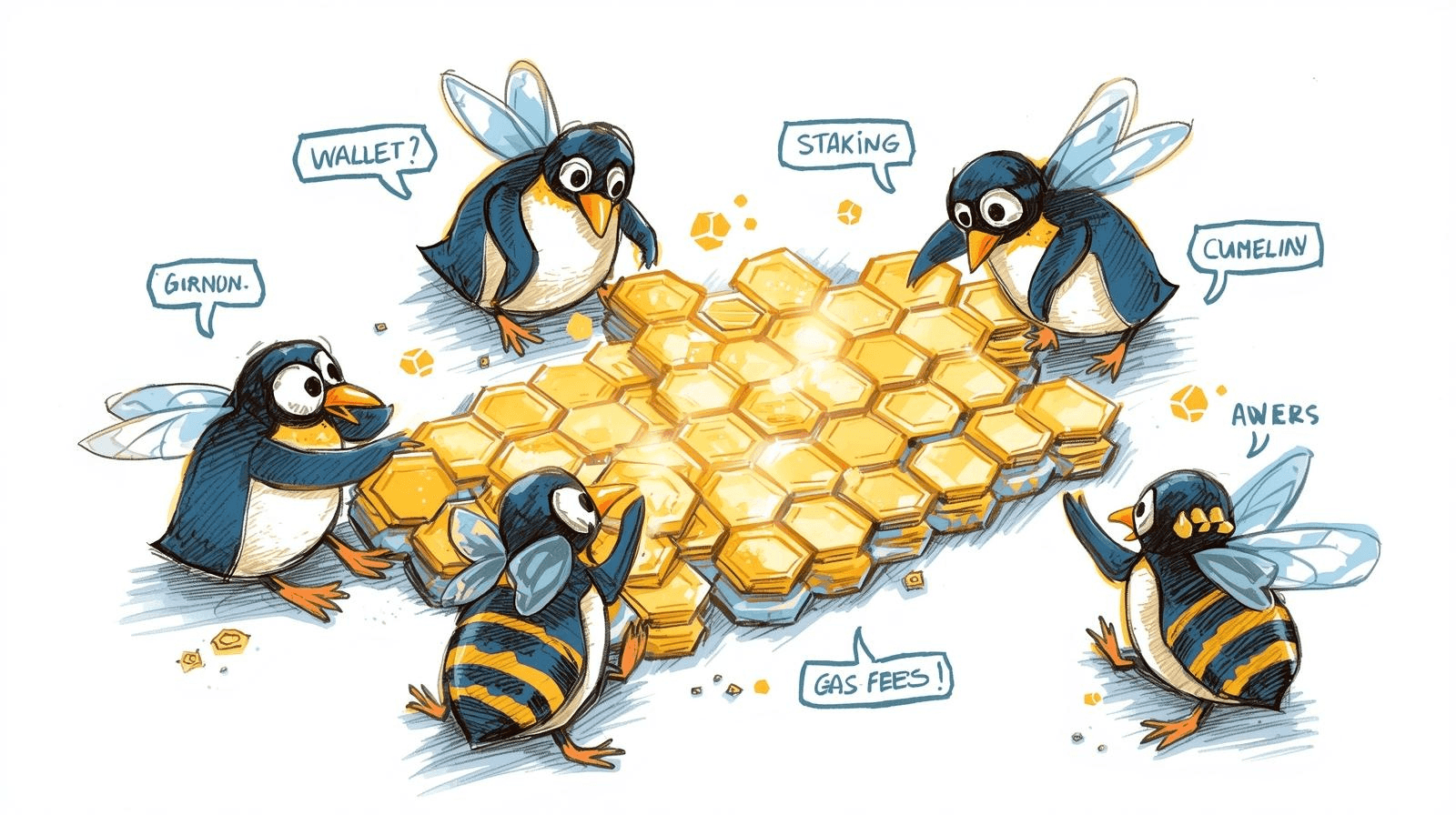
The cryptocurrency world can feel like stepping into a foreign country where everyone speaks a different language. Terms like blockchain, staking, and gas fees get thrown around as if everyone already knows what they mean. This guide breaks down the essential crypto terminology into plain English, so you can navigate the cryptocurrency space with confidence. Understanding key crypto terms is crucial for making informed investment and trading decisions, and mastering them helps build a solid foundation as you engage with the evolving market.
Quick Start: Core Crypto Terms You Must Know First
Don’t worry if crypto jargon feels overwhelming right now. In the next few minutes, you’ll understand the building blocks that make everything else click. Let’s start with the essentials.
At its simplest, “crypto” refers to digital money that exists on the internet, secured by advanced mathematics rather than banks or governments. Unlike the dollars in your bank account, cryptocurrencies operate on a distributed network of computers worldwide, with no single company or country in control. This system is known as a cryptocurrency network, which is made up of computers and protocols that support the operation, transactions, and data exchange of digital currencies within a decentralized blockchain system.
Here are the absolute must-know crypto terms:
Cryptocurrency: Digital currency that uses cryptography (complex math) to secure transactions and control the creation of new units
Blockchain: A shared digital ledger that records every transaction across a network of computers, making it nearly impossible to alter past records. Blockchain is a type of distributed ledger technology, which records and verifies transactions across multiple computers or nodes, ensuring transparency and security without a central authority.
Wallet: Software or hardware that stores the cryptographic keys you need to access and control your crypto
Exchange: A platform where you can buy, sell, and trade cryptocurrencies
Bitcoin (BTC): The first and most well-known cryptocurrency, launched in 2009
Altcoin: Any cryptocurrency other than Bitcoin, including Ethereum, Solana, and thousands of others
To put this in perspective, Bitcoin launched in 2009 as an experiment in digital money. By November 2021, it reached approximately $69,000 per coin. That kind of growth—and the volatility that comes with it—is what draws millions of people to the crypto landscape.
The rest of this article breaks these ideas down slowly, term by term, so you’ll feel comfortable discussing cryptocurrency fundamentals with anyone.

What Is Cryptocurrency, Really?
Think about the money sitting in your bank account right now. You can’t physically touch most of it—it exists as numbers on a screen. Cryptocurrency works similarly, except it exists only in digital form and operates independently of banks, governments, or any central authority.
Cryptocurrencies use cryptography (advanced mathematical techniques) to secure transactions. When you send Bitcoin to someone, complex algorithms verify that you actually own what you’re sending and that the transaction is legitimate. This happens without a bank manager approving anything—the network of computers running the blockchain does the verification instead.
One distinction that trips up beginners is the difference between coins and tokens:
A coin is the native digital asset of its own blockchain network. Bitcoin (BTC) runs on the Bitcoin blockchain. Ether (ETH) runs on the Ethereum blockchain. These coins power their respective networks.
A token is built on top of an existing blockchain using smart contracts. Thousands of tokens run on Ethereum, for example, without having their own separate blockchain infrastructure.
Here are a few concrete examples with dates:
Bitcoin (BTC): Launched January 2009, the original cryptocurrency and still the largest by market cap
Ethereum (ETH): Launched July 30, 2015, introduced programmable smart contracts to blockchain technology
Tether (USDT): Launched 2014-2015, a stablecoin designed to maintain a 1:1 peg with the US dollar
One thing you’ll notice quickly in the cryptocurrency markets is extreme market volatility. Bitcoin climbed from around $4,000 in March 2020 to nearly $69,000 in November 2021—then crashed to under $20,000 in 2022. These swings are far more dramatic than what you’d typically see in traditional financial systems.
Key takeaways:
Cryptocurrency is digital money secured by math, not banks
Coins have their own blockchain; tokens are built on existing blockchains
Prices can swing wildly—volatility is part of the game
Blockchain Basics for Dummies
Imagine a public notebook that sits in thousands of locations around the world simultaneously. Anyone can read what’s written in it, but no single person can secretly erase or change past entries. That’s essentially what a blockchain is—a tamper-resistant digital ledger shared across a distributed network of computers.
Let’s break down the two key parts of “blockchain”:
Block: A batch of transactions grouped together. When people send cryptocurrency, their transactions get bundled into a block. Each block contains block data, including transaction details, timestamps, nonce values, and other metadata essential for block verification, consensus, and hashing processes. On the Bitcoin network, a new block gets created approximately every 10 minutes.
Chain: Each block connects to the previous one through a cryptographic hash—a unique digital fingerprint. If anyone tries to change data in an old block, the hash changes, breaking the link and alerting the entire network that something’s wrong.
Blockchain relies on specialized data structures, such as Merkle Patricia tries, to organize and secure information efficiently.
Some concrete milestones in blockchain history:
Bitcoin’s first block, called the Genesis Block, was created on January 3, 2009
The Ethereum blockchain launched on July 30, 2015, expanding what blockchains could do beyond simple payments
The key properties that make blockchain technology revolutionary:
Decentralized: No single company or government controls it. Thousands of computers (called nodes) around the world each maintain a copy of the ledger.
Transparent: Anyone can view cryptocurrency transactions on public blockchains. You can literally watch Bitcoin move between addresses in real-time.
All transaction data is securely recorded within each block, contributing to the immutability and trustworthiness of the blockchain system.
Immutable: Once blockchain data is recorded and confirmed, it’s extremely difficult to change. Each new block reinforces the security of all previous blocks.
Why this matters:
Blockchain enables cryptocurrency coins to exist without central banks
It makes non fungible tokens (NFTs) and decentralized finance possible
The technology creates trust through mathematics rather than institutions

How Blockchain Transactions Work
Let’s walk through what happens when you send Bitcoin to a friend:
A blockchain transaction is a digital transfer of value that is processed and confirmed by the network, with miners or validators ensuring its security and integrity through multiple confirmations.
You create the transaction: Using your crypto wallet, you specify how much BTC to send and enter your friend’s wallet address.
Broadcast to the network: Your wallet broadcasts the transaction to the Bitcoin network. Thousands of computers (called nodes) receive this information.
Validation: Nodes check that you actually own the Bitcoin you’re trying to send and that you haven’t already spent it elsewhere. This is called validating transactions.
Grouping into a block: Your transaction joins a queue of other unconfirmed transactions. Miners (or validators, depending on the network) group these into a new block.
Adding to the chain: Once the block is complete, it receives its own cryptographic hash and gets linked to the previous block on the chain.
Confirmation: Your transaction is now confirmed. Each additional block added after yours provides another “confirmation,” increasing security.
A few important terms from this process:
Node: A computer running blockchain software that helps validate transactions and maintain the network
Network fees (also called transaction fees or gas fees on Ethereum): Small payments to miners or validators for processing transactions. These fees change based on network congestion—busy times cost more.
Practical example: If you send 0.01 BTC to a friend, you’ll pay a small network fee (maybe a few dollars during normal times, more during high demand). After about 10 minutes, you’ll see 1 confirmation. Waiting for 3-6 confirmations is standard practice for larger amounts, as each confirmation makes the transaction more secure against fraud.
Quick summary:
Transactions get broadcast, validated, grouped into blocks, and added to the chain
Nodes are the computers that keep the network running
Fees compensate network participants for processing transactions
More confirmations = more security
Consensus Mechanisms: PoW vs PoS
Here’s a question that might occur to you: if there’s no bank or central authority, how do all these computers agree on which transactions are valid?
The answer is called a consensus mechanism—the rules that let network participants agree on the state of the blockchain without trusting each other or a central boss.
Proof of Work (PoW)
In proof of work systems, miners use powerful computers to solve complex mathematical puzzles. The first miner to solve the puzzle gets to add the next block to the chain and earns a block reward (newly minted cryptocurrency plus transaction fees).
Main example: Bitcoin mining uses PoW
Trade-off: Extremely secure, but uses enormous amounts of electricity
Proof of Stake (PoS)
In proof of stake systems, validators lock up (or “stake”) their own coins as collateral. The network selects validators to propose and validate blocks based on how much they’ve staked. Validators earn network rewards for honest participation but risk losing a portion of their stake if they misbehave.
Main example: Ethereum transitioned from PoW to PoS in September 2022 in an event called “The Merge”
Trade-off: Far more energy-efficient than PoW, but requires different security assumptions
Energy comparison: PoS typically uses a tiny fraction of the electricity that PoW requires, making it attractive for networks concerned about environmental impact.
Key Crypto Assets: Coins, Tokens, and Stablecoins
The term “crypto” covers a wide range of crypto assets with different purposes. Understanding these categories helps you make sense of what you’re actually buying or using.
Quick overview of major categories:
Coins: Native assets of their own blockchain (Bitcoin, Ethereum, Solana)
Tokens: Built on existing blockchains via smart contracts (USDC, UNI, LINK)
Stablecoins: Designed to maintain a stable price, usually pegged to fiat currency like the US dollar
NFTs: Unique digital assets representing ownership of specific items
New crypto projects often raise capital through methods like initial coin offerings (ICOs) and initial exchange offerings (IEOs), allowing them to garner financial support via token sales.
Among major coins, Ripple (XRP) is an altcoin known for its fast transaction speeds, and Litecoin (LTC) is an altcoin that aims to provide quicker transaction times than Bitcoin.
Let’s break each of these down.
Coins vs Tokens
Coins are the native digital asset of their own blockchain. They’re used to pay transaction fees, reward miners or validators, and serve as the primary currency of that network.
Coin | Blockchain | Launch Year |
|---|---|---|
Bitcoin (BTC) | Bitcoin | 2009 |
Ether (ETH) | Ethereum | 2015 |
Solana (SOL) | Solana | 2020 |
Tokens are built on top of existing blockchains using smart contracts. They don’t have their own blockchain infrastructure—they operate within the rules of another network.
On the Ethereum blockchain, tokens follow standardized formats:
ERC-20: The standard for fungible tokens (where each token is identical and interchangeable, like currency)
ERC-721: The standard for non-fungible tokens (where each token is unique)
Examples of popular tokens:
USDC (USD Coin): A stablecoin launched in 2018, pegged 1:1 to the US dollar
UNI (Uniswap): A governance token launched in 2020, giving holders voting rights on protocol changes
LINK (Chainlink): A utility token for an oracle service that brings external data onto blockchains
CryptoPunks: An NFT collection launched in 2017, with individual pieces selling for millions
Common token use cases:
Payments and transfers
Governance (voting on crypto projects’ decisions)
Rewards and incentives
In-app currencies within decentralized applications
Stablecoins Explained
Definition: A stablecoin is a cryptocurrency designed to maintain a near-stable price, typically pegged 1:1 to fiat currency like the US dollar
Purpose: Provides stability in a volatile market, letting users hold value without exposure to wild price swings
Major stablecoins:
Tether (USDT): The oldest and largest stablecoin, launched 2014-2015, claims 1:1 backing by US dollar reserves
USD Coin (USDC): Launched 2018, maintains a 1:1 peg with audited reserves
DAI: A crypto-collateralized stablecoin on Ethereum that maintains its peg through smart contracts rather than fiat backing
Types of stablecoins:
Fiat-backed (USDC, USDT): Hold actual dollars or equivalents in bank accounts
Crypto-collateralized (DAI): Lock cryptocurrency as collateral in smart contracts
Algorithmic: Attempt to maintain the peg through supply/demand mechanics without direct backing
Why beginners use stablecoins:
Move money between exchanges without converting to fiat currency
Avoid volatility while staying in the crypto space
Participate in decentralized finance without holding volatile coins
Risk note: Stablecoins aren’t risk-free. TerraUSD (UST), an algorithmic stablecoin, collapsed in May 2022, dropping well below its $1 peg and causing massive losses. Always research the backing mechanism before trusting a stablecoin with significant funds.
NFTs (Non‑Fungible Tokens)
Definition: An NFT (Non-Fungible Token) is a unique digital asset that proves ownership of a specific item—art, music, collectibles, in-game items, or virtual real estate—on a blockchain
“Non-fungible” explained: Unlike Bitcoin, where 1 BTC always equals 1 BTC (they’re interchangeable), each NFT has its own unique identity and value. Think of the difference between a dollar bill (fungible) and an original painting (non-fungible).
High-profile examples:
Beeple’s “Everydays”: Sold for $69 million at Christie’s auction house in March 2021, bringing NFTs to mainstream attention
CryptoPunks: One of the earliest NFT collections, launched in 2017, with individual punks selling for millions
Bored Ape Yacht Club: A popular collection that became a status symbol in the crypto world
Blockchains commonly used for NFTs:
Ethereum (the original and most established)
Polygon (lower transaction fees)
Solana (fast and inexpensive)
Main use cases:
Digital art and collectibles
Gaming assets (characters, weapons, land)
Virtual real estate in platforms like Decentraland
Music and entertainment distribution
Digital ownership certificates
Decentralized Applications: What Are DApps and Why Do They Matter?
Imagine the apps on your smartphone—banking, games, social media—but instead of running on a company’s private servers, they operate on a public blockchain network. These are called decentralized applications, or DApps, and they’re one of the most exciting innovations in the cryptocurrency landscape.
DApps are software programs built to run on blockchains, using smart contracts to automate tasks and enforce rules without relying on a central authority. This means that when you interact with a DApp, your actions are processed transparently and securely by the network itself, not by a single company. The result? Greater trust, fewer middlemen, and a system that’s much harder to tamper with.
The Ethereum blockchain is the most popular platform for building decentralized applications. Thanks to the Ethereum Virtual Machine (EVM), developers can create and deploy smart contracts that power everything from decentralized finance (DeFi) protocols to NFT marketplaces and blockchain-based games. The EVM acts as a global computer, allowing DApps to execute code exactly as programmed, every time.
Why do DApps matter? They’re transforming traditional financial systems by enabling decentralized finance, where users can lend, borrow, trade, and earn interest on crypto assets—all without banks or brokers. Beyond finance, DApps are also driving innovation in areas like digital identity, supply chain tracking, and even voting systems.
Wallets vs Exchanges: Where Your Crypto Lives
This distinction confuses many beginners, so let’s be crystal clear:
An exchange is a marketplace where you buy, sell, and trade cryptocurrencies
A wallet is a tool that stores the cryptographic keys you need to access and control your crypto
Think of it this way: an exchange is like a store where you purchase gold. A wallet is like the safe where you keep your gold at home.
Here’s the critical security concept: “Not your keys, not your coins.” If you leave crypto on an exchange, you’re trusting that company to keep it safe. If the exchange gets hacked, goes bankrupt, or freezes your account, you could lose everything. When you hold crypto in your own wallet, you control the private keys—and therefore, the funds.
When to use each:
Scenario | Best Option |
|---|---|
Buying crypto with dollars | Centralized exchange (CEX) |
Active trading | Exchange (CEX or DEX) |
Long-term holding | Personal wallet (preferably cold storage) |
Using DeFi apps | Non-custodial wallet |

Wallets: Hot, Cold, Custodial, Non‑Custodial
A cryptocurrency wallet doesn’t actually store your coins—the coins exist on the blockchain itself. What the wallet stores are your private keys, which prove you own those coins and let you authorize transactions.
Hot Wallet
Connected to the internet
Examples: MetaMask (browser extension), Trust Wallet (mobile app)
Pros: Convenient for frequent transactions
Cons: More vulnerable to hacking, malware, and phishing attacks
Best for: Amounts you actively trade or can afford to lose
Cold Wallet
Offline storage, not connected to the internet
Examples: Hardware wallets like Ledger Nano or Trezor
Pros: Much more secure against online attacks
Cons: Less convenient for quick transactions
Best for: Long-term holdings and larger amounts
Custodial Wallet
A third party (like a centralized exchange) controls the private keys on your behalf
Pros: Easier account recovery, simpler user experience
Cons: You’re trusting someone else with your funds
Non-Custodial Wallet
You alone control your private keys and recovery phrase
Pros: Full control, no intermediary can freeze your funds
Cons: Full responsibility—lose your keys, lose your crypto
Essential security rules:
Never share your seed phrase (the 12-24 word recovery phrase) with anyone
Never type your seed phrase into random websites or apps
Never send screenshots of your seed phrase
Keep multiple offline backups in secure locations
Enable two-factor authentication wherever possible
Exchanges: CEX vs DEX
Centralized Exchange (CEX)
A platform run by a company where you create an account, complete identity verification (KYC—Know Your Customer), and deposit funds to trade.
Exchange | Founded | Notes |
|---|---|---|
Coinbase | 2012 | Popular in US, user-friendly |
Binance | 2017 | Largest by trading volume |
Kraken | 2011 | Strong security reputation |
Pros:
Beginner-friendly interfaces
Customer support available
Easy fiat currency on-ramps (buy crypto with dollars via bank transfer or card)
High liquidity for major trading pairs
Cons:
You don’t control your private keys while funds are on the exchange
Requires identity verification
Can freeze accounts or restrict access
Decentralized Exchange (DEX)
A platform where trades happen through smart contracts and liquidity pools, with no central company controlling funds.
Examples: Uniswap (launched November 2018), PancakeSwap, SushiSwap
How it works: Users provide liquidity to pools, and traders swap assets against those pools via smart contracts
Pros:
You maintain control of your funds (trades from your own wallet)
Access to a wider range of tokens
No identity verification required
Censorship-resistant
Cons:
Steeper learning curve for beginners
No customer support
Higher risk of scams and low-quality tokens
Variable liquidity and potential slippage on smaller pairs
Basic trading terms:
Trading pair (e.g., BTC/USDT): The two assets being exchanged. First asset is what you’re buying/selling; second is the price quote.
Spread: The difference between what buyers will pay (bid) and what sellers want (ask). Tighter spreads indicate more liquidity.
Liquidity: How easily you can buy or sell without significantly moving the price. High liquidity means smoother trades.
Common beginner path: Start on a CEX to buy crypto with fiat, then transfer to a personal wallet for long-term storage or to a DEX for accessing more tokens.
Market Lingo: Bull, Bear, FOMO, and More
The crypto space has developed its own vocabulary that can sound like a foreign language. Much of this slang describes emotions and market trends—understanding it helps you recognize what’s happening and avoid making emotional decisions.
This section covers the terms you’ll see constantly on social media, forums, and news sites.
Bull Market vs Bear Market
Bull Market
A period of rising prices and optimism. Investors expect prices to keep going up, new money flows in, and positive sentiment dominates.
Real example: Bitcoin climbed from around $4,000 in March 2020 to nearly $69,000 in November 2021. This period saw massive institutional adoption, mainstream media coverage, and widespread excitement about digital currencies.
Bear Market
A prolonged period of falling prices and pessimism. Investors become cautious or sell, negative news dominates, and many projects fail.
Real examples:
The 2018 “crypto winter” following the 2017 bull run
The 2022 downturn after the November 2021 peak
Volatility
How dramatically and quickly prices move. Crypto markets are typically far more volatile than stocks or foreign exchange markets. A 10-20% daily move isn’t unusual in crypto; in traditional markets, that would be extraordinary.
Practical tips for handling market volatility:
Avoid panic buying near all-time highs or panic selling during crashes
Set a budget for what you can afford to lose
Consider dollar cost averaging (regular purchases regardless of price) instead of trying to time market tops and bottoms
Remember that market trends can change quickly
FOMO, FUD, HODL, and “Going to the Moon”
FOMO (Fear Of Missing Out)
The anxiety that you’ll miss gains if you don’t buy right now. FOMO often leads people to buy near all-time highs because social media is buzzing with success stories.
Example: Seeing Bitcoin at $60,000 and buying because everyone’s talking about $100,000, only to watch it drop to $30,000.
FUD (Fear, Uncertainty, Doubt)
Negative news or rumors that create panic, whether or not the concerns are legitimate. FUD can be genuine warnings about problems or deliberate market manipulation to drive prices down.
How to handle FUD: Verify sources, check official project channels, and understand whether the concern actually affects fundamentals.
HODL
Originally a typo of “hold” from a 2013 Bitcoin forum post during a price crash. It became slang for holding cryptocurrency long-term regardless of short-term price swings.
The philosophy: Instead of trying to trade every move, buy and hold through the ups and downs if you believe in the long-term value.
“To the Moon” / “Mooning”
Phrases expressing expectation or excitement that a coin’s price will skyrocket dramatically. Often used enthusiastically (or ironically) on social media.
Simple mindset rules:
Avoid trading strategies based purely on emotion
Set personal rules for buying and selling before the market gets volatile
Write down your decisions and reasoning—it helps you stay rational later
Whales, Degens, Rug Pulls, and Getting Rekt
Whale
An individual or institution holding a very large amount of a cryptocurrency (for example, thousands of BTC). Whales can move markets with single large trades.
Why it matters: Whale movements are tracked by community members as potential signals of upcoming price action. A whale selling a huge position can crash prices; a whale buying can spike them.
Degen (Degenerate)
A trader who takes extremely risky bets, often on meme coins, micro-cap tokens, or with heavy leverage. Degen culture embraces high-risk, high-reward plays with full awareness that total loss is possible.
Rug Pull
A scam where project creators drain liquidity or disappear with investor funds. Common in low-quality decentralized finance projects, meme coins, and initial coin offering-style token launches.
Warning signs:
Anonymous team with no verifiable track record
No clear documentation or whitepaper
Unrealistic return promises
Liquidity controlled entirely by creators
Rekt
Slang for suffering heavy losses. Getting rekt often happens from leverage trading gone wrong, falling for scams, or buying at market peaks after FOMO.
The takeaway: Always do your own research (DYOR). Check team backgrounds, read documentation, understand what you’re buying, and never invest more than you can afford to lose entirely.
Technical but Important: Keys, Gas Fees, Mining & Staking
These terms sound technical, but understanding them at a basic level is essential for protecting your funds and avoiding costly mistakes. Think of this section as practical knowledge that could save you money—or prevent you from losing it.
We’ll use simple analogies to make these concepts stick.
Decentralized autonomous organizations (DAOs) are blockchain-based entities that operate with member-driven governance, emphasizing transparency and decentralized decision-making through voting mechanisms.
Private Keys, Public Keys, and Addresses
Private Key
A secret password that lets you spend your crypto. It’s a long string of numbers and letters that proves you own the coins at a particular address.
Critical rule: Anyone who has your private key can take all your funds. Never share it with anyone, ever.
Public Key and Address
The shareable part, like an email address for receiving crypto. You can safely give your wallet address to anyone who wants to send you cryptocurrency.
Seed Phrase (Recovery Phrase)
Most modern wallets generate a seed phrase—typically 12 or 24 words—that serves as the master backup for all private keys in that wallet. If you lose access to your wallet app or physical device, you can restore everything using these words.
Non-negotiable safety rules:
Never type your seed phrase into any website or app that asks for it (legitimate wallets only ask during initial setup)
Never send screenshots or photos of your seed phrase to anyone
Keep multiple backups in secure, offline locations
Consider a fireproof safe or safety deposit box for large holdings
Test your backup by restoring on a different device before you have funds at risk
Gas Fees and Network Fees
Gas Fees (Ethereum)
Small payments to validators for processing transactions and executing smart contracts on the Ethereum network. The term “gas” refers to the computational effort required.
How fees work: Fees change based on network congestion. During busy times (like a popular NFT mint), gas fees can spike dramatically. During quiet periods, they drop.
Example: Sending ETH during a high-demand period might cost $20-50 in fees. The same transaction during low demand might cost $2-5.
Network Fees (Bitcoin and others)
Every blockchain has some form of transaction fees paid to miners or validators for processing transactions. Bitcoin network fees go to miners who validate blocks. On proof of stake networks, fees go to validators.
Practical tip: Always check estimated fees before confirming a transaction. When sending small amounts, high fees could eat up a significant percentage of your transfer. Use fee estimation tools and consider waiting for lower-traffic periods for non-urgent transactions.
Mining and Staking
Mining (Proof of Work)
In PoW systems like Bitcoin, bitcoin mining means using computing power to validate transactions, secure the network, and earn block rewards.
Technical reality:
Modern Bitcoin mining uses ASICs (Application-Specific Integrated Circuits)—specialized hardware wallets designed only for mining
Home mining is often unprofitable due to electricity costs exceeding rewards
Industrial operations with cheap electricity dominate the mining industry
Miners earn: Newly minted cryptocurrency (the block reward) plus transaction fees from all transactions in the block
Staking (Proof of Stake)
In PoS systems like Ethereum (after The Merge), Cardano, and Solana, staking means locking up coins to help secure the network and earn rewards in return.
How it works:
Validators stake their own coins as collateral
The network selects validators to propose and validate new blocks
Validators earn network rewards for honest participation
Misbehavior (like trying to validate fraudulent transactions) results in “slashing”—losing part of your staked coins
Key difference:
Mining = energy + specialized hardware
Staking = capital locked up + network rewards
Both the blockchain industry approaches accomplish the same goal—securing the network and achieving consensus—but through different mechanisms and with different environmental impacts.
Putting It All Together: How to Keep Learning Safely
You’ve now covered the essential crypto terms that form the foundation of the entire cryptocurrency world. You understand the difference between coins and tokens, how blockchain transactions work through the consensus process, why hardware wallets matter for security, and what people mean when they talk about bull markets, bear markets, and whales.
Here’s how to continue learning safely:
Start small and slow
Begin with amounts you can genuinely afford to lose
Practice with major, well-known cryptocurrency coins (Bitcoin, Ethereum) before exploring niche tokens
Use test transactions with tiny amounts to learn how wallets and exchanges work
Build knowledge before deploying capital
Read official documentation for any crypto projects you’re considering
Check whitepapers to understand what problems a project claims to solve
Use testnets (practice networks with fake money) to try decentralized applications without risk
Follow news from reputable sources, not just social media influencers
DYOR (Do Your Own Research)
This isn’t just a catchphrase—it’s a survival strategy in a constantly evolving space where scams are common. Cross-check information across multiple sources. Verify claims rather than trusting headlines. Understand what you’re buying and why before you buy it.
Practical next steps:
Set up a small account on a reputable centralized exchange
Practice buying a small amount of a major coin
Transfer it to a personal wallet you control
Learn to read blockchain data on a block explorer
Only scale up once you’re comfortable with the basics
The crypto landscape moves fast. New terms, protocols, and crypto projects appear constantly. But the fundamentals you’ve learned here—blockchain participants validating transactions, private keys controlling access, the difference between custodial and non-custodial options—these concepts remain stable even as specific technologies evolve.
Understanding crypto terminology is the first big step toward making informed, safer decisions. You don’t need to master everything overnight. Take your time, stay curious, and remember: the best investors in any underlying asset class are the ones who understand what they own.