Dec 23, 2025
Characteristics of Investment
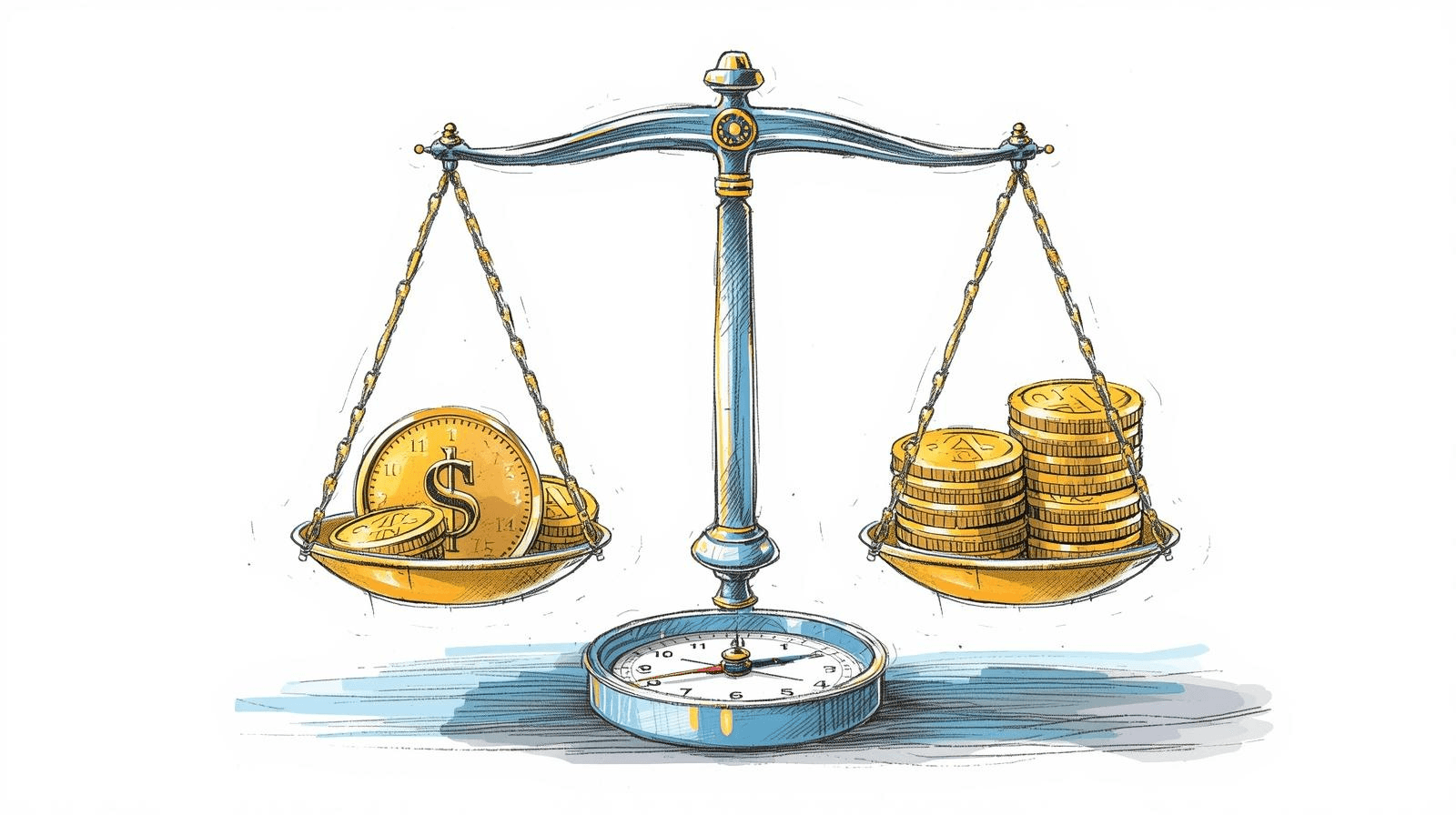
Every investment you consider in 2025 and beyond comes with its own DNA—a unique set of characteristics that determine whether it’s right for your situation. These characteristics include risk, return potential, liquidity, time horizon, costs, taxation, inflation impact, and your own behavior as an investor.
Think about the difference between putting money into a US Treasury bill versus a 10-year corporate bond versus a global equity ETF. Each offers a fundamentally different experience. A 1-year Treasury bill provides predictable, modest returns with virtually no volatility. A corporate bond extends your commitment and introduces credit risk. A global equity ETF opens the door to higher potential returns but comes with price swings that can test your patience during market downturns.
Before making any investment decisions, it’s important to acquire a solid understanding of these key characteristics. This knowledge separates investors who build wealth confidently from those who make reactive decisions based on headlines or hunches. Whether you’re evaluating S&P 500 index funds, UK gilts, Indian equity mutual funds, Jamaican USD bonds, or residential real estate in London or Mumbai, the same framework applies. Investments can generally be divided into two categories: public investments, which are traded on open markets and accessible to most investors, and private investments, which are not publicly traded and often require higher minimums or special access.
Here are the major characteristics we’ll explore in this guide:
Risk level and potential rewards
Liquidity and accessibility
Time horizon alignment
Diversification benefits
Inflation protection
Tax efficiency
Market volatility and consistency
Costs and fees
Psychological and behavioral factors
Goal alignment

Introduction to Investing
Investing represents the decisive foundation for wealth accumulation and financial goal achievement—there's no question about this fundamental truth. At its core, investing means strategically deploying your capital across various asset classes—stocks, bonds, real estate, mutual funds—with the clear expectation of generating superior returns over time. Each investment vehicle carries distinct characteristics: risk profiles, return potential, liquidity constraints, and fee structures, all of which demand careful analysis to determine optimal portfolio fit. Inefficient investment selection bothers me profoundly because it undermines your financial trajectory.
A superior investment achieves optimal risk-reward equilibrium while aligning precisely with your risk tolerance and strategic priorities—whether you're targeting capital appreciation or income generation. Understanding these characteristics empowers decisive action, eliminates costly mistakes, and enables systematic portfolio diversification that accelerates your financial success. Whether you're launching your investment journey or optimizing your existing approach, mastering what constitutes suitable investments for your specific situation is absolutely critical for long-term wealth optimization. Strategic foresight and informed decision-making transform complexity into clarity, ensuring you control your financial future rather than leaving it to chance.
Types of Investments
Investment asset classes demand strategic understanding—each offering distinct characteristics that I've witnessed transform portfolios when properly leveraged. Equity investments, particularly stocks and mutual funds, represent true ownership stakes in companies and deliver the substantial long-term growth that I consistently advocate for my clients, though their volatility requires decisive risk management. Fixed income investments—bonds specifically—provide the regular interest payments and stability that form the backbone of any serious investment strategy, making them indispensable for investors who demand predictable returns without compromise.
I've guided countless clients through alternative asset classes that most advisors overlook—cash and cash equivalents like savings accounts and money market funds deliver the high liquidity and security that every portfolio demands as its foundation, though their modest returns require strategic positioning. Commodities—gold, oil, agricultural products—serve as the inflation hedges that I insist upon for portfolio diversification, because market volatility is non-negotiable reality. Real estate and precious metals represent the alternative investments that I've seen provide both income generation and capital appreciation, though their reduced liquidity demands careful timing and risk assessment that only experienced guidance can navigate.
When I construct investment portfolios, risk tolerance assessment and goal alignment drive every decision—because inefficient allocation bothers me profoundly. Diversification across asset classes isn't just strategy; it's the systematic risk management that separates successful investors from those who struggle with market uncertainty. I thrive on transforming complex investment landscapes into clear, actionable strategies that align with long-term financial objectives, ensuring my clients achieve optimized outcomes rather than settling for mediocre returns.
Risk and Return
Risk and return are the foundation of every investment decision. The relationship between them became painfully clear during the 2020 COVID-19 crash, when global stocks dropped more than 30% in weeks, and again during the 2022 inflation shock, when both stocks and bonds fell simultaneously—something most people hadn’t experienced in decades.
Every investor faces multiple types of risk:
Market risk: The possibility that entire markets decline, as seen when equities dropped roughly 30% during major corrections
Credit risk: The chance that a bond issuer defaults on payments, more common with corporate bonds than government securities
Interest rate risk: How bond prices fall when interest rates rise—long-term bonds suffered significant losses in 2022-2023 when central banks raised rates aggressively
Currency risk: The impact of exchange rate movements when you invest in assets denominated in foreign currencies
The risk and potential rewards relationship is straightforward in principle: safer investments like government bills currently yield around 4-5%, while long-term equities have historically returned 8-10% annually but with substantially higher volatility. Long term investments, by leveraging the power of compounding over decades, can achieve substantial returns that are generally not possible with short-term or medium-term strategies.
Consider this example: an investor who put $10,000 into a broad US equity index fund in 2010 would have experienced gut-wrenching drops during corrections but ended 2020 with approximately $36,000. Another investor who chose 3-year government bonds over the same period had a smoother ride but ended with roughly $13,000. Same starting point, dramatically different outcomes—and dramatically different experiences along the way. For lower-risk investments, protecting the original amount (principal) is a key consideration, especially for risk-averse investors who prioritize capital preservation.
Key takeaways on risk and return:
Higher risk assets offer higher potential returns over long periods
Lower risk investments provide more predictable but modest growth
Your risk tolerance should match your ability to stay invested during downturns
Diversification across different asset classes helps manage overall portfolio risk
Liquidity
Liquidity refers to how quickly and reliably you can convert an investment to cash at a fair price. This characteristic often gets overlooked until you actually need your money—then it becomes critical.
Cash in a savings account and money market funds offer same-day access. Listed stocks and ETFs typically settle in two business days (T+2 settlement). Residential property in most markets takes months to sell, and you may need to accept a lower price for a quick sale. Private equity funds often lock up your capital for 5-10 years with limited or no ability to exit early.
Your liquidity needs depend entirely on your goals. An emergency fund covering 2025 expenses needs to be immediately accessible—liquid investments like cash or money market funds are essential. Pension assets you won’t touch until 2040 can tolerate illiquid investments that may offer higher returns precisely because you’re compensating for reduced flexibility.
Liquidity comparison:
High liquidity: Cash, money market funds, major stock ETFs, large-cap stocks
Medium liquidity: Corporate bonds, smaller company stocks, some mutual funds with redemption periods
Low liquidity: Real estate, private equity, certain alternative investments, collectibles like precious metals or art
Time Horizon
Your time horizon is the period from when you invest to when you realistically need the money. This single factor shapes almost every other investment decision you’ll make.
A clear distinction exists between different investment timeframes:
Short-term (up to 3 years): Saving for a 2027 car purchase or building an emergency fund
Medium-term (3-10 years): Accumulating a house deposit for 2030 or funding a wedding
Long-term (10+ years): Building retirement assets or a child’s 2045 college fund
Longer horizons allow more exposure to volatile assets like global equities and emerging market funds. Short-term money typically requires safer, more stable instruments because you can’t afford a 30% drop right before you need the funds.
Consider two investors with different situations. A 25-year-old professional with retirement in 2060—35 years away—can weather multiple market crashes and recoveries. Their investment portfolio can hold 80-90% in equity investments without losing sleep. Meanwhile, someone five years from a 2030 retirement faces a completely different calculation. A major market drop in 2029 could derail their plans, so shifting toward bonds and dividend stocks makes sense.
How asset choices typically change with time horizon:
Short-term goals: Prioritize capital preservation—savings accounts, short-term bonds, money market funds. For fixed income securities, ensure the maturity date matches your time horizon so principal is returned when needed.
Medium-term goals: Balanced approach—mix of bonds and stocks, moderate volatility acceptable. When using bonds, select maturities that align with your investment timeframe to manage risk and liquidity.
Long-term goals: Growth focus—heavier equity allocation, can accept temporary losses for higher returns
Diversification
Diversification means spreading your money across different assets, sectors, and geographies so that no single poor-performing investment derails your entire financial journey. It’s one of the few genuine “free lunches” in investing—reducing risk without necessarily sacrificing returns.
Practical diversification involves mixing US, European, and Asian equities rather than concentrating in one country. It means combining bonds with stocks to smooth out volatility. Many investors add real estate investment trusts (REITs) and commodities ETFs to a traditional 60/40 portfolio for additional balance.
The 2008 financial crisis demonstrated diversification’s value clearly. Investors holding only financial sector stocks lost 80% or more. Those with diversified portfolios across different types of investments—including bonds and international stocks—still suffered but recovered faster because not everything fell equally or stayed down as long. The 2020 pandemic showed similar patterns, with technology stocks surging while travel and hospitality collapsed.
Asset allocation and rebalancing turn diversification from concept into practice. If you target 60% equities and 40% bonds, market movements will shift those percentages over time. Annual rebalancing—selling some winners and buying some laggards to return to your target allocation—maintains your intended risk level and forces a disciplined “buy low, sell high” behavior.
Diversification principles:
Spread investments across asset classes (stocks, bonds, real estate, commodities)
Include different geographic regions to reduce country-specific risk
Mix various forms of securities within each asset class
Rebalance periodically to maintain target allocations
Avoid concentration in single stocks or sectors regardless of how promising they seem

Inflation Protection
Inflation erodes purchasing power quietly but relentlessly. The elevated inflation rates seen globally in 2022-2023 reminded investors that a 5% nominal return means nothing if inflation runs at 6%—you’re actually losing ground in real terms.
Several investment types help protect against inflation:
Inflation-linked bonds: US Treasury Inflation-Protected Securities (TIPS), UK index-linked gilts, and similar instruments adjust their principal and interest payments based on inflation measures
Real estate: Property in growing cities tends to appreciate with or ahead of inflation over long periods, and rental income often rises with living costs
Broad equity indices: Companies can raise prices and pass inflation costs to customers, making stocks a reasonable long-term inflation hedge
Commodity funds: ETFs tracking energy, metals, or agricultural products often rise during inflationary periods
Consider the math: 3% annual inflation over 20 years reduces the real value of cash by nearly half. Your $100,000 in a non-interest-bearing account would have the purchasing power of roughly $54,000 in two decades. Even modest returns that merely match inflation preserve your wealth; returns that beat inflation grow it in real terms.
Not every inflation hedge works in every period—TIPS underperformed during 2022 despite high inflation due to rising real interest rates. These assets work best as part of a diversified long-term strategy rather than short-term inflation bets.
When to prioritize inflation protection:
Long-term savers planning for retirement after 2040
Anyone with fixed future obligations (education costs, healthcare)
Investors holding significant cash or fixed-rate bond positions
Those living in countries with historically higher inflation rates
Tax Efficiency
Two investments with identical headline returns can deliver vastly different after-tax results. A 7% return taxed annually at your marginal rate might net you only 5% or less, depending on your tax bracket and country. Over long periods, this difference compounds dramatically.
Tax-advantaged accounts exist specifically to address this challenge:
United States: 401(k) and Roth IRA accounts offer tax-deferred or tax-free growth
United Kingdom: ISAs and SIPPs shelter investments from capital gains and income tax
Canada: TFSA and RRSP accounts provide similar tax benefits
Tax-free municipal bonds: In the US, interest from municipal bonds is often exempt from federal taxes
Smart tax strategies make meaningful differences:
Hold high-yield and frequently traded assets in tax-sheltered accounts where gains aren’t taxed annually
Use tax-loss harvesting in taxable accounts to offset gains with losses
Prefer low-turnover index funds for taxable holdings to minimize annual capital gains distributions
Understand the difference between ordinary income and capital gains rates in your jurisdiction
The numbers tell the story. A $10,000 investment earning 7% pre-tax for 20 years grows to approximately $38,700. The same investment netting only 5% after taxes reaches roughly $26,500. That’s a $12,000 difference—more than your original investment—purely from tax drag. This is why tax efficiency matters as an investment characteristic alongside return potential.
Principles of tax-efficient investing:
Maximize contributions to tax-advantaged accounts before taxable investing
Match asset types to appropriate account types (high-turnover in tax-sheltered, low-turnover in taxable)
Consider after-tax returns, not just headline returns, when comparing options
Consult tax professionals for jurisdiction-specific strategies
Market Volatility and Consistency
Volatility describes the day-to-day and month-to-month price swings of investments. March 2020 offered a vivid example: global stocks plunged more than 30% in weeks, then recovered those losses by year-end. Investors who panicked and sold locked in losses; those who held on participated in one of the fastest recoveries in market history.
Different asset classes exhibit vastly different volatility patterns. Broad bond funds and money market funds tend toward stability, making them suitable for capital preservation. Small-cap stocks, cryptocurrencies, and emerging market equities experience much larger swings—exciting when prices rise, terrifying when they fall.
Consistent, moderate returns suit conservative investors who prioritize steady progress and peaceful sleep. More volatile investments may appeal to younger investors or those with higher risk tolerance seeking capital appreciation over decades. Neither approach is inherently superior; the right choice depends on your circumstances and temperament.
Managing volatility in practice:
Dollar-cost averaging: Investing fixed amounts regularly (monthly or quarterly) smooths out purchase prices over time, reducing the impact of buying at market peaks
Diversification: Spreading investments across asset classes with different volatility patterns reduces overall portfolio swings
Long-term perspective: Focusing on multi-year or multi-decade goals rather than daily market movements helps maintain discipline
Written investment plans: Documenting your strategy in advance provides an anchor during emotional market periods
Automatic investing: Removing the decision to invest from each paycheck eliminates the temptation to time markets
Costs and Cost Efficiency
Costs—fees, commissions, spreads, and trading taxes—directly reduce your net returns. Unlike market performance, which you can’t control, costs are one characteristic you can actively minimize.
The range of costs across various forms of investments is substantial:
Mutual funds: Traditional actively managed funds often charge 1.0-1.5% annually in management fees
Index ETFs: Broad market index ETFs may charge as little as 0.03-0.20% annually
Advisory fees: Financial advisers typically charge 0.5-1.0% of assets managed per year
Real estate: Property investments incur maintenance costs, property taxes, insurance, and transaction costs like stamp duty
Trading costs: Frequent buying and selling generates commissions, spreads, and potential tax events
That seemingly small 1% annual fee difference compounds into significant money over time. Consider two investors each starting with $100,000 and earning 7% gross returns for 30 years. One pays 0.20% in fees, ending with approximately $715,000. The other pays 1.20%, ending with roughly $525,000. The difference—nearly $200,000—went to fees rather than building wealth.
Ways to reduce ongoing investment costs:
Choose low-cost index funds and ETFs over actively managed funds when appropriate
Avoid frequent trading that generates commissions and taxes
Compare expense ratios before selecting any fund
Consider whether advisory services justify their fees based on your complexity and needs
Psychological and Behavioral Factors
Your own psychology may be the most underestimated investment characteristic. Fear, greed, overconfidence, and herd behavior often override rational analysis, leading to decisions that harm long-term results.
Common behavioral biases show up repeatedly:
Panic selling: During March 2020, many investors sold near market lows, crystallizing losses just before recovery
FOMO buying: Meme stock frenzies in 2021 saw investors buying at peaks because everyone else seemed to be making money
Loss aversion: Holding losing positions too long because selling feels like admitting failure
Overconfidence: Believing you can time markets or pick winning stocks consistently despite evidence that most people can’t
Recency bias: Assuming recent performance (good or bad) will continue indefinitely
Countermeasures for behavioral challenges:
Written investment plans: Document your strategy, target allocation, and rebalancing rules before emotional moments occur
Automatic contributions: Set up regular investments that happen without requiring a decision each time
Rules-based strategies: Define clear criteria for buying and selling that don’t depend on how you feel
Professional guidance: Financial advisers or robo-advisors can provide accountability and prevent impulsive decisions
Limit financial news consumption: Daily market commentary encourages short-term thinking that conflicts with long-term investing

Investment Goals and Alignment
The same investment characteristic can be desirable or problematic depending on whether it matches your investment objective. High risk is appropriate when you’re building wealth over 30 years; it’s dangerous when you need money for a house deposit next year. Low liquidity presents no issue for pension assets but creates problems for emergency funds.
Investment goals typically fall into categories based on timeline:
Short-term goals (1-3 years): House deposit in 2027, new car, vacation fund, emergency reserves
Medium-term goals (3-10 years): Child’s university costs in 2035, starting a business, major home renovation
Long-term goals (10+ years): Financial independence by 2050, comfortable retirement, legacy for heirs
Your investment decision process should map characteristics to goals. For near-term goals, prioritize capital preservation and liquidity—you can’t afford losses or delays accessing your money. For long-term goals, prioritize growth, inflation protection, and tax efficiency—you have time to recover from setbacks and need returns that build real wealth.
Standard investment objectives connect directly to these characteristics:
Capital preservation: Focuses on liquidity, low volatility, stable value
Income generation: Prioritizes reliable cash flows from dividends or interest
Capital appreciation: Emphasizes growth potential, accepts volatility for higher returns
Mapping goals to investment characteristics:
Emergency fund → High liquidity, very low risk, immediate access
House deposit (2-3 years) → Low risk, moderate liquidity, capital preservation
University fund (10+ years) → Moderate risk, inflation protection, tax efficiency
Retirement (20+ years) → Higher risk tolerance, strong growth focus, diversification across asset classes
Achieving Capital Appreciation
Capital appreciation—the increase in asset value over time—represents the cornerstone of intelligent wealth building, and frankly, any investor without this focus is missing the fundamental point. Investments like stocks and real estate deliver the substantial returns that truly matter, growing exponentially across years and decades. The higher risk? Non-negotiable. Market fluctuations and temporary setbacks are simply the price of meaningful wealth creation—investors who can't handle this reality shouldn't be investing at all.
Building a superior portfolio demands strategic precision—balancing aggressive growth assets with stabilizing investments isn't just important, it's essential for long-term dominance. Liquidity considerations, management fees, and investment alignment with your financial trajectory must be systematically evaluated because mediocre planning yields mediocre results. Real estate, while potentially delivering exceptional value growth, presents liquidity constraints compared to stocks or mutual funds—but the cost-benefit analysis often favors the patient, strategic investor.
The optimal capital appreciation investment aligns perfectly with your risk capacity while driving your financial success forward relentlessly. By focusing decisively on risk management, market potential, and cost efficiency—rather than getting distracted by emotional market noise—investors position themselves to capture substantial capital appreciation over time. Strategic focus and disciplined execution separate wealth builders from wealth dreamers.
Investment Strategies
Selecting the optimal investment strategy is absolutely critical for achieving your financial objectives while maintaining intelligent risk management—and frankly, too many investors approach this haphazardly. Your strategy must precisely reflect your risk tolerance, investment goals, and time horizon. As someone who prioritizes efficiency above all else, I advocate for long-term perspectives that involve strategic allocation to higher-risk growth assets like equities, intelligently balanced with stability-focused investments such as bonds—because scattered approaches yield scattered results.
The fundamental strategies I implement consistently include diversification—systematically spreading investments across different asset classes to eliminate unnecessary risk—and dollar-cost averaging, which involves disciplined regular investments to neutralize market volatility. Regular portfolio rebalancing is non-negotiable; it ensures your asset allocation remains precisely aligned with your objectives and risk parameters, especially as markets inevitably fluctuate. Inefficient drift bothers me profoundly, which is why I insist on systematic rebalancing protocols.
Before committing to any investment approach, you must rigorously assess your financial goals, risk capacity, and investment timeline—because guesswork has no place in wealth building. A strategically designed investment framework enables you to optimize potential returns while controlling downside risk, making it significantly easier to maintain discipline and focus on long-term wealth creation. By understanding exactly how different strategies align with your personal situation, you can make decisive investment choices and construct a portfolio that systematically supports your financial future rather than leaving it to chance.
Putting the Characteristics Together in Practice
Real-world portfolios balance multiple characteristics simultaneously. You can’t optimize for maximum returns while also demanding zero risk and instant liquidity—trade-offs are inevitable. Successful investors acknowledge these trade-offs and make deliberate choices aligned with their priorities.
Profile 1: Early-Career Professional (Age 30)
A 30-year-old professional investing monthly into global index funds has a 30+ year time horizon before retirement. This long-term perspective allows for aggressive equity allocation—perhaps 80-90% stocks across developed and emerging markets, with minimal bonds.
Risk: High tolerance; can recover from multiple market crashes
Time horizon: Very long; decades until funds needed
Liquidity: Low priority for retirement accounts; maintains separate emergency fund
Costs: Prioritizes low-cost index funds to maximize compounding
Tax efficiency: Maximizes contributions to tax-advantaged accounts first
Inflation protection: Equity-heavy allocation provides natural inflation hedge
Profile 2: Pre-Retiree (Age 55, Retiring 2035)
Someone 10 years from retirement faces a transition period. Preserving accumulated wealth becomes increasingly important while still needing some growth to keep pace with inflation and fund potentially 30+ years of retirement.
Risk: Moderate and declining; shifting from growth to preservation
Time horizon: Medium-term transition; sequence of returns risk matters
Liquidity: Increasing priority as retirement approaches
Costs: Still important; fees compound against smaller remaining time
Tax efficiency: Planning for tax-efficient withdrawal strategies
Inflation protection: Balanced approach with TIPS, dividend stocks, some real estate
Profile 3: Retiree (Age 70, Living on Portfolio Income)
A retiree depending on their investment portfolio for living expenses prioritizes income and capital preservation. Wild swings in portfolio value create both financial and emotional stress when you’re withdrawing regularly.
Risk: Low tolerance; cannot recover from major losses
Time horizon: Mixed; needs income now plus preservation for longevity
Liquidity: High priority; regular withdrawals required
Costs: Critical; every fee dollar reduces income
Tax efficiency: Managing withdrawal sequence across account types
Inflation protection: Modest growth allocation plus inflation-linked bonds
Investment Evaluation Checklist
Before adding any new investment to your portfolio, assess:
[ ] What is the risk level, and can I tolerate potential losses?
[ ] What return can I reasonably expect over my time horizon?
[ ] How liquid is this investment if I need to sell?
[ ] Does the time frame match my goal?
[ ] What are the total costs including fees, commissions, and taxes?
[ ] How tax-efficient is this investment in my specific situation?
[ ] Does it help or hurt inflation protection?
[ ] Can I hold this investment through volatility without making emotional decisions?
Tips for Effective Investing Using These Characteristics
Applying these characteristics doesn’t require complexity. A few consistent practices make substantial differences:
Define clear goals with dates and amounts: “Retire comfortably” is vague; “$1 million portfolio by 2050 to generate $40,000 annual income” is actionable and allows you to choose investments that match
Assess your true risk tolerance before selecting assets: Be honest about how you’d react to a 30% portfolio drop—your ability to stay invested during downturns matters more than your appetite for gains
Favor diversified, low-cost funds for core holdings: Broad market index funds provide instant diversification across hundreds of companies at minimal cost, serving your best interest over decades
Automate your investing: Setting up automatic monthly contributions—say, $500 into a global equity ETF starting January 2025—removes emotion from the process and harnesses dollar-cost averaging to reduce volatility’s impact
Review your portfolio annually: Life changes, markets shift, and allocations drift. Annual reviews help you rebalance diversification and adjust for new circumstances without overreacting to short-term noise
Keep costs relentlessly low: Every 0.5% in fees you avoid compounds into meaningful wealth over 20-30 years—treat fees as a controllable enemy of returns
Each tip connects to the characteristics we’ve discussed: clear goals inform time horizon decisions, risk assessment prevents panic selling, low costs preserve returns, and automation counters behavioral biases.
Conclusion
Understanding the characteristics of investment—risk, liquidity, time horizon, diversification, inflation impact, tax efficiency, costs, volatility, and behavioral factors—transforms investing from guesswork into informed decision-making. These characteristics form a framework you can apply to any opportunity, whether it’s a simple savings account, equity investments in emerging markets, or alternative assets like real estate and commodities.
There is no universally “good investment” in isolation. There are only investments whose characteristics align—or fail to align—with your specific goals, timeline, and temperament. Stocks aren’t inherently better than bonds; they’re appropriate for different situations. Illiquid investments aren’t bad; they’re problematic only when you need flexibility you’ve traded away for potentially higher returns.
Before making significant financial commitments in 2025 and beyond, apply these principles to your current holdings. Consider whether your investment goals match your portfolio’s actual risk level and time horizon. Evaluate whether you’re paying unnecessary costs or missing tax efficiency opportunities. If the analysis feels overwhelming, working with a qualified adviser can help translate these concepts into a personalized strategy that serves your long-term success.
The investments you choose today will compound for years or decades. Making those choices through the lens of fundamental characteristics—rather than headlines, hunches, or what most people seem to be doing—positions you for a more confident and successful financial journey ahead.